
Train Clients Without a Lease: The Hourly FlexSpace Model Explained
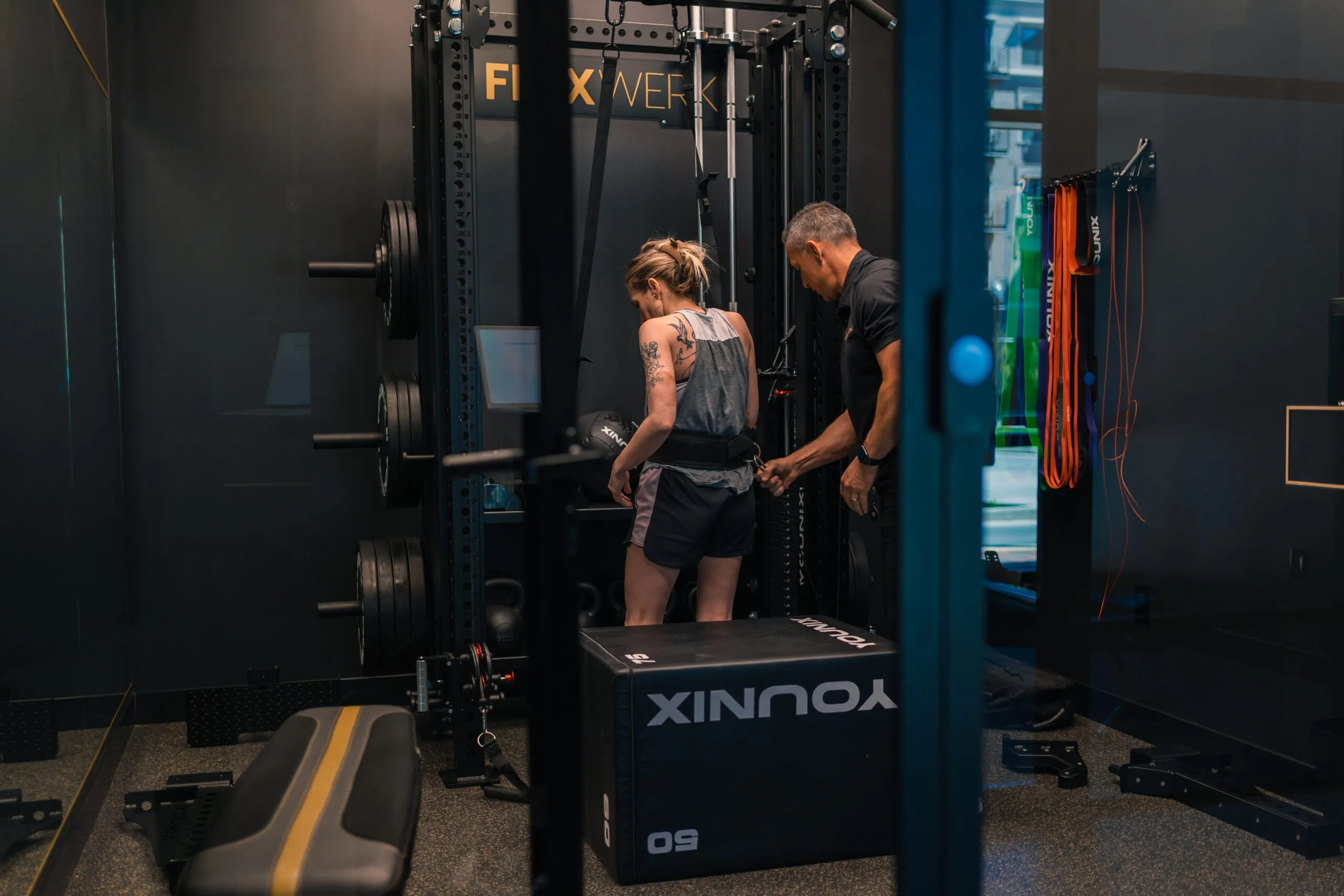
A studio lease is not the price of admission to professional training; it is one financing choice among several, and for most independent coaches it is the wrong one. The hourly alternative reserves a private, fully equipped room only when a session sits on your calendar, which deletes the largest fixed cost in a typical training business before it exists. FlexWerk built its Carmel facility around exactly that trade when it opened in 2023.
To see why the model spread, look closely at what a lease actually asks of you, one commitment at a time.
The five commitments hiding in a studio lease
A commercial lease is really a bundle of separate promises, and each one deserves its own scrutiny:
- The term. Small commercial spaces rarely rent month to month. You are promising years of payments against a client roster that can change in a quarter.
- The guarantee. Landlords routinely ask small operators to guarantee the lease personally, which means a rough stretch in the business reaches into your household finances.
- The build-out. Flooring, equipment, sound, signage: a training studio is an expensive empty box until you fill it, usually on borrowed money, all before revenue.
- The overhead. Utilities, property insurance, cleaning, repairs, and equipment maintenance land on you every month and answer to no one’s schedule.
- The utilization bet. Rent is identical whether you coach ten hours that month or a hundred and sixty. You are betting, in advance, that you will sell enough hours to justify the room.
None of these is scandalous; they are just risks, and they used to be unavoidable. The hourly model exists because they no longer are.
How booking by the hour dissolves each one
At FlexWerk, every commitment on that list collapses into a single decision: reserve the room or do not. The term disappears because your obligation ends when your booked hour does. The guarantee disappears because there is nothing to guarantee. The build-out disappears because each private space already holds the rack, cables, dumbbells, screens, and sound, with cardio rooms carrying HYDROW rowers, CLMBR climbers, and curved treadmills. Overhead belongs to the facility, and the utilization bet inverts: instead of hoping your sessions justify the rent, your sessions create the cost.
Everything a client sees stays professional grade. The rooms are genuinely private, the lighting and music answer to you, and your clients walk in free as your guests. You bill your rate, keep all of it, and the building handles being a building.
Scheduling matches the flexibility. The app shows live availability from the 5 AM weekday open through the 9 PM close, with 7 AM to 4 PM weekends, and recurring reservations hold your regulars’ hours without any contract holding you. Well over 40 working fit pros run their client books this way at Carmel City Center, a useful sanity check that no-lease does not mean not-serious.
What the no-lease version costs
The numbers are public and flat: an hour in a training space costs $18 to $22 depending on the room, dedicated cardio rooms begin at $12, and a fitness professional’s first booked hour costs nothing. The published pricing stays current on the details. Weigh that against a lease scenario where rent, utilities, insurance, and equipment payments arrive before your first client does, and where the total rarely shrinks in a bad month.
The comparison gets vivid when you use your own numbers. The what your setup really costs calculator takes your weekly sessions and rate and shows the monthly bill your current arrangement sends you; run the same week as booked hours and the difference is the risk you were carrying for no return. For a deeper side-by-side, FlexWerk versus a studio lease itemizes the cost lines a lease adds.
The seasonality test most trainers forget
Indiana hands every coach two predictable dips, and a lease ignores both. Outdoor and park-based trainers lose reliable conditions from roughly November through March, and nearly every independent trainer feels the summer slowdown when client travel scatters the calendar. A leased room charges its full rent through the quietest week of July exactly as it does through the packed first week of January. Hourly space bends with the same curve your revenue follows: heavy months cost more because they earn more, and thin months cost almost nothing. Coaches who work parks and trails through the warm season use the same property in reverse, moving winter sessions indoors without paying for a room all summer.
That single property, cost that tracks demand, is why the model suits businesses whose demand breathes. Training is one of them.
When signing a lease is still the right call
The honest exceptions are narrow but real. A lease starts to make sense when the location itself is the product you are selling, a multi-coach facility with your name on the glass, and when your on-site volume runs near capacity every week of the year, and when you hold enough capital to absorb a long slow stretch without flinching. All three at once describe a small fraction of working trainers. Even coaches heading that direction tend to prove their volume in hourly rooms first, then lease from evidence rather than optimism.
If you are earlier in the arc, particularly if you are still planning your exit from an employer’s floor, the staged departure playbook shows where hourly space slots into the timeline.
The cheapest experiment in this industry is still the same one: book the free first hour, coach a real client in the room, and see whether the lease question survives the session.
Related questions
Is there a contract at all with hourly space?
You set up a Fit Pro account and reserve hours through the app; the obligation begins and ends with each booking. There is no term, no notice period, and no space commitment that outlives your calendar.
What if I outgrow hourly space?
Outgrowing the model means booking more hours, larger rooms, or overlapping rooms for a team, all of which are calendar changes rather than contracts. A lease only enters the conversation at sustained volumes most solo trainers never hold year round.
Do I still need an LLC and insurance without a lease?
Yes. Skipping the lease removes a landlord, not your status as a business. Professional liability coverage and a clean entity protect you in any venue, and most facilities expect proof of insurance regardless.