
Subleasing Gym Floor Space vs. a Private Suite: Pros and Cons
Subleasing a corner of someone else’s gym gives you a fixed monthly cost and someone else’s rules; a private hourly suite gives you a variable cost and full control. Which one wins depends almost entirely on two numbers, your weekly session volume and the rate premium a private environment lets you charge, plus one question money can’t settle: whose business are you building?
How gym subleases actually work
A sublease (sometimes called a floor-rental or independent-contractor space deal) is a private arrangement with a gym or studio owner: you pay a flat monthly fee, or occasionally a per-session cut, for the right to train your clients in their facility. Every deal is negotiated individually, which means terms are all over the map, but the usual shape includes:
- A monthly fee owed regardless of how many sessions you run
- Shared access to the floor and equipment, usually with the host’s own classes and trainers taking scheduling priority
- The host’s rules on hours, music, guests, and conduct
- Little or no signage or branding of your own
- A handshake-to-informal-contract spectrum of security, renegotiable whenever the owner’s situation changes
For a trainer leaving the big-box employee model, a sublease can feel like freedom, and compared to handing over the 40 to 60% commission splits common at commercial gyms, it often is. The question is whether it’s the right kind of freedom.
The genuine advantages of a sublease
A fair accounting, because subleases persist for real reasons:
- Predictable cost. One flat number every month makes budgeting simple.
- Cheap at very high volume. If you run a packed schedule, a flat fee divided by many sessions can produce a low per-session cost, often the lowest available anywhere.
- Unlimited-ish access. Within the host’s rules, you can be in the building as much as you want, floater sessions, program writing, your own workouts.
- A built-in host relationship. A good host refers overflow clients and provides a veteran sounding board.
- Specialized equipment. If your method needs turf runs, platforms, or a full machine circuit, a big host floor may offer what no suite can.
If you’re a high-volume trainer with a loyal book, thick skin about environment, and a trustworthy host, a sublease can be a legitimately good deal.
The costs that never appear in the listing
The problems show up in months three through twelve:
- The rent clock runs in your slow months. Vacation, injury, a January dip, the flat fee doesn’t care. Fixed costs transfer the host’s risk onto you.
- Second-class scheduling. When the host’s boot camp needs the turf at 6 PM, your session moves. Priority conflicts are structural, not personal.
- Shared equipment, shared crowd. Your client’s squat rack is available except when it isn’t. The environment, noise, strangers, someone else’s playlist, is the host’s, and so is the impression it leaves.
- Brand dilution. Clients say “I train at [host gym’s name].” After two years of hard work, your business’s public identity belongs to someone else’s building.
- Fragility. Host sells, host expands their own program, host’s landlord raises rent, informal deals unwind fast, and your clients’ habits unwind with them.
What a private suite changes
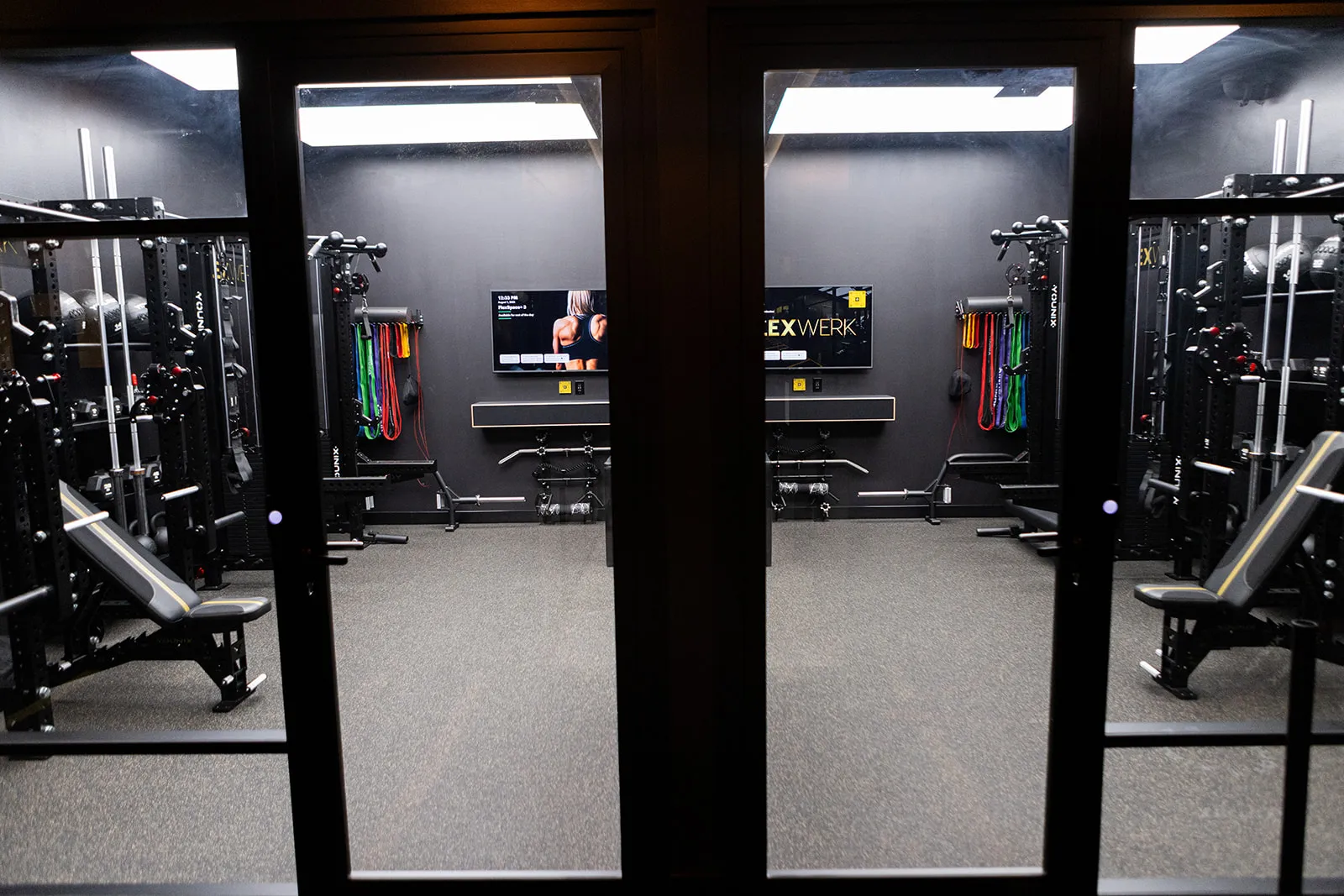
The hourly private-suite model, FlexWerk’s model in Carmel, restructures every one of those trade-offs. Cost becomes variable: you pay per booked hour, so a slow week costs little and a packed one pays for itself. The room is exclusively yours for the hour, rack, cables, dumbbells, lighting, music, the lot, so the client experience is fully yours to design, and it’s a premium one: private, professional, bookable in real time through an app. No host to renegotiate with, no lease to be released from, and every session runs under your brand rather than a building’s.
The honest counterweights: per-session cost at very high volume can exceed a well-priced sublease’s, you book hours rather than wandering in at will, and a 150 to 200 sq ft suite can’t host a twelve-person class or a 40-yard sled track. The pricing model is transparent precisely so you can run your own comparison.
The math, and the deciding question
Put the two structures side by side:
| Sublease | Private hourly suite | |
|---|---|---|
| Cost structure | Fixed monthly | Per booked hour |
| Slow-month risk | Yours | Nobody’s |
| Scheduling priority | Host first | Whoever books first |
| Equipment access | Shared | Exclusive for the hour |
| Environment & brand | The host’s | Yours |
| Exit cost | Notice period, disruption | None |
Then run your actual numbers: take your true weekly session count (the honest average, not the best week), price it under both structures, and factor in the rate difference a private environment supports, around Carmel, private premium-tier training commonly commands $75 to 125+ against $40 to 70 at the shared-floor tier. The big-box rent vs. hourly space math walks through the full calculation with worked examples.
For most independent trainers below very high volume, the variable-cost structure wins on risk alone, and the environment premium widens the gap. But the tiebreaker is the non-financial question: in five years, do you want to have spent that time building your brand or your host’s?
The cheapest way to inform the decision is to feel both rooms. You already know what a shared floor is like; the first hour in a private suite is free, so the comparison costs you sixty minutes.
Related questions
What does subleasing gym space typically involve?
You pay a gym or studio owner a flat monthly fee, or sometimes a per-session cut, to train your clients on their floor, under their rules and schedule priorities. Terms vary widely because every deal is privately negotiated.
When does a sublease beat hourly rental?
Mainly at very high, very consistent session volume in a space whose flat rent works out cheaper per session than hourly booking, and when you can live with shared equipment and second-priority scheduling.
What's the biggest hidden cost of subleasing?
Brand dilution. Your clients experience the host gym's environment, crowds, and rules, so you're building your business inside someone else's, and the flat rent is owed even in your slowest month.