
Stretch Studio Franchise Cost vs Renting Hourly Space
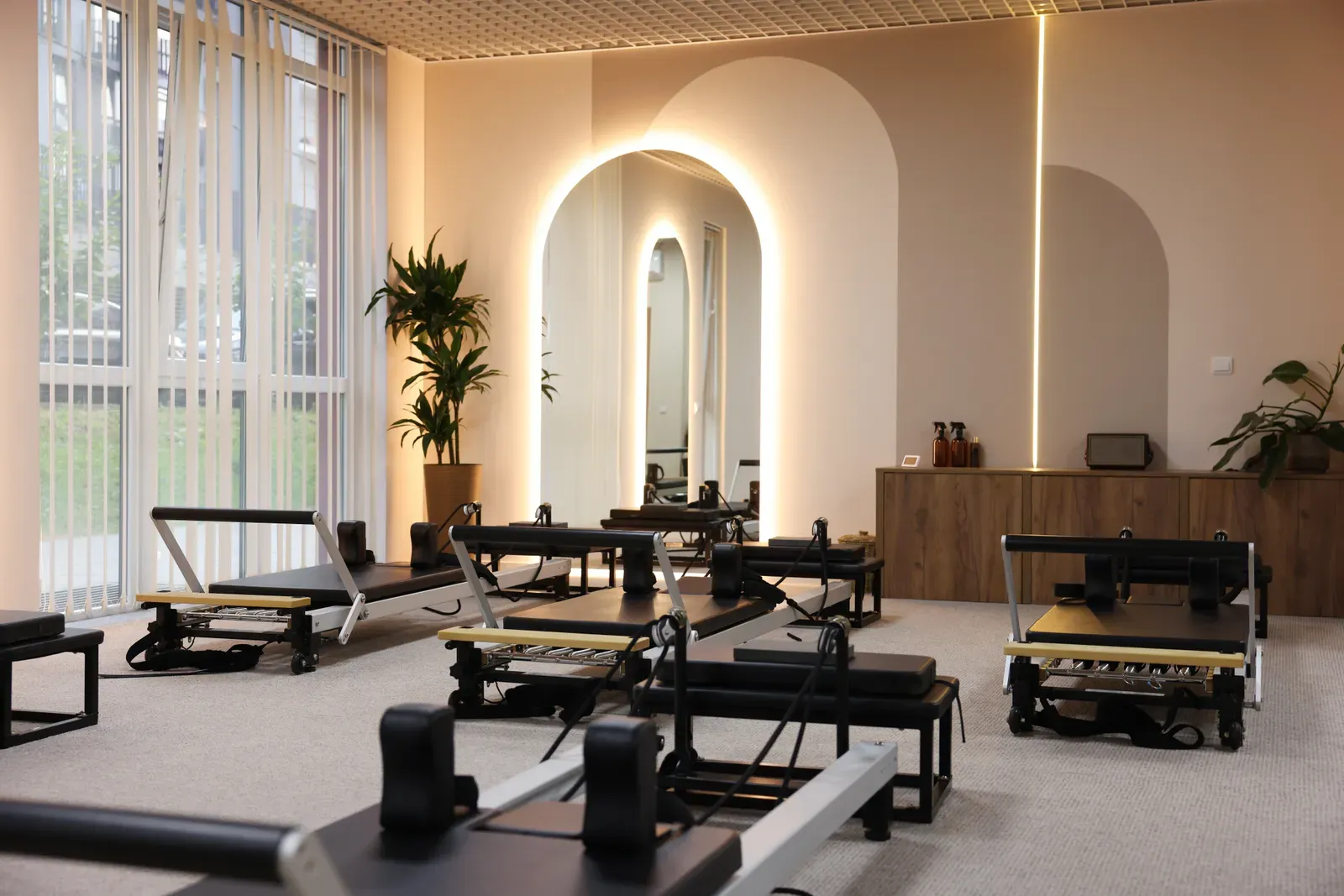
Opening a stretch studio through a franchise system commonly requires a low six figure investment before a single paying client walks in, a franchise fee, an ongoing royalty on revenue, a marketing fund contribution, and a buildout the franchisor specifies down to the flooring, a total worth running through the calculator before signing anything. Building an independent assisted-stretching practice out of private hourly rooms skips every one of those obligations except your own time, at the cost of the brand recognition and the operating playbook a franchise system provides. Here is what each dollar in a franchise agreement buys, and what changes when the room rents by the hour instead of a corporate system.
What a franchise fee actually buys
A franchise agreement bundles several distinct costs into one relationship. The upfront fee buys entry into the system and access to its training materials and brand. The ongoing royalty, commonly a percentage of gross revenue, funds the franchisor for as long as the agreement runs, whether a given month is strong or weak. A separate marketing fund fee is common on top of the royalty. Territory rights limit how close another location of the same brand can open, and the agreement itself typically runs for a multi-year term with renewal conditions written by the franchisor, not the franchisee.
The buildout a franchisor requires
Franchise systems commonly dictate the buildout to a specific standard: flooring, wall treatments, signage, reception design, and the equipment brand and layout. That consistency is part of the product a franchise sells, and it also removes the franchisee’s ability to shop for a cheaper buildout. The result lands in the same territory as the cost to open a pilates studio, a low six figure commitment once lease deposits, buildout, and equipment are counted, before the franchise fee and royalty are added on top.
A licensing wrinkle worth checking before you build the pitch deck
Indiana’s massage therapy definition is broader than most fitness professionals expect: it specifically includes nonspecific stretching and stretching performed within a normal anatomical range of motion. That means a stand-alone assisted-stretching service, sold as its own offering rather than as part of a broader training session, may fall inside licensed massage scope depending on how the service is structured and marketed. This is worth a direct call to the state licensing agency before a business plan gets built around the service, franchise or independent, because the answer shapes whether the offering needs a licensed provider delivering it.
What the exit clause of a franchise agreement usually says
The part of a franchise agreement that gets the least attention before signing is the one that matters most if the business does not work out: the exit terms. Multi-year agreements commonly carry a non-compete clause that restricts operating a similar business in the territory for a period after leaving the system, along with de-identification requirements, stripping branded signage and materials, and sometimes a final settlement of outstanding royalty obligations. None of that is unusual for a franchise relationship, but it does mean the commitment does not end cleanly the day a franchisee decides the model is not working, which is worth weighing against the low six figure entry cost before signing.
Running assisted stretching independently in rented space
Skip the franchise agreement and the same service can run out of a private room booked by the hour. There is no franchise fee, no ongoing royalty on every dollar billed, and no territory restriction dictating where clients come from. Rooms at FlexWerk in Carmel City Center rent from $18 to $22 an hour with no lease behind them, and a fitness professional’s first hour is free, so testing demand for a stretch-focused offering costs one session, not a signed agreement.
Building a client base without a franchise brand behind you
The trade a franchise makes explicit is worth naming plainly: brand recognition brings in some walk-in demand that an unknown independent name will not get automatically. An independent stretch practice earns that demand instead through referrals from existing training clients, a focused local search presence, and word of mouth once the first cohort of clients feels the difference a genuinely private, unhurried session makes. That path takes longer to build than opening under a recognized name, and it keeps every dollar of what gets built rather than sharing it with a franchisor for the length of the agreement.
| Franchise stretch studio | Independent, hourly room | |
|---|---|---|
| Upfront investment | Commonly low six figures | None beyond your own tools |
| Ongoing royalty | A percentage of revenue, for the term | None |
| Brand and territory rules | Set by the franchisor | Yours to build |
| Space cost | A fixed multi-year lease | $18 to $22 per booked hour |
Which model fits which business
A franchise earns its cost when a founder wants a proven system, training materials, and brand recognition, and can raise the capital the agreement requires. An independent, hourly model fits a coach who already has a client base or referral relationships and wants to keep the full price of every session rather than sending a percentage to a franchisor for the life of the agreement, a structural gap covered more broadly in how FlexWerk pricing compares to a studio lease. Compare the real numbers on your own plan with the calculator before signing either kind of contract.
Related questions
Is assisted stretching regulated in Indiana?
It may be. Indiana's massage therapy definition includes nonspecific stretching and stretching within a normal anatomical range, so a stand-alone assisted-stretching service can fall inside licensed massage scope depending on how it is delivered. Confirm with the state licensing agency before building a business around it.
What does a franchise territory fee actually protect?
It commonly protects the franchisee from a second location of the same brand opening nearby, in exchange for an ongoing royalty and adherence to the franchisor's system. Outside that protected radius, the territory fee buys nothing.
Can assisted stretching sessions run in the same room as strength training?
Yes. A private strength room with open floor space works for stretching and mobility work as easily as for lifting, so a trainer offering both services does not need a separate room booked for each.