
The Cost to Open a Pilates Studio (and the Hourly Alternative)
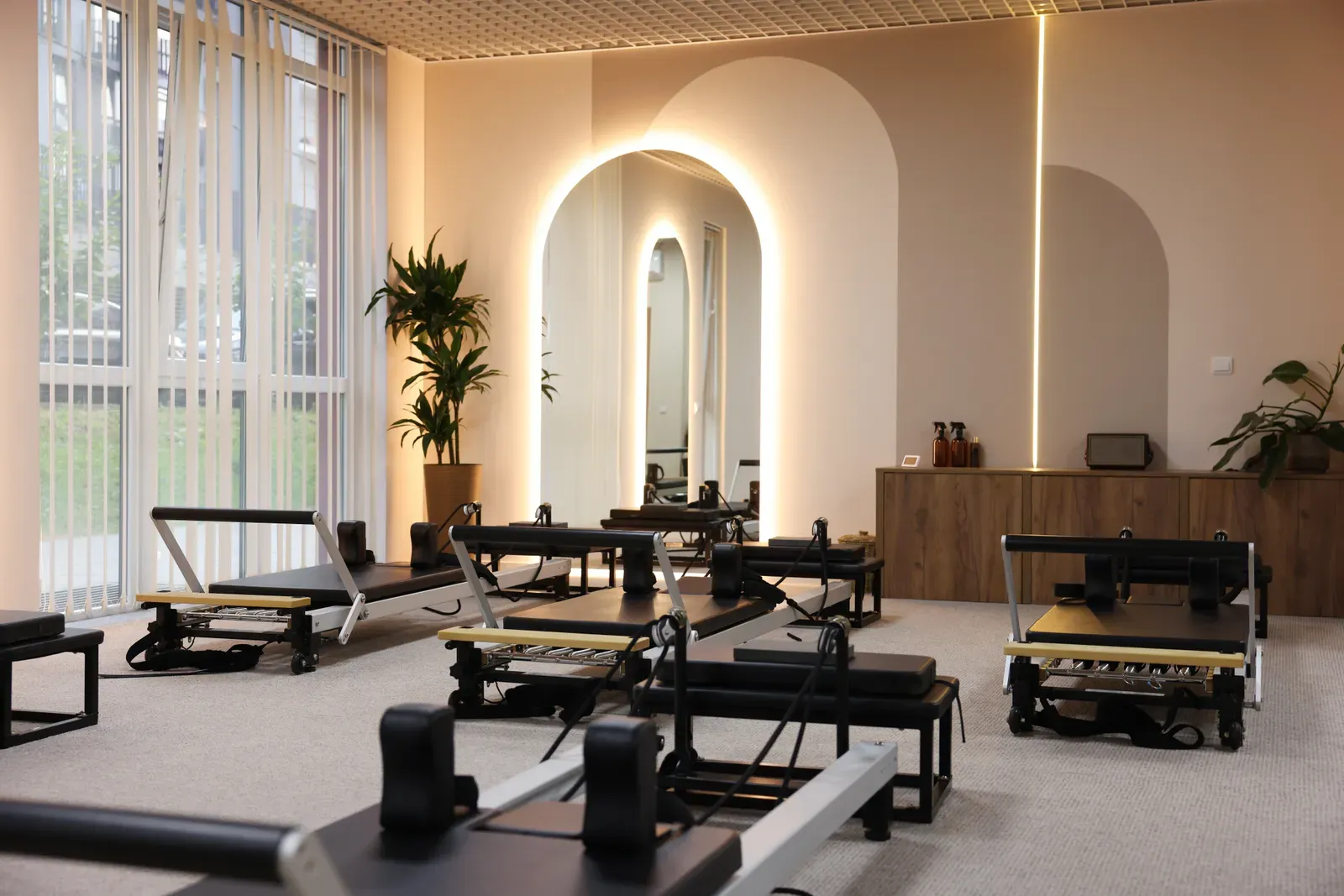
Opening a pilates studio is commonly a low six figure commitment before the first client ever books, which is why many instructors are choosing a different starting line. The honest comparison is not studio versus no studio; it is a lease you fund up front versus private hourly space you pay for one booked session at a time. Here is the math instructors actually face, and where each path wins.
The buildout numbers a studio lease demands
The startup bill arrives in four stacks, and each is bigger than the brochure version suggests. Commercial rent in an affluent market like Carmel comes with deposits, personal liability on the lease, and commonly a 3 to 5 year term, so the lease alone is a six figure promise even when the monthly number looks manageable. Buildout follows: flooring, paint, sound, storage, a reception corner, and the permitting that goes with construction, commonly tens of thousands even for a modest space. Then the apparatus: quality reformers commonly run several thousand dollars each, and a class model needs a row of them plus the towers, chairs, and small equipment around them. Finally the quiet costs: insurance, signage, booking software, marketing, and the operating reserve every new studio needs because month one revenue never covers month one rent.
None of these numbers are exotic; they are simply all due before your schedule is full. And the calendar compounds them: between signing and opening sit weeks or months of buildout, permitting, and inspections, during which rent is owed on a studio that cannot yet earn a dollar. Most new owners underestimate that dead zone more than any line item. The broader version of this math, applied to gyms of every kind, is in the cost of opening a gym.
The monthly nut, and why it decides everything
Fixed overhead is the real risk, because it does not care how your month went. A leased studio owes rent, utilities, insurance, and software every month, and that nut determines how many sessions you must sell before earning anything, often several dozen just to reach zero. Boutique studios that fail rarely fail on quality; they fail on the gap between a fixed cost base and a variable client base, a pattern unpacked honestly in what boutique studio margins teach.
Now run the same month in hourly space. A private room at FlexWerk costs $18 to $22 per hour, booked through an app only when a client is scheduled. Ten sessions cost you ten hours of rent; zero sessions cost zero. Your break-even is one client, your first hour as a fitness professional is free, and you keep 100 percent of what you charge.
| Studio lease | Hourly private room | |
|---|---|---|
| Up front commitment | Commonly six figures | None |
| Monthly fixed cost | Rent plus overhead, always due | Zero |
| Cost per session | Falls only at high volume | $18 to $22, flat |
| Apparatus | Yours to buy and maintain | Bring your own small apparatus |
| Group classes | Yes, the lease’s best argument | No, capacity is 4 |
What the hourly room does and does not offer an instructor
Be clear-eyed about the fit, because this path serves a specific pilates business. A FlexSpace holds strength equipment, a custom lifting rack, cable system, and dumbbells, plus WiFi, music streaming, a TV, and controllable lighting in a genuinely private room. What it does not hold is pilates apparatus: no reformers, no towers. Instructors here run floor based private sessions and bring their own small apparatus in a carry bag, and many blend classical work with the strength equipment their clients increasingly ask for.
That makes the hourly route strongest for the instructor whose revenue is private and semi-private clients rather than group classes. A FlexSpace Standard suits 1 on 1 work; a Plus takes up to 4 for small group sessions. If your method and your income are reformer centric, a lease, a sublease inside an existing studio, or equipment financing remains the honest answer, and no hourly room changes that.
When the lease still wins, and how to know you are ready
A studio lease earns its risk under specific conditions: a proven local following that fills a class schedule, a reformer based offer clients cannot get elsewhere, and enough cash reserve to survive the ramp. The instructors who thrive in leases usually arrive with a full book, not hopes of one. The smart sequence, and the one hourly space makes possible, is to build the full book first: run private clients in rented rooms at premium rates, bank the difference between your session fee and $22, and sign a lease later from a position of proof, if you still want one.
Carmel supports the premium version of this plan. Median household income here is $141,505, the group fitness tier is crowded while private 1 on 1 work remains the gap, and FlexWerk’s building at 885 Monon Green Blvd in Carmel City Center, steps from the Monon Trail with garage parking a short walk away, already hosts more than 40 fitness professionals running exactly this model. Hours run Monday to Friday 5 AM to 9 PM and weekends 7 AM to 4 PM, wide enough for the early and evening slots private clients favor.
Before you sign anything with a five year term, spend one free hour standing in a private room with your client list in mind, and let the two sets of numbers argue it out.
Related questions
What does it typically cost to open a pilates studio?
Commonly a low six figure project once lease deposits, buildout, apparatus, and operating reserve are counted. Reformer equipped studios sit at the high end because each apparatus commonly runs several thousand dollars.
Is there pilates equipment in a FlexWerk room?
No. The rooms hold strength equipment: a lifting rack, cable system, and dumbbells. Pilates instructors bring their own small apparatus, which suits floor based private work rather than reformer classes.
When does a studio lease genuinely make sense?
When your business is reformer centric or class based, since group revenue needs dedicated apparatus and room for a schedule of classes. For private floor based clients, hourly space usually wins first.