
Can I Store My Equipment at a Rented Gym Space?
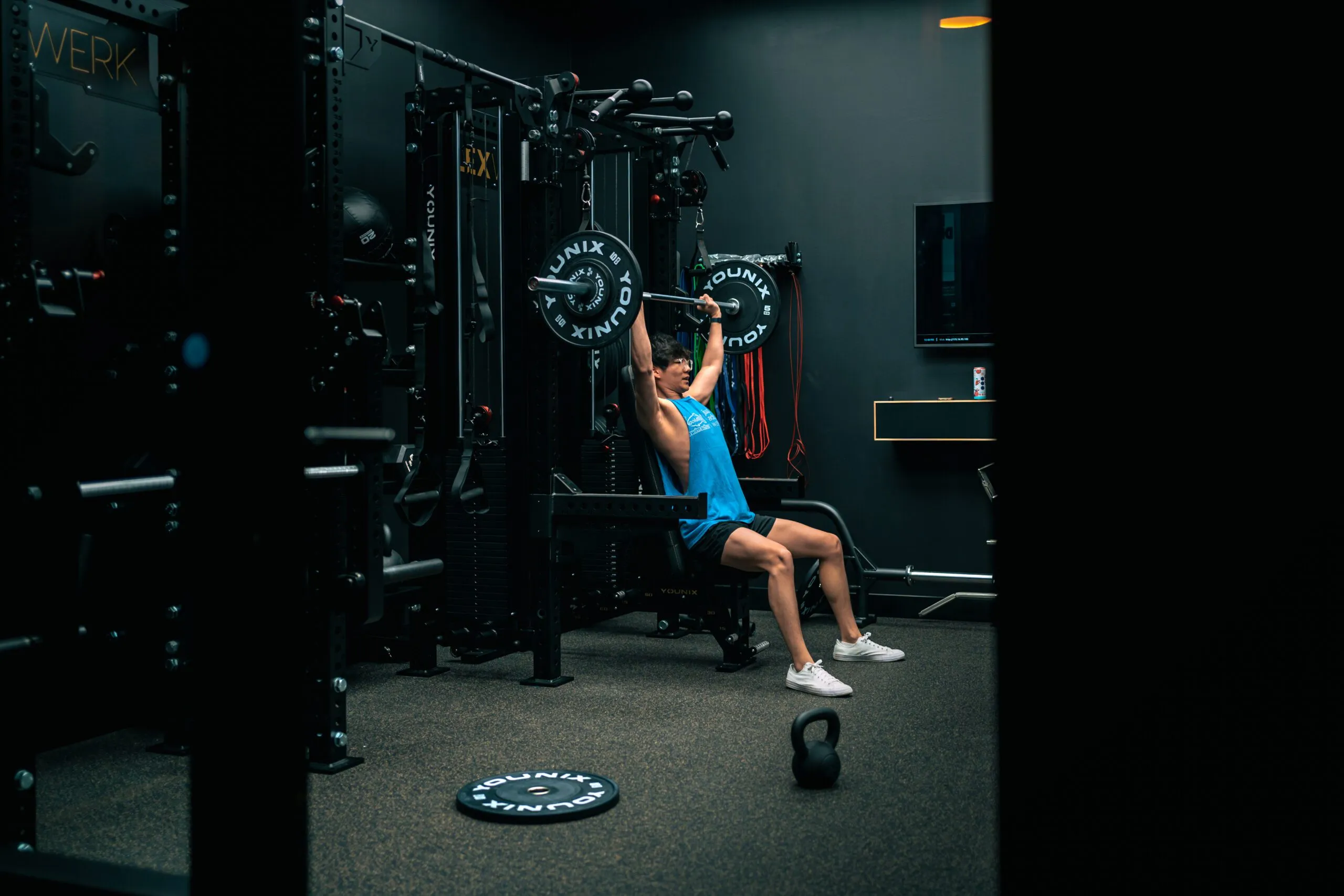
At most hourly training facilities, dedicated equipment storage isn’t part of the deal, rooms turn over between professionals all day, but at a fully equipped facility like FlexWerk, the honest answer is that most trainers never need it. When the rack, cable system, dumbbells, and cardio machines are already in the suite, “storage” shrinks to a gym bag you carry anyway. For anything beyond that, ask the host before you book.
Here’s how to think the question through properly, because it hides a bigger decision about which rental model fits your business.
Why hourly spaces rarely include storage
The economics of hourly rental depend on every room serving many professionals. A suite that holds your personal equipment overnight is effectively half-leased to you, which defeats the model that keeps hourly rates low and commitment at zero. There are also practical reasons facilities are cautious: liability for stored property, cleanliness standards, and the simple physics of a room that has to look brand-new for the next coach at the top of the hour.
There’s a liability layer too. Facilities that hold professionals’ property take on questions nobody enjoys answering: who’s responsible if stored gear goes missing, gets damaged, or gets used by someone else? Most hourly operators simply decline to be in the storage business, the same way most trainers’ insurance policies are written around gear the trainer controls rather than gear left in someone else’s building.
Monthly subleases sit at the other end of the spectrum. When you rent a studio’s back room by the month, storage is commonly part of the appeal, your kettlebells live there. But you pay for that privilege every day of the month whether you train five hours or fifty, and storage is often the least valuable thing you’re buying.
So the real question isn’t “can I store equipment?” It’s “how much equipment do I actually need to own?”
How a fully equipped suite changes the question
Trainers accumulate equipment because most rented rooms come empty. Flip that assumption and the storage problem largely dissolves. Inside every FlexSpace:
- Strength: a custom lifting rack, cable system, and dumbbells, 850+ exercises in a Standard suite, 1,100+ in a Plus.
- Cardio: dedicated suites with HYDROW rowers, CLMBR climbers, and curved treadmills.
- Session tech: WiFi, music streaming, a TV/monitor, and controllable lighting.
That inventory covers the heavy, bulky, expensive categories, the exact things you’d otherwise be hauling or storing. What’s left is the light stuff: bands, straps, mitts, an assessment kit, the small tools a given certification builds around. All of it fits in one bag, and the full equipment rundown shows why most programs transfer in without substitutions.
The kit trainers actually carry
Watch independent trainers who work out of hourly suites and a pattern emerges. The typical carry is:
- Resistance bands and mini-bands, light, personal, and preference-driven.
- Lifting straps, wrist wraps, and a belt, for clients who use them.
- Assessment tools, measuring tape, timing gear, whatever your intake process uses.
- Modality-specific items, boxing mitts, pregnancy-support props, sport-specific tools.
- A laptop or tablet, programming and notes, which the suite’s WiFi and monitor turn into a coaching asset.
If your whole professional toolkit fits in a backpack, storage stops being a criterion for choosing a facility, and you regain the freedom to pay only for hours you book.
A worthwhile exercise before you evaluate any space: audit your trunk. Most trainers who’ve worked mobile or floated between facilities are hauling gear that a fully equipped suite makes redundant, the adjustable dumbbells, the folding bench, the bag of plates. List what you actually deploy in a normal week, subtract what the facility stocks, and what’s left is your real carry. For most coaches it’s startlingly small, and the audit doubles as a reminder of how much capital is currently sitting in a car doing nothing.
When storage genuinely matters, and a lease wins
Honesty requires the other side. Some businesses really do run on owned equipment: a sled-heavy sports-performance program, a coach with a trailer of specialty implements, a practitioner whose treatment table is non-negotiable and awkward to transport daily. If hauling your core tools to every session would burn time and goodwill, a monthly sublease or your own studio, storage included, can be the better structure, and no hourly facility should pretend otherwise.
The break-even logic is the same as the broader is-it-worth-it math: fixed monthly space (with storage) versus variable hourly space (without). The more your method depends on gear the facility doesn’t stock, the more the fixed model earns its rent.
Ask before you assume, either direction
Storage policies are facility-specific everywhere, and the fastest route to a real answer is a direct question. At FlexWerk, that’s prosupport@flexwerkfitness.com, or simply raise it with the host while you’re in the building, the free first hour for fitness professionals is a natural moment to look at your actual kit, stand in an actual suite, and settle the question against reality instead of assumption.
If your equipment fits in a bag, and after standing in a suite, for most trainers it does, the storage question quietly answers itself. Book the free hour, bring your current kit, and see how much of it the room makes unnecessary; whatever’s left is the honest size of your storage problem.
Related questions
Can I leave my gear at FlexWerk between sessions?
The suites come fully equipped, rack, cables, dumbbells, cardio, so most professionals carry only a small bag. If you have a specific storage need, ask the host directly at prosupport@flexwerkfitness.com before you book.
What do trainers typically carry to an hourly space?
Commonly one small kit: bands, straps, a timer, assessment tools, and any specialty items their method uses. Everything heavy stays in the suite because it's already there.
Do any rented gym spaces include storage?
Some monthly subleases and dedicated studios offer storage as part of the arrangement, sometimes for an added fee. Hourly facilities typically don't, because rooms turn over between professionals, always confirm the specific policy before booking.