
Can I Run Back-to-Back Client Sessions in a Rented Suite?
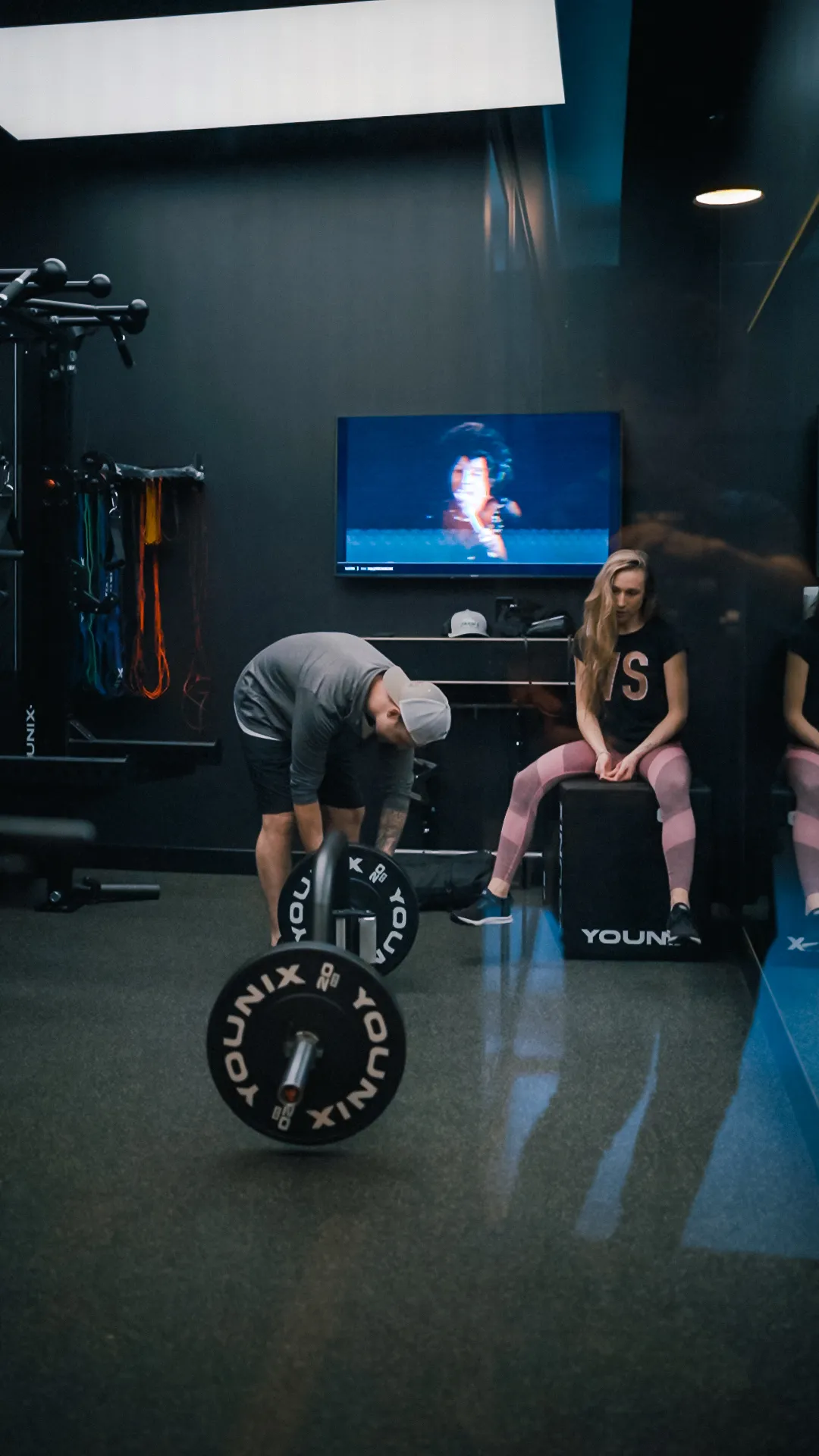
Yes, running back-to-back client sessions in a rented suite is as simple as booking consecutive hours, and dense scheduling is exactly what the hourly model rewards: every booked hour is a revenue hour, with no drive time, no equipment roulette, and no dead gaps between clients. Stacked blocks are how full-time independents turn hourly space into a full-time income. Here’s how the mechanics work and how to run dense days well.
How stacking works in practice
In the FlexWerk app, consecutive hours book the same way single hours do, reserve 6 AM, 7 AM, and 8 AM and you’ve built a three-session morning block in one suite, in about the time it takes to confirm the clients. Client One trains, Client Two arrives as they finish, and your equipment, playlist, and setup carry straight through. Nothing about the model meters you to one session at a time; the hour is the unit, and blocks are just hours in a row.
Compare that with the alternatives trainers stack sessions around today. On a commercial floor, back-to-back clients mean re-fighting for a rack every hour on the hour. For mobile trainers, “back-to-back” is a fiction, every transition is a drive. A private suite removes both failure modes: the room is yours for the entire block, continuously.
The facility’s hours make serious runs possible, 5 AM-9 PM weekdays and 7 AM-4 PM weekends, which is a longer working canvas than most trainers will ever fill.
Designing the transition minutes
The craft of back-to-back training lives in the last five minutes of each hour. Trainers who run smooth blocks converge on the same habits:
- Program 50 to 55 minute sessions. The final minutes absorb cooldown, scheduling talk, and the handoff, inside the hour you’ve booked, so transitions cost nothing extra.
- Pre-write every session in the block. Dense days have no gaps for on-the-spot programming; the block runs on preparation.
- Reset as you coach. Re-rack between exercises during the session and the room is ready for the next client automatically.
- Stagger intensity across the block. Putting your most demanding coaching client at the end of a five-session run serves nobody; sequence for your attention curve, not just their preference.
- Build one real break into long days. Coaching quality decays quietly; most veterans cap continuous runs at three to five sessions before a deliberate pause.
None of this is facility-specific, it’s the standard operating skill of high-volume coaching, and a private room simply makes it executable. The difference the room makes is reliability: on a shared floor, even a perfectly planned transition dies when someone claims your rack during the handoff. In a suite, the plan you wrote is the session you run.
The economics of a dense day
Stacking is where the hourly model’s math gets attractive. A scattered day, 6 AM here, 11 AM there, 6 PM across town, bleeds unpaid hours between paid ones. A stacked day converts that scatter into blocks: sessions clustered morning and evening, the midday left genuinely free for programming, content, or life.
Concretely: at premium-tier Carmel rates, commonly $75 to 125+ per private session, a three-session morning block grosses more before 9 AM than many scattered schedules gross all day, and the space cost underneath it is exactly three booked hours. It’s the working pattern behind real full-time practices here: the professionals at FlexWerk average around 24 sessions a week, a volume that only fits comfortably into a week when sessions stack. The pricing structure is straightforward enough to run your own block math in minutes.
Semi-private trainers stack a second dimension entirely, multiple clients within each hour of the block, which a Plus suite (up to 4 guests) is sized for. And blocks don’t have to be homogeneous: a trainer whose programming alternates strength and conditioning days can book a strength suite for one block and a cardio suite, HYDROW, CLMBR, curved treadmill, for another, matching the room to the training phase instead of compromising the phase to fit one room.
The other quiet win of stacking is what it does to the rest of your life. Trainers who compress client hours into two daily blocks consistently describe the same shift: the midday stops being a graveyard of one-hour gaps too short to use, and becomes actual working time, programming, check-ins, content, business admin, or actual rest. Scattered schedules don’t just cost money; they shred the day into confetti.
Protecting your blocks
One operational note: dense blocks are premium inventory, and the peak windows they occupy, early morning, after work, are the first hours to fill at any training facility. The professional habit is booking your standing blocks ahead rather than assembling them week to week; the practical rhythm for that is covered in how far in advance to book training space. Because there’s no lease or membership in the model, booking a recurring block far ahead adds commitment to your calendar, not to a contract.
Test the block, not just the room
A single trial hour tells you about the space; a trial block tells you about the business. If you’re evaluating the model, consider booking two consecutive hours with two real clients and feeling the handoff yourself, the first of those hours is free for fitness professionals, which makes the experiment about as cheap as market research gets.
Related questions
How many back-to-back sessions can I realistically run in a day?
The facility window is generous, FlexWerk runs 5 AM to 9 PM on weekdays, so the real limit is coaching quality. Most experienced trainers cap continuous runs at three to five sessions before a deliberate break.
Do my clients overlap between sessions?
Briefly and gracefully, one client finishing as the next arrives is normal practice, and in a private suite the handoff happens in your room on your terms rather than in a crowded lobby.
Is stacking sessions cheaper than spreading them out?
Per hour the price is the same, but dense blocks make every booked hour a revenue hour and eliminate dead gaps, which is why full-time pros gravitate to morning and evening blocks.