
Where Do Clients Wait Between Training Sessions?
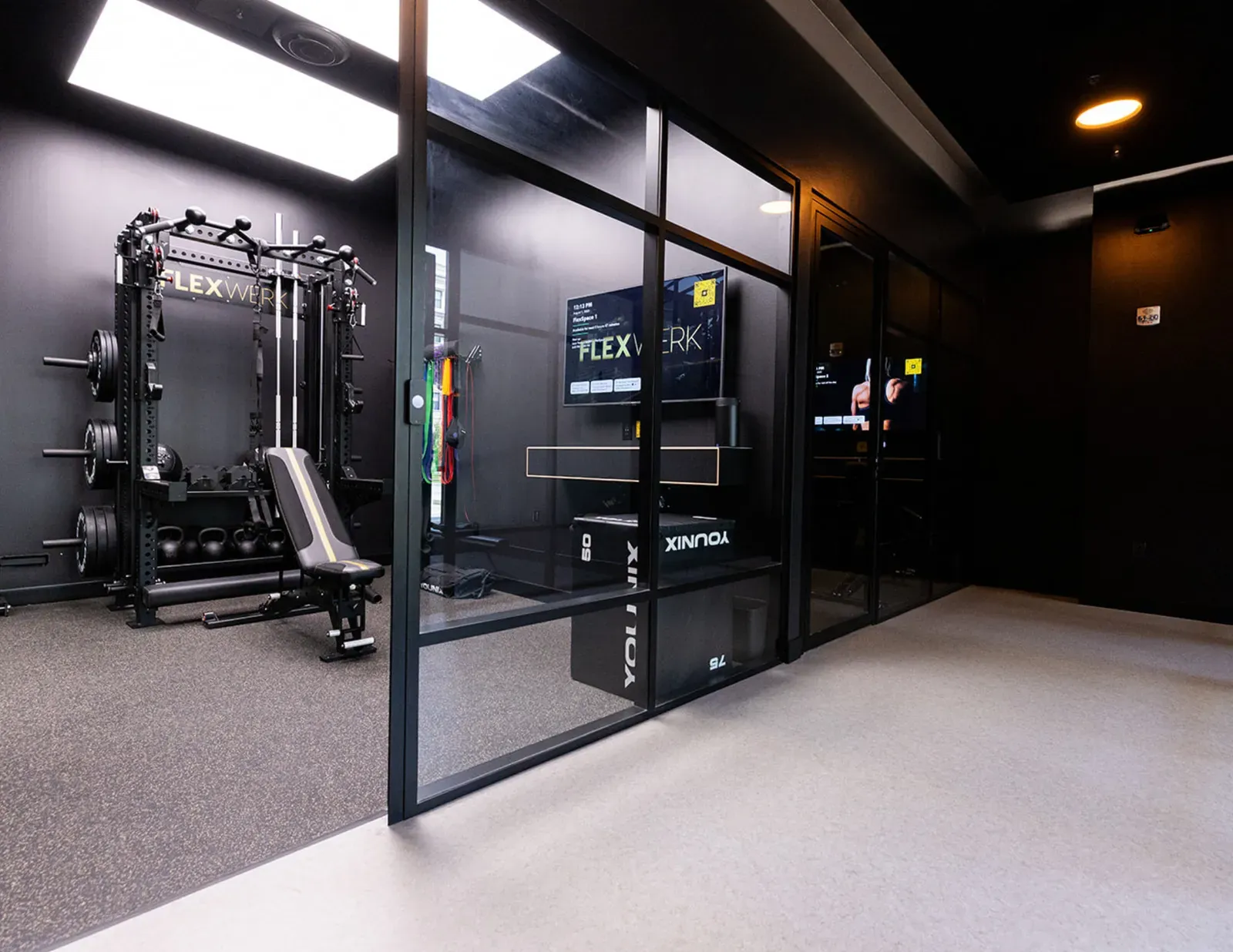
At a private hourly facility, clients do not wait in a shared lounge, because the model is built on reserved rooms rather than a lobby: your booking confirmation carries the arrival instructions, and one client hands off to the next at the door of your space. It is a timing system, not a waiting room, and once you run it deliberately it feels more professional than any couch. The free first hour at FlexWerk is the right moment to walk the arrival path yourself before a client ever does.
How arrivals work at a private facility
The honest answer to “where is the waiting area” is that a well-run private facility makes waiting unnecessary. When you book a space at FlexWerk, at 885 Monon Green Blvd in Carmel City Center, your booking carries the practical details, and you translate them into a short arrival note for the client: where to park, which entrance, when to show up. Garage parking sits a short walk away, and the parking specifics are worth sending to every first-timer.
The instruction that does the most work is the arrival time itself. Tell clients to arrive five minutes before their session, not fifteen, and the waiting problem mostly stops existing before it starts.
Handling the client who shows up early
Early arrivals need a plan, not a lobby. Three habits cover it:
- Set the expectation once. “Arrive five minutes early; I will be finishing with another client until the top of the hour” tells the client exactly what the handoff looks like.
- Give early birds a destination. The facility sits inside Carmel City Center with the Monon Trail steps away, so “grab a coffee or take a lap on the trail, I will text when the room is ready” is a genuinely pleasant answer.
- Use a text-on-arrival habit. A client who texts “here” gets a reply the moment your room turns over, which converts vague hovering into a clean two-minute buffer.
The back-to-back handoff
When you stack sessions, one client finishes as the next arrives, and in a private room that handoff happens at your door on your terms rather than in a crowd. Program 50 to 55 minute sessions and the final minutes absorb cooldown, scheduling talk, and the swap, all inside the hour you booked. The full craft of dense scheduling, from block booking to sequencing your coaching energy, is covered in running back-to-back client sessions.
Why no lobby is a feature, not a gap
The absence of a waiting room is the same fact as the presence of privacy. Your client never sits in a row of strangers, never gets sized up on the way in, and never watches another trainer’s session while waiting for yours. For the beginners, executives, and privacy-minded clients who choose private training in the first place, walking straight from the car to a reserved room is a large part of what they are paying for. More than 40 fitness professionals run their sessions here on exactly this rhythm.
Before your first client visit, book the free hour, park where they will park, walk in the way they will walk in, and write the three-line arrival message. That one rehearsal makes every arrival after it boring, which is the goal.
Related questions
What if my client arrives twenty minutes early?
Give them somewhere specific to be. Carmel City Center surrounds the facility with places to sit and walk, and the Monon Trail is steps from the door, so an early client waits comfortably rather than hovering.
Where do clients park?
Garage parking is a short walk from the facility at 885 Monon Green Blvd. Put the parking note in your confirmation message and first-time arrivals stop being a source of texts.
Is there a front desk my clients check in with?
The model is built around reserved private rooms rather than a staffed lobby flow, so your arrival instructions do the guiding. Walk the entrance yourself on your first visit and write down exactly what a client should do.