
Is Renting Gym Space Worth It for Personal Trainers?
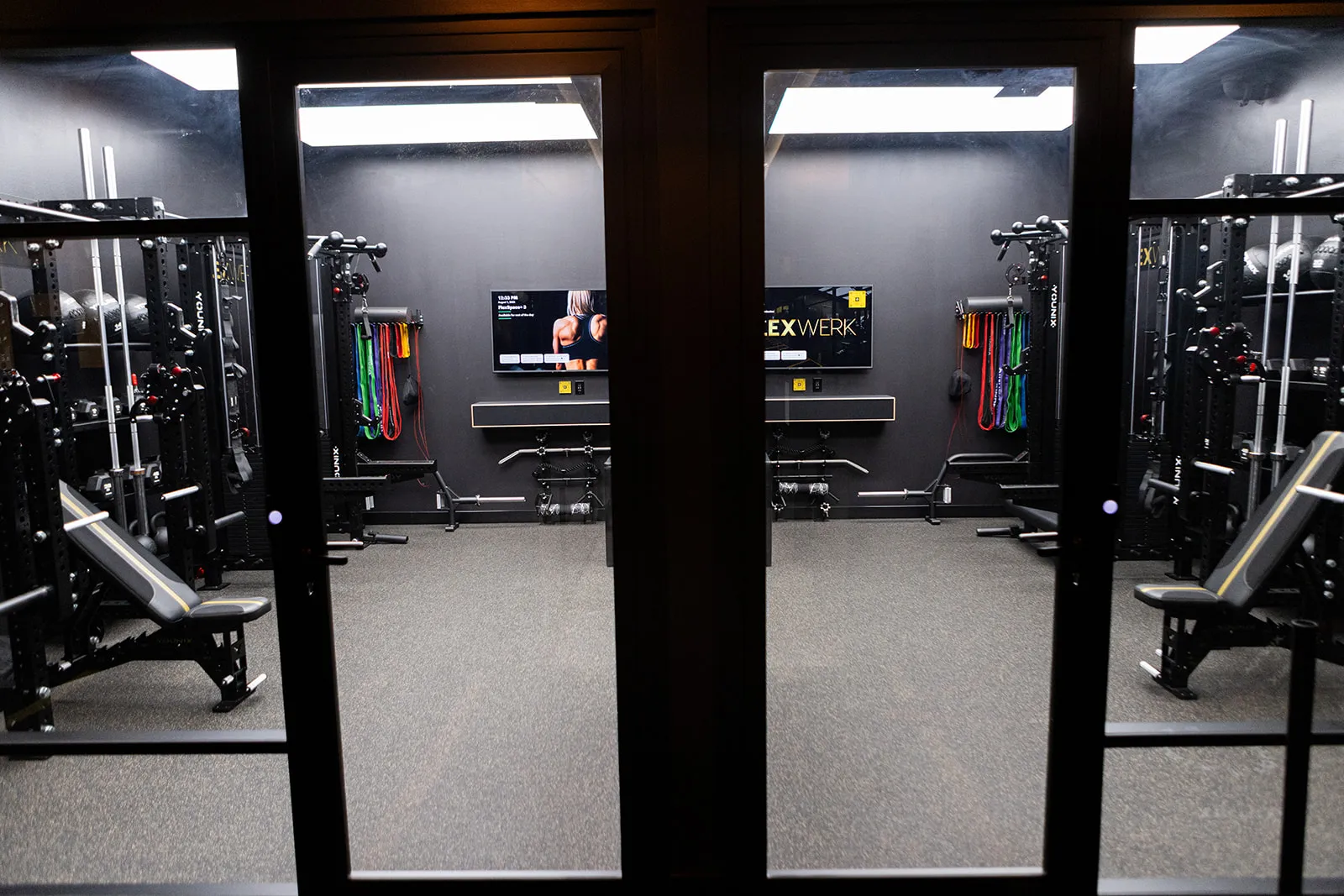
For most trainers who already have clients, renting gym space is worth it: keeping 100% of a premium-tier rate while paying only for the hours you book beats surrendering the 40 to 60% commission big-box gyms commonly take. The exceptions are real, though, and they’re mostly about lead flow and format, not money. Here’s the decision, laid out honestly.
The math that decides it
Strip away the emotion of “going independent” and this is an arithmetic problem with three inputs: your rate, your volume, and your space cost.
On a commission floor, the house’s cut is the dominant cost. At a 50% split, the middle of the commonly cited 40 to 60% range, a trainer running twenty $80 sessions a week hands over $800 of $1,600, every week, forever. That cost scales up with success: the better your book, the more you pay.
Renting hourly inverts the structure. Your space cost per session is one booked hour, a fixed, knowable number, so the house’s share of your revenue falls as your rate rises. And because private-space trainers commonly command premium rates ($75 to 125+ in the Carmel market, versus $40 to 70 at the big-box tier), the same client hour typically produces more gross revenue and keeps a far larger share of it. Work through what to charge in an hourly model and the per-session comparison usually stops being close, or enter your current sessions, rate, and split into the Fit Pro calculator and let it settle the question with your own figures.
Volume seals it. At FlexWerk Carmel, more than 40 fitness professionals run their businesses on the hourly model, averaging around 24 sessions a week, full-time books, not side hustles, which is decent evidence the economics hold up under real workloads.
There’s a time dimension the arithmetic misses, too. Mobile and in-home trainers pay their space cost in windshield hours, driving between clients is unbilled work that caps how many sessions a day can hold. Consolidating a scattered book into one facility converts drive time back into billable time, which for some trainers is worth more than the rate uplift itself.
What you give up, the part sales pages skip
Worth it doesn’t mean free. Leaving a commercial floor costs you three real things:
- Lead flow. This is the big one. A big-box floor delivers a daily stream of members who can become clients. Independent, you replace that with referrals, local reputation, and deliberate marketing. Trainers with full books barely feel this; trainers who relied on floor pickups feel it immediately.
- Administrative cover. Employers handle payment processing, scheduling infrastructure, and tax withholding. Independents build their own light stack and set aside their own taxes, manageable, but real work.
- A place to simply be. Floor trainers linger, chat, stay visible for hours. Hourly renters show up for booked sessions. Some trainers love the efficiency; others miss the clubhouse.
None of these reverse the math for an established trainer, but pretending they don’t exist is how bad transitions happen. The trainers who switch well line up their client commitments first and treat marketing as a weekly discipline from day one.
The upside most switchers underestimate runs the other way: a private suite opens revenue formats a shared floor makes awkward. Semi-private pairs and small groups, several participants sharing an hour at per-person rates, are logistically miserable on a crowded floor and natural in a room built for up to four guests. For many independents, one or two semi-private hours a week quietly out-earn the lead flow they left behind.
When renting is genuinely not worth it
An honest list, because it exists:
- You have no clients and no lead plan. If the floor is your only client source, the split you’re paying is functionally a marketing expense, and it may be worth paying a while longer while you build referral muscle.
- Your format needs open floor. Large group bootcamps, team training, turf-and-sled programs, a private suite isn’t the right container, and a lease on a bigger box might be.
- You need all-day exclusive occupancy. If your business model requires owning a room from open to close, you’re describing a lease, and the lease-versus-hourly comparison is the analysis to run instead.
Note what’s not on the list: low volume. Fixed-rent arrangements punish small books brutally; hourly rental doesn’t care. A trainer with six weekly sessions pays for six hours, which is exactly why hourly space is often the first step out of employment rather than the reward for scale.
How to answer the question for your own numbers
Skip the spreadsheet-only version; it misses the product. The better test costs an hour:
- Book a session in an actual private suite, at FlexWerk, the first hour is free for fitness professionals.
- Bring a current client and run your normal programming.
- Get the real hourly space number from the host, put your real rate and weekly volume beside it, and compare the take-home against your current split.
- Watch the client. The private-suite experience, their music, their room, zero audience, is the part of the value the math can’t show, and it’s the part that supports premium pricing for years.
If the numbers and the session both land, you have your answer; if either doesn’t, you’ve spent one free hour finding out and can stay exactly where you are. Either outcome beats another year of wondering while a commission quietly compounds against you. That’s the cheapest due diligence in the industry, take it.
Related questions
Is renting space worth it if I only have a handful of clients?
With hourly rental, often yes, you pay only for booked hours, so five sessions a week cost five hours of space, not a month's rent. The model scales down as gracefully as it scales up.
What's the biggest thing trainers lose when they leave a gym floor?
Lead flow. Big-box floors hand trainers a stream of members to convert. Independents must replace that with referrals, local presence, and marketing, the trade is usually worth it, but only if you plan for it.
How can I test whether it's worth it without committing?
Run one real session in a rented space and compare the numbers against your current split. At FlexWerk, fitness professionals get the first hour free, which makes the test essentially cost-free.