
Bring a Reformer to a Rented Studio: What to Check
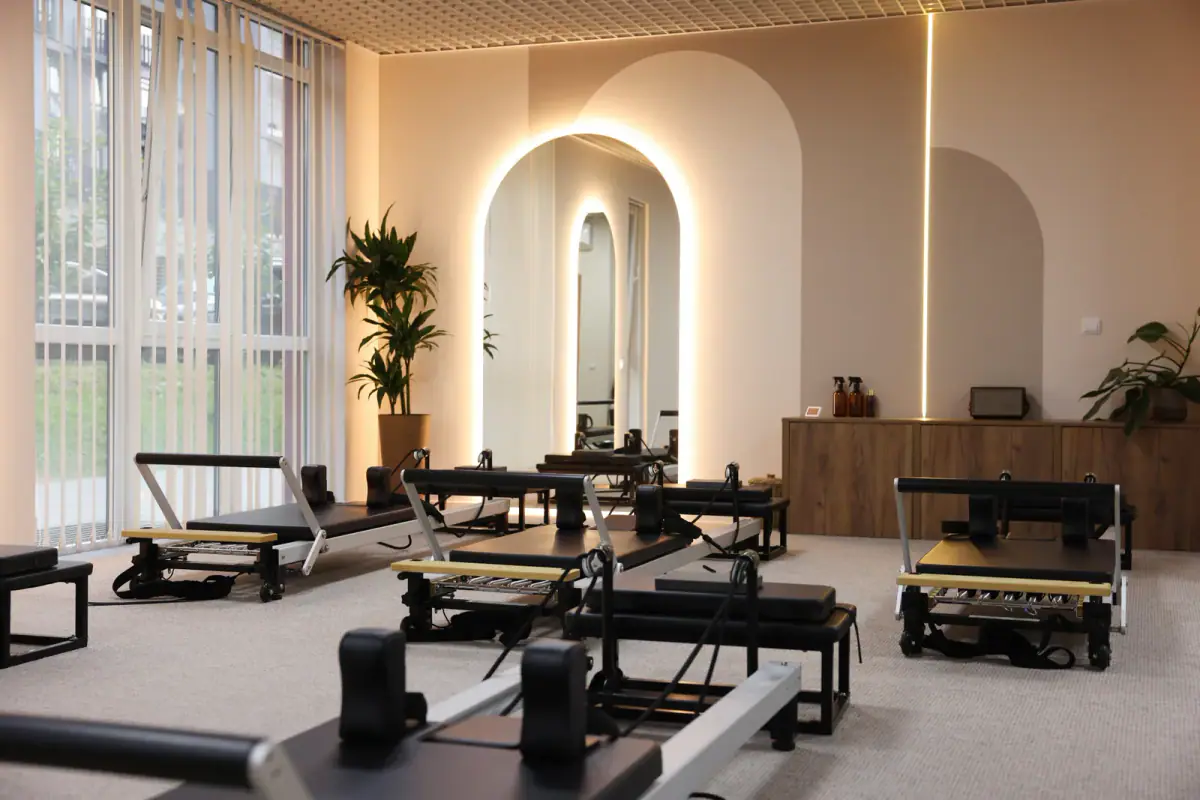
Bringing a reformer to a rented studio is possible only if the facility agrees, the room has the footprint and the floor can take it, so confirm policy first, then measure the room, the doorway and your own transport plan. The FlexWerk rooms at Carmel City Center are set up around strength equipment with no reformer on site, and whether an instructor may bring apparatus in is a policy question to put to the pro support team before you buy a hand truck. Everything below describes how these things typically work at hourly facilities, so you can ask the team the right questions.
Start with the policy, not the tape measure
Ask three questions before anything else, in writing:
- Is instructor-owned apparatus allowed in the rooms?
- If yes, may it stay between sessions, or must it leave after each booking?
- Are there conditions, such as size limits, floor protection, insurance or move-in times?
Send them to prosupport@flexwerkfitness.com, or ask through the app, and keep the reply. A friendly “probably” from a front-desk conversation is not a plan. For the general rules of carrying gear in and out, see bringing your own equipment to a rented space.
Footprint and clearance
A reformer is long and narrow, but the floor you need around it is what fills a room. Check the manufacturer’s specification sheet for your model and measure the room’s actual length and width rather than relying on square footage alone, because a room of the right area but the wrong shape may not fit.
Plan for:
- The full length of the machine, plus any extended position of the footboard or ropes.
- Clear standing room beside it for you to move and adjust springs.
- Space at the foot end for the client to step on and off safely.
- Room to open the door without hitting the machine.
The floor-plan arithmetic, including a second client and a walkway, is worked through in how much space a reformer needs. Do that exercise with the real room dimensions before you commit to a booking.
Floor load and surface
A reformer is heavy, and its weight rests on small contact points. Check the weight on the specification sheet and ask the facility whether the floor has any limits or finish concerns. Hard floors can be scratched by feet or wheels, so many instructors carry protective pads. Ask whether floor protection is permitted, and follow the facility’s rule if it differs from your habit.
The weight also matters for moving it. If it takes two people or a hand truck, your plan needs a second person at every session or a way to move it alone safely.
Transport and the path from car to room
Trace the entire route in your head, then walk it if you can:
- The vehicle: will the machine fit, and can it travel without damage?
- The parking: at Carmel City Center, garage parking is a short walk from the building, which is a long carry with a heavy load.
- The doors, corridors and any lift between parking and the room.
- The turning space at corners.
Time the move. Many instructors discover that loading, carrying, setting up and breaking down add a significant amount of time to each session, which is either unpaid or must be built into the booking and the rate. A sixty-minute session might need ninety minutes of booked room time.
Storage between sessions
Hourly spaces rarely include storage, a point covered in storing equipment at a rented gym space. If equipment must leave every time, you also need somewhere to keep a reformer between bookings: a home, a garage, a storage unit or a van. Include that cost in your math.
If the facility does allow some arrangement, get its terms in writing, including who is responsible if the equipment is damaged or moved.
Decide with numbers
Put the extra costs on a sheet: transport, a second person, storage, extra booked time and any insurance changes. Compare the total to the alternative of teaching mat and small apparatus work, which needs far less hauling. If the numbers say the reformer adds more cost than the price premium you can charge, small portable equipment may be the smarter choice; see portable pilates equipment for private sessions for that kit.
Spaces rent by the hour with no lease, you keep what you charge, and the first hour is free for fitness professionals, so you can visit, measure the room and ask your questions at no cost before you decide.
Related questions
Is a reformer too big for a typical private room?
Not necessarily, but it uses a lot of the floor. A reformer needs its own length plus room to stand beside it and move around it, so the room's real dimensions matter more than its total square footage.
Can I leave it in the room between sessions?
Do not assume so. Hourly facilities commonly expect equipment to leave with you, and overnight storage is a separate arrangement. Ask the facility directly and get the answer in writing.
What about my insurance?
Tell your insurer you will teach on apparatus in a rented room, and ask the facility whether it wants a certificate of insurance naming it. Equipment you bring in is your responsibility.