
Portable Pilates Equipment for Private Sessions: A Kit List
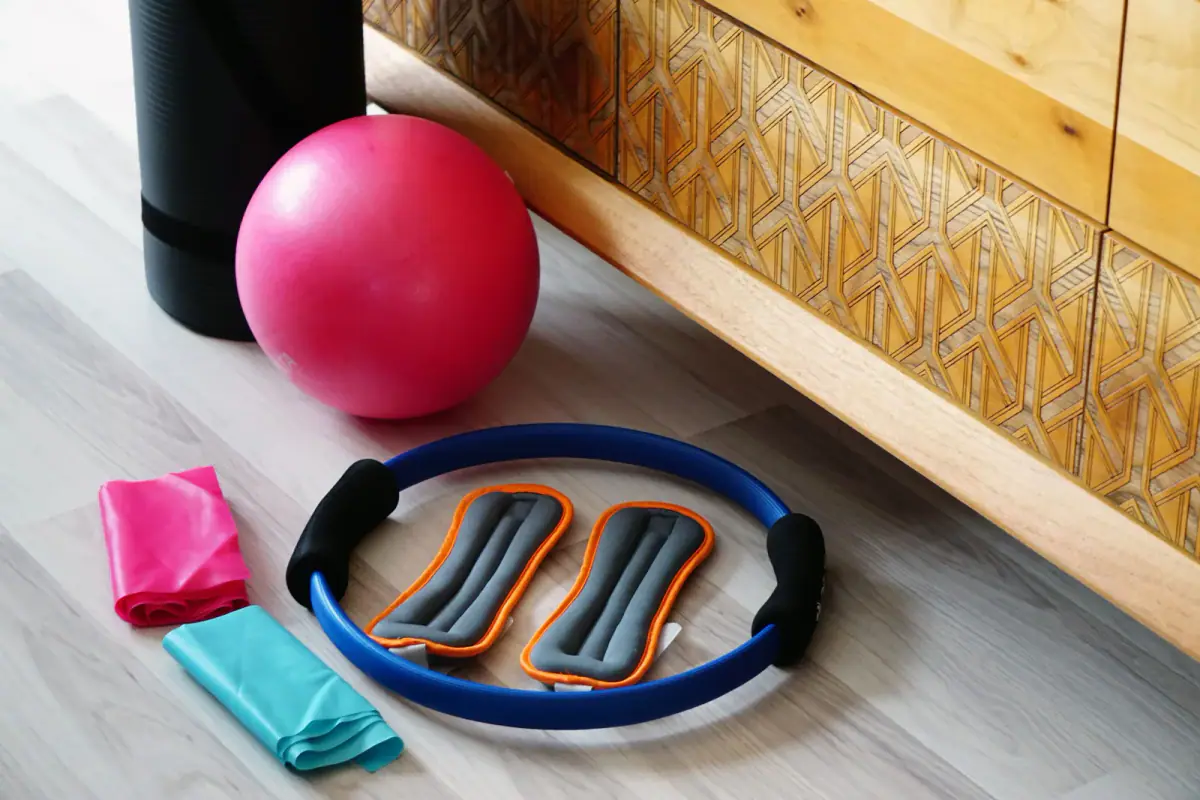
A portable pilates kit for private sessions can fit in one bag and include a resistance ring, a few bands of different strengths, a small ball, a foam roller or similar tool and, if you have the budget, a compact spring-based piece, chosen for the exercises each one unlocks. For instructors without a reformer, this kit turns an open floor into a working studio. Whether you teach in a private rented room or travel to clients, build the kit around what you teach most and carry only what earns its place.
The core kit
Start with items that cover the widest range of work:
| Item | What it adds |
|---|---|
| Resistance ring | Inner and outer thigh work, arms, trunk control |
| Bands in three strengths | Resistance for legs, shoulders and back, and assisted mobility |
| Small inflatable ball | Support under the back or pelvis, squeezing and balance |
| Larger stability ball | Seated and prone work, and a base for balance |
| Foam roller | Spinal articulation, balance and a way to vary difficulty |
| Hand weights, light | Arm series and added challenge |
| Cleaning wipes and a spare cloth | Hygiene between clients |
Keep it simple. Every piece should answer the question: “Which exercises can I teach with this that I cannot teach without it?” If the answer overlaps with another item, leave it at home.
Small apparatus worth considering
If your training includes spring-based equipment and you want more than the basics, a few compact pieces can travel:
- Spring board or compact spring unit. Gives some of the resistance feel of apparatus work in a box you can carry. Check weight and setup time.
- Foot corrector or similar small device. Useful for foot and ankle work and compact enough for a bag.
- Handheld pull straps. Many instructors use straps held by hand or looped around a stable fixture. Ask the facility before attaching anything to a wall or equipment.
Be honest about trade-offs. Heavier items cost you energy and time, and each takes setup minutes from the hour. Choose a single compact apparatus piece first, learn it well, and add another only when clients ask.
Build the kit around the session
Plan a sample private hour and mark which items you use:
- Warm-up and breath: foam roller, small ball.
- Strength and control: ring, bands, hand weights.
- Balance and trunk: stability ball, small ball.
- Targeted work for the client’s goal: one or two small apparatus items.
- Cool-down: roller, bands.
Then look at the list. If one item appears only once, ask whether another tool could do the job. A tight kit is faster to set up, faster to clean and easier to carry.
Carry, clean and protect
Pack in a single bag or a small wheeled case, with the heaviest items closest to your back. Keep cleaning wipes accessible. Inspect bands and rings for cracks and replace them at the first sign of wear, because a snapping band is a safety risk, and tell your insurer what equipment you teach with; see what a pilates policy prices in.
Rental rooms usually expect equipment you bring to leave with you. The etiquette and the question of storage are in bringing your own equipment to a rented space. At Carmel City Center, rooms already have a lifting rack, cable system and dumbbells, and open floor, so you can leave some items at home. Ask the support team which items you may bring and whether any are restricted.
Duets and small groups
A kit also decides whether you can run two clients. Count each item: two rings, two ball sets, enough bands. If you plan duets, how to run duet pilates sessions lays out the hour, and the kit list above should be doubled for the pieces each client holds at once.
Pricing the kit into your rate
A kit has a cost: purchase, replacement and the time you spend cleaning and packing. Add it to your hourly floor, as described in how much to charge for private pilates sessions. Most instructors find a lean kit pays back quickly because it replaces a studio hire.
Next step: lay your kit on the floor, run through one full session in your head and remove one item. If you can still teach the whole hour, you have found your carry-in kit.
Related questions
Can a small kit replace a reformer?
It cannot replicate spring-based apparatus, but it can support a full session of resistance, balance and control work. Many instructors build a successful private practice on a small kit and add larger equipment later if demand calls for it.
How heavy should the kit be?
Light enough that you can carry it in one trip without strain. If you need two trips, you will start skipping items or arriving late, so prune until it fits one bag.
Do I need to clean equipment between clients?
Yes. Wipe down anything that touches a client's skin after each session, and keep a small supply of cleaning wipes in the bag.