
How Much to Charge for Private Pilates Sessions
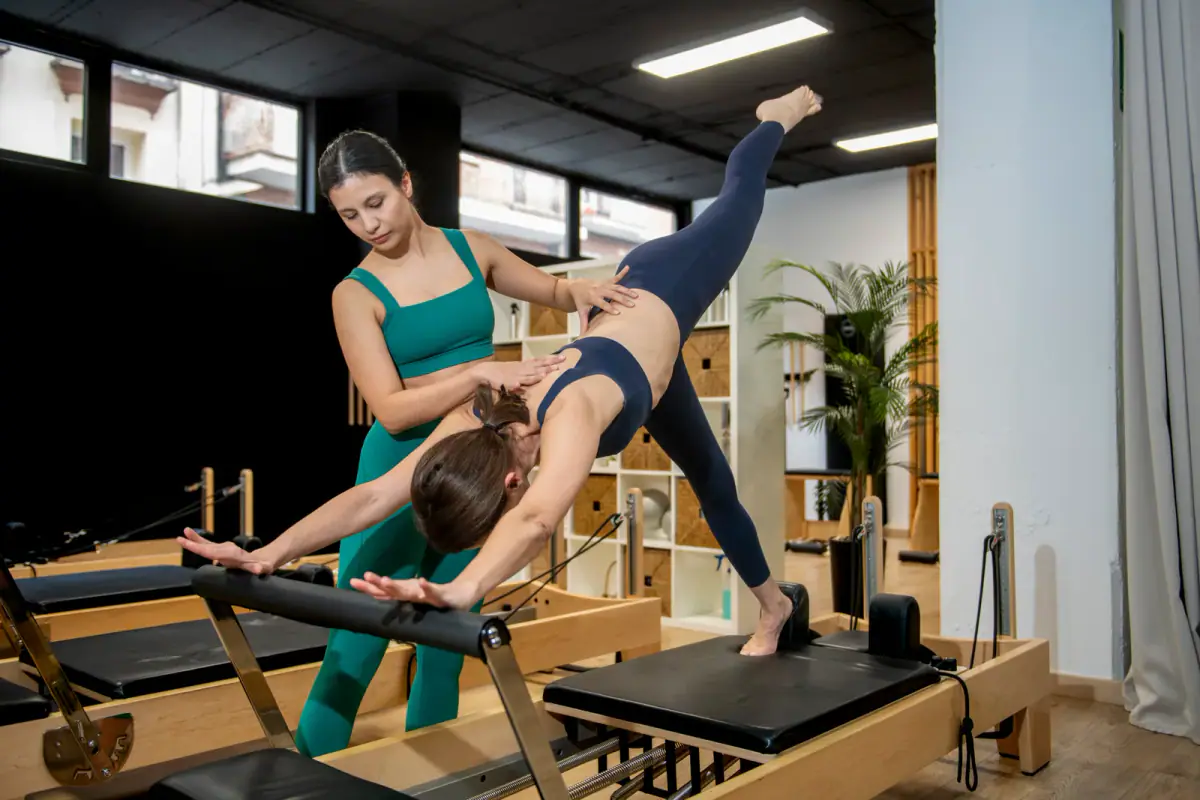
Charge for private pilates sessions by starting from your hourly floor (room, insurance, equipment and unpaid time), adding the income you want per hour, and then arranging the result into a solo rate, a duet rate and a separate apparatus line. This page deliberately gives no dollar figure, because a number copied from another market or another modality can undercut you or price you out. It shows you how to build one you can defend, whether you rent a private pilates space by the hour or teach elsewhere.
Find your floor first
Your floor is the lowest price at which a session still pays. List every cost that sits behind one session:
- Space: the hourly cost of the room, or your share of a studio fee.
- Insurance: your annual policy divided by the sessions you realistically teach.
- Equipment: purchase, repair and replacement for what you bring.
- Unpaid time: scheduling, cleaning, travel, client notes and planning.
- Slack: cancellations and empty slots, which every calendar has.
Add the unpaid time to the session itself, because a sixty-minute session that needs thirty minutes of surrounding work is really a ninety-minute job. Divide your total by the number of paid sessions you teach in a typical month. Any quote under that number loses money.
For a deeper view of how pay is built for this profession in Indiana, how pilates instructors earn in Indiana compares per-class and per-private structures without giving this page’s rate.
Add your target, then check the positioning
On top of the floor, add what you want to earn per hour. Then ask what your offer says about you:
| Positioning signal | What it supports |
|---|---|
| Years of teaching and a deep client base | Pricing toward the top of your local range |
| A specialty, such as prenatal or athletes | A premium on that service |
| A private room with no studio crowd | A personal, appointment-based feel |
| A new instructor still building a book | A lower entry price with a plan to raise it |
Do not guess the local range; look at what instructors near you publish, and note whether they sell privates, duets or classes. If you teach in a facility that takes a share, subtract that share before you decide what you net. On personal training, the way to think about pricing levers is described in how to price personal training in the Carmel market, and the same logic of levers applies here even though the figures do not.
Build the ladder
A ladder shows clients the logic and gives them choices:
- Solo session. Your full attention for the hour. This is your anchor rate.
- Duet session. Two clients, one hour. Set a per-person price below the solo rate, with a total above it. The mechanics of running one are in how to run duet pilates sessions.
- Apparatus line. If you teach on equipment, price it separately, since your cost and training differ from mat work.
- Prepaid sets. Four or eight sessions paid upfront, at a modest reduction that rewards commitment without gutting your anchor.
The ladder should make the solo rate look reasonable and the duet look like a smart choice for two friends. Resist the urge to add more than four rungs; a long menu invites haggling.
Quote it, test it, then review it
State the rate in one sentence with what it includes, such as the session length, the cancellation rule and any prepayment terms. Avoid giving a range, which invites negotiation. Write the cancellation policy before your first booking.
Track three numbers for a quarter: how many inquiries you get, how many convert and how full your calendar is. If everyone says yes without hesitation and your calendar is full, raise the rate for new clients. If inquiries stall, look at your message and your visibility before you cut the price.
Facilities that rent by the hour with no lease let you test a rate with real clients without a fixed monthly obligation, and you keep what you charge. If you are comparing space types, what the portable approach costs and requires is a useful side-by-side. Write your floor, your target and your ladder on one page this week, then quote your next inquiry from it.
Related questions
Should a duet cost twice a solo session?
No. The usual structure is a per-person price below the solo rate but a total above it, because you are coaching two bodies at once but spending one hour. The exact split is yours to set and test.
How do I raise my rate with existing clients?
Give written notice, a clear start date and a short reason, and keep the old rate for current packages until they end. New clients get the new rate immediately.
Do I charge differently for mat sessions and apparatus sessions?
Often yes, because the cost to you differs. Apparatus work carries equipment costs or a facility fee, while mat work carries less, so many instructors price the two on separate rate lines.