
Private Space for Olympic Weightlifting Coaches in Carmel
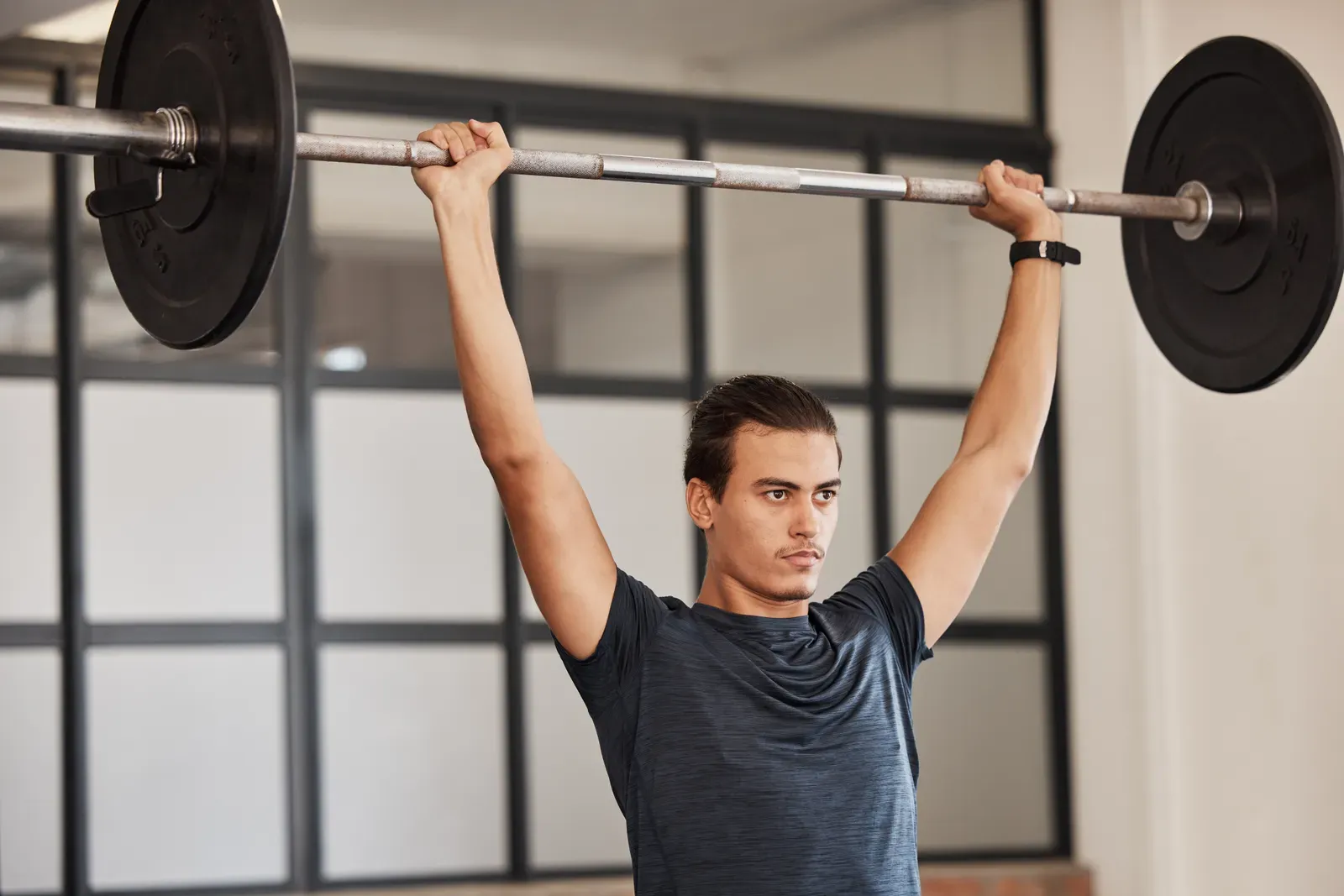
Say the honest part first: this is not a weightlifting hall, there is no bumper-drop zone, and bars are never dropped here. What FlexWerk’s private hourly rooms give an Olympic weightlifting coach is everything else: a reserved, quiet space for the technique, positional strength, and mobility work that actually fills a lifter’s week, with no lease and the first hour free. Coaches who understand where their sport’s volume really lives will recognize the fit immediately.
What the room is for, and what it is not
The split is simple: skill and strength work here, limit attempts elsewhere. The overwhelming majority of a weightlifter’s training is not maximal singles; it is positions, pulls, squats, presses, and mobility, all performed with controlled eccentrics or from rack-supported setups. That work needs attention and repetition, not a dropping area. What fits a private room honestly:
- Technique work at learning loads, where the bar comes down under control on every rep
- Positional strength: pauses, pulls to the knee, and rack-supported holds
- Squat and press volume, the tonnage that fills most training days
- Mobility blocks for ankles, hips, and the overhead position
- Video review, filmed in the room and studied on the TV between sets
True max-out days, where a lifter needs to bail freely overhead, belong at a dedicated weightlifting facility, and a good coach says so up front. The credibility you build with that sentence is worth more than the sessions it costs you.
Run the arithmetic on an actual training week and the split looks even more lopsided. Of a typical lifter’s fifteen to twenty weekly working sets on the classical lifts, nearly all are at learning and technical percentages where controlled lowering is standard practice anyway; add the squat, pull, and press volume around them and the sessions that genuinely require a dropping area amount to a small fraction of the month. A coach who books the private room for the many and a weightlifting facility for the few is not compromising; he is allocating venues the way the training actually distributes.
Why technique coaching thrives behind a closed door
Learning the lifts is awkward, repetitive, and best done unwatched. An adult beginner rehearsing a hip contact or fighting an early arm bend does not improve faster with a gym-floor audience; they improve faster with one coach, one bar, and silence between cues. A private room provides the conditions commercial floors structurally cannot: no queue for the rack, no music you did not choose, no interruptions mid-set, and a camera angle you can repeat every week.
The rooms are deliberately filming-friendly, with controllable lighting, WiFi, and a TV for immediate review, which matters doubly in a sport coached largely through video. Film the lift, watch it together, fix one position, film it again: that loop is the entire pedagogy, and it runs cleanly in a FlexSpace Standard at 150 sq ft for 1 to 2 guests, or a Plus at 200 sq ft for up to 4 when you run small technique groups. The small-group format suits this sport’s culture well: three lifters sharing a technique hour learn from each other’s reps, split a premium rate, and turn a solitary discipline into an appointment nobody skips.
Who hires an Olympic lifting coach in Carmel
Your market here is wider than competitive lifters. It includes adult professionals who want to learn the lifts properly after years of watching them, general athletes whose sports reward explosive hip extension, masters lifters returning to a barbell with more caution than ego, and gym-goers whose coaches never taught overhead positions. Carmel’s demographics carry the niche: a professional population of roughly 105,000 with a median household income north of $140,000, and recent industry surveys suggest around half of clients now specifically want a specialist. “I teach the Olympic lifts” is a specialist sentence.
For the strength-first portion of your roster, the adjacent practice is covered on the powerlifting coach page, and generalists should read the broader strength coach guide.
Masters lifters deserve a special mention because they are this market’s quiet majority. Adults in their forties and fifties returning to the lifts want exactly what a private room offers: patient technique work, honest loading, no audience, and a coach who treats mobility as programming rather than punishment. They also keep morning appointments, pay professional rates without negotiation, and stay for years, which makes a masters-heavy roster one of the most stable businesses in strength coaching.
Running the practice on hourly space
The economics favor a technique specialist unusually well. Training spaces run $18 to $22 per hour, booked through the FlexWerk app with no lease or membership, and you keep 100 percent of your coaching fee; skill instruction commands premium rates against a room cost that stays a small fraction of a session price, with current rates posted here. Scheduling fits lifter culture: hours run Monday to Friday 5 AM to 9 PM and weekends 7 AM to 4 PM, early enough for before-work technique sessions and late enough for the evening crowd, with back-to-back bookings turning an evening into a full coaching block.
The facility sits at 885 Monon Green Blvd in Carmel City Center, garage parking a short walk away, alongside more than 40 fitness professionals already running independent businesses in the building, most of whom average about 24 sessions a week.
Book the free first hour, bring one lifter whose pull you have been meaning to rebuild, and run a positional session with the door closed and the camera rolling.
Related questions
Can my lifters drop bars at FlexWerk?
No. Bars are never dropped here; every rep is lowered under control. That makes the rooms right for technique, positional strength, squats, pulls, and overhead work, while true max-out sessions belong at a dedicated weightlifting facility.
What equipment is in the room?
Each training space carries a custom lifting rack, cable system, and dumbbells, supporting 850+ exercises in a Standard and 1,100+ in a Plus, plus a TV, WiFi, and music streaming for video review.
What does an hour cost?
Training spaces run $18 to $22 per hour through the FlexWerk app, with no lease or membership, and fitness professionals get their first hour free.