
Home Gym vs Renting Gym Space by the Hour: Honest Math
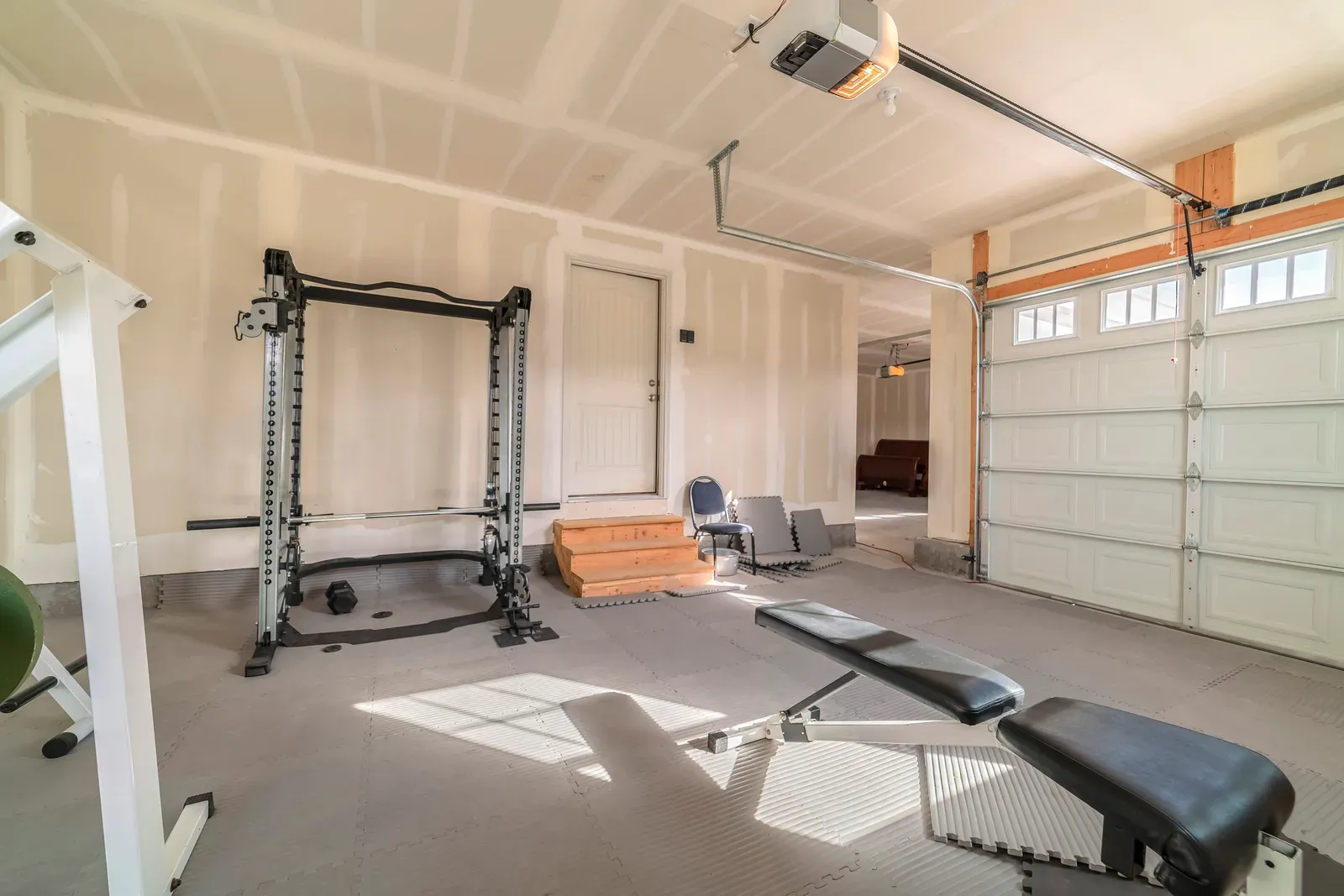
A real home gym commonly costs $2,500 to $8,000 to build and permanently claims a garage bay, while a stocked private room rents for $18 to $22 an hour with zero upfront spend. Which one wins depends on your training frequency, your time horizon, and how honest you are about the Indiana winter. Booking a private workout space is not automatically the answer, so here is the actual math.
What a home gym really costs to build
Skip the fantasy number and price a setup you would genuinely train in for years. Typical retail ranges, hedged because gear prices move:
- Power rack or squat stand: commonly $500 to $1,500 for something you would trust overhead.
- Barbell and plates: commonly $400 to $900 for a decent bar and 250 to 300 pounds of iron.
- Adjustable dumbbells: commonly $300 to $700 a pair.
- Bench: commonly $150 to $500.
- Flooring: commonly $200 to $600 to protect a slab and your joints.
- A cardio machine: commonly $1,000 to $3,000+, and the connected rowers and climbers people actually want run toward the top of that.
A serious build lands somewhere between $2,500 and $8,000 before a single workout. Budget versions exist near $1,000, but they usually mean no cables, light dumbbells, and compromises you feel by month three. For comparison, a FlexSpace Standard holds a custom lifting rack, cable system, and dumbbells supporting 850+ exercises, and a Plus supports 1,100+, none of which you had to buy, assemble, or bolt down.
The costs nobody prices in
The purchase price is the visible half. The invisible half:
- Space. A usable home gym wants roughly 150 square feet, which for most households means a car lives outside now. That is a real ongoing cost in a state with hail seasons and frosted windshields.
- Climate. Garage lifting in an Indiana January, with highs around 33 degrees, is a character test most people fail by February. Cooling it through a humid 90 degree July is the same test reversed. Conditioning that space costs money; not conditioning it costs consistency.
- Maintenance and mistakes. Gear wears, cheap gear wears fast, and almost everyone buys at least a few hundred dollars of equipment they never touch again.
- The motivation tax. Some people train better at home. Plenty discover the opposite: the room ten steps from the laundry is also ten steps from every distraction they own.
None of this makes home gyms bad. It makes the real cost higher than the receipt.
What the hourly math looks like
Now the rental side, with equally honest numbers. At FlexWerk in Carmel, strength spaces run $18 to $22 per hour and cardio spaces from $12, no membership underneath:
- Two hours a week: roughly $144 to $176 a month, about $1,750 to $2,100 a year.
- Three hours a week: roughly $216 to $264 a month.
Against a $5,000 home build, two weekly rented hours take around two and a half years to cost the same, and that ignores the home gym’s space, climate, and maintenance costs, plus the fact that hourly money is spent only in months you actually train. Against a $2,500 budget build, the crossover comes faster, closer to 15 months at two hours a week.
So the honest verdict: frequency and horizon decide. A four day a week lifter with a decade horizon and a spare garage bay should probably build; the per session cost of ownership falls below any rental within a few years. A one to three session a week trainee, anyone unsure they will still be lifting in 2028, and anyone whose garage is already full should rent the hours and keep the capital.
There is also a hybrid answer worth naming, because plenty of people land on it. A few hundred dollars of home basics, a couple of adjustable dumbbells and floor space, covers the short maintenance days, while the heavy or long sessions happen in a rented room with a full rack and cable stack. You get the convenience of home for the easy work without pretending a corner of the bedroom is a gym, and without the four figure buy in.
Renting first makes the buying smarter
There is also a sequencing answer that beats both pure options: rent for 60 to 90 days before you build anything. A stocked private room is a showroom you actually sweat in. A month of real sessions teaches you whether you ever touch the cable stack, whether the rower is a habit or a fantasy, and whether you train more or less when the gym is not in your house. The January crowd escape plan works on the same logic: buy the decision data before buying the commitment. That goes double for premium cardio, where an hour on the exact machines costs from $12 and the machines cost thousands.
Logistics, briefly: FlexWerk is at Carmel City Center, 885 Monon Green Blvd, steps from the Monon Trail with garage parking a short walk away, open Monday to Friday 5 AM to 9 PM and weekends 7 AM to 4 PM. A host conversation sets you up, the FlexWerk app books your hours in seconds, and if you are 18 or older and local, the first hour is free once a host confirms eligibility. If what you actually want in that room is a coach, the coached side lives at flexwerkfitness.com.
Run your own numbers with your real frequency, not your aspirational one. Then let the cheaper answer win without shame either way.
Related questions
What does renting a private space cost?
At FlexWerk in Carmel, fully equipped strength spaces run $18 to $22 per hour and cardio spaces start at $12, with no membership or commitment. Eligible locals 18 or older get a free first hour after a host confirms eligibility.
How much does a decent home gym really cost?
Typical retail ranges put a quality rack, bar, plates, adjustable dumbbells, a bench, and flooring commonly between $2,500 and $8,000, before any cardio machine. Budget builds exist, but they usually trade away the equipment you end up wanting.
Can renting help me decide what to buy for a home gym?
Yes, and it is one of the smartest uses of an hourly room. Training in a fully stocked space for a month teaches you which equipment you actually use before you spend thousands guessing.