
Film Your Workouts Without an Audience (or a Gym Filming Ban)
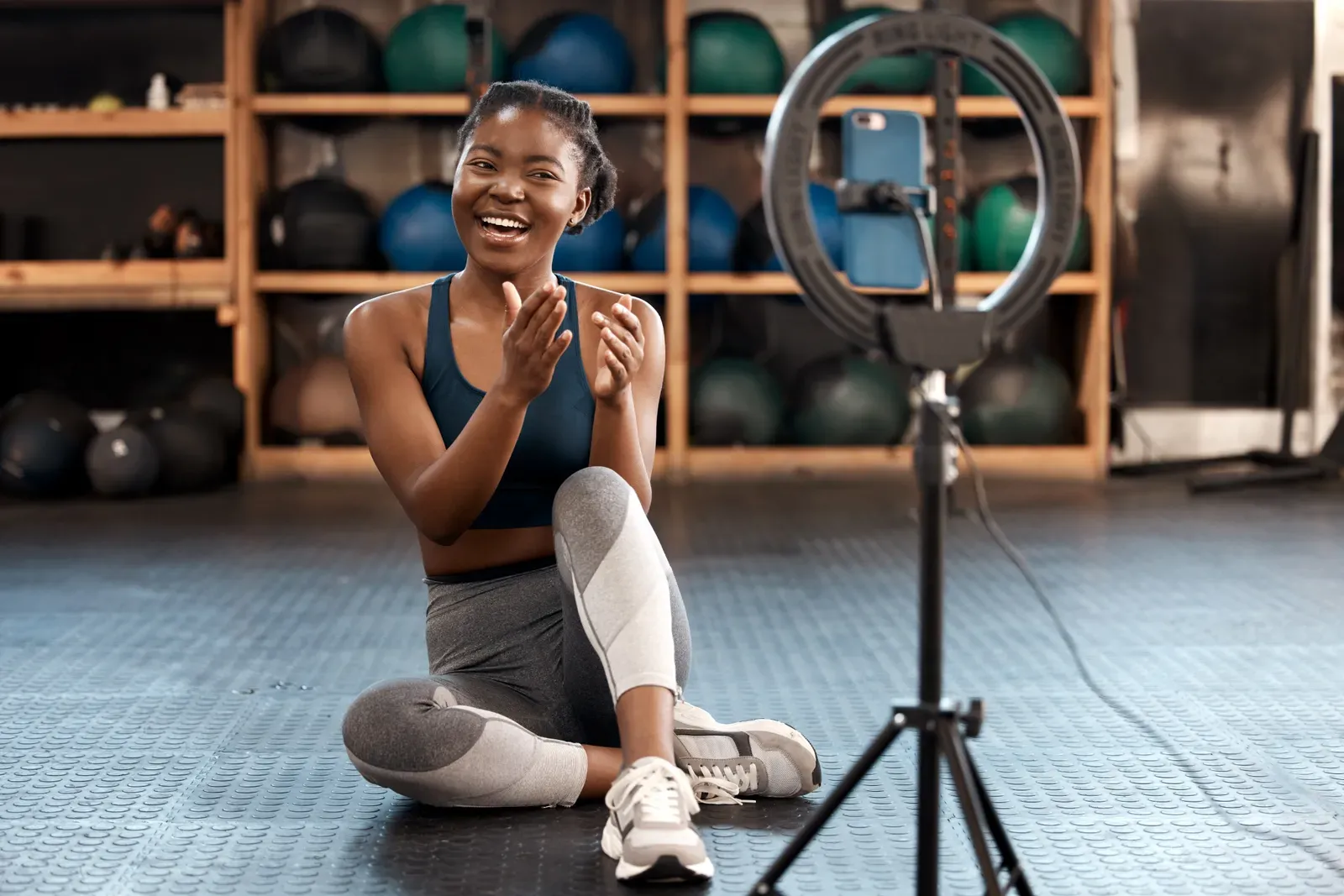
Searching for gyms that allow filming gets you a shrinking list with growing fine print: no tripods, no other members in frame, staff discretion. The clean answer is a room where the rules do not apply because nobody else is in it: a private workout space rented by the hour, deliberately filming friendly, with no one to blur, ask, or apologize to. At FlexWerk in Carmel, that costs $18 to $22 per hour with no membership.
Why big gyms keep tightening filming rules
Be fair to the gyms: the rules exist because filming on a shared floor drags bystanders into your content. Other members never consented to appear in a stranger’s video, tripods claim floor space everyone paid for, and staff end up refereeing disputes between people mid-set and people mid-shoot. So chains keep tightening: designated zones, no-tripod policies, outright bans. None of that is hostility toward you; it is arithmetic about shared space.
Which points at the real solution. Every filming rule at a commercial gym exists to manage other people, so a room with no other people needs none of them. Book the space, close the door, film anything.
What filming looks like when the room is yours
In a private space the camera stops being a negotiation and becomes a tool. Put the tripod wherever the shot needs it, in the middle of the floor if you like. Nobody walks through your frame, so nothing gets blurred or reshot. The lighting is controllable, so your footage looks consistent session after session instead of inheriting whatever the floor lights were doing. WiFi handles uploads and live streams, the TV gives you instant playback for checking angles, and your audio is your choice: the room’s music streaming, your phone, or silence for clean voiceover later.
The equipment holds up its end of the shot list. A custom lifting rack, cable system, and dumbbells support 850+ exercises in a FlexSpace Standard and 1,100+ in a Plus, and the cardio spaces run HYDROW rowers, CLMBR machines, and curved treadmills if your content leans conditioning.
The form-check use case, not just the content one
Plenty of people filming their workouts have no audience in mind at all; the camera is a coach. A phone on a tripod, set at hip height from the side, tells you more about your squat depth or deadlift back angle than any mirror, and reviewing the clip between sets on the room’s TV turns every session into a small technique lab. That loop is awkward on a public floor, where leaving a phone recording feels risky in both directions, and effortless in a private room. Filming also pairs naturally with training alone: the safety habits in how to lift heavy without a spotter plus video review cover most of what a training partner would catch.
And if the reason you never filmed was that being watched while performing for a camera is a double dose of audience, the private room deletes both audiences at once, a relief unpacked in working out alone with gym anxiety.
The third use case is the long game: a progress archive. Film the same three lifts from the same tripod marks on the first booking of every month, in the same room format under the same controllable lighting, and by month six you own something no memory can fake, an honest, consistent record of how your body and your technique have changed. Consistent conditions are what make progress footage believable, and consistent conditions are exactly what a bookable private room provides and a crowded floor never will.
Costs, booking, and the fine print that is not fine print
Filming costs nothing extra; you are just renting the room. Spaces run $18 to $22 per hour, cardio spaces from $12, with no membership or contract. If you are 18 or older and local to the Carmel location, a host can confirm you for a free first hour, which is a zero-cost way to test your setup; eligibility details live in who qualifies for the free first hour, and the booking sequence, host conversation first, then the FlexWerk app, is in how to book a private workout space.
Hours run Monday to Friday 5 AM to 9 PM and weekends 7 AM to 4 PM at 885 Monon Green Blvd in Carmel City Center, garage parking a short walk away. Early weekday slots are a filmmaker’s friend: consistent artificial light, an unhurried setup, and the whole building quiet. And because the rate is per room rather than per person, a filming partner who trades camera duties with you splits the hour’s cost; capacities and sharing rules are in bringing a friend to a private workout space.
If your filming is actually a business
One boundary worth naming: if you are a trainer or coach producing client-facing content, you are in different territory, with consent questions when clients appear on camera and a professional booking path with its own free first hour. That world is covered on the professional side in the fitness content studio in Carmel. For everyone filming their own training, for form, for progress, or for an audience of thousands, the consumer path is the one you are on.
Set up the tripod in a room with your name on the hour, press record, and film the whole session, every angle, every attempt, every celebration, without once checking who is behind you.
Related questions
Is filming really allowed in the spaces?
Yes, by design. The rooms are deliberately filming friendly, with controllable lighting, WiFi, and a TV, and because you book the entire space, there is no one else to object or wander into frame.
Why do regular gyms restrict filming?
Mostly to protect other members, who never agreed to appear in your footage, and to keep tripods from blocking a shared floor. Those are reasonable rules for shared space, which is exactly why a private room solves the problem.
What does it cost to film my training here?
The same as training without a camera: $18 to $22 per hour for a private space, cardio spaces from $12, no membership. Eligible locals 18 or older can have a host confirm them for a free first hour.