
A Fitness Content Studio in Carmel You Can Book by the Hour
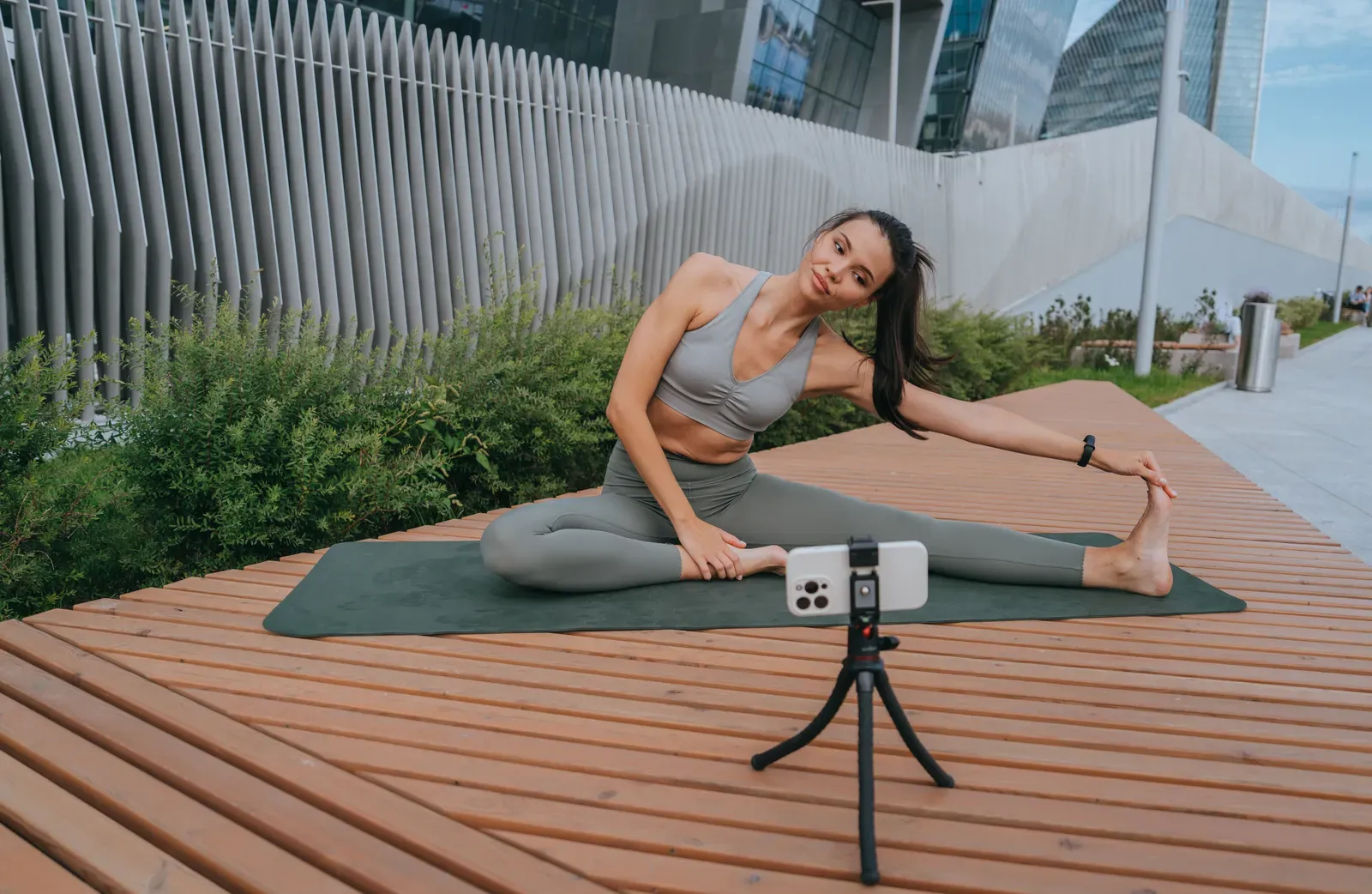
Every fitness creator eventually hits the same wall: the content is ready, and the room is not. FlexWerk at Carmel City Center works as a bookable fitness content studio: a private, deliberately filming friendly room by the hour, with controllable lighting, WiFi, and nobody in your frame, and the first hour is free for fitness professionals. No studio lease, no gym manager asking you to put the tripod away.
Why a private room beats a gym floor for content
Filming on a shared floor fails in three predictable ways. First, permission: commercial gyms increasingly restrict tripods and filming because their members did not agree to be extras, so the shoot you planned can end at the front desk. Second, the frame: even where filming is tolerated, strangers wander through shots, and every passerby is a blur job, a reshoot, or a consent question you cannot answer for them. Third, the sound and light belong to the house, so your footage inherits whatever playlist and fluorescent wash the floor is running that day.
A booked private room deletes all three problems at once. You reserve the space, so filming is not a favor anyone can revoke mid-shoot. The room is empty except for the people you brought. And the lighting is controllable and the music is yours, which means the set looks and sounds the same every time you come back, the thing that makes a channel feel consistent.
What the room gives you as a set
The equipment doubles as production design. A custom lifting rack, cable system, and dumbbells give you the honest, working-gym backdrop fitness audiences trust, and with 850+ exercises supported in a FlexSpace Standard and 1,100+ in a Plus, the demonstration library never runs dry. Around the training equipment, the production basics are built in:
- Controllable lighting, so you can set a look and repeat it shoot after shoot
- WiFi for live sessions, uploads between takes, and running your shot list from the cloud
- A TV or monitor for instant playback, checking framing without crouching over a phone
- Music streaming for atmosphere between takes; for published footage, your audio decisions are your own
- A door that closes, which is the difference between performing and working
Specialty production gear is bring your own: tripods, phone rigs, microphones, and any extra lights come in with you, set up in minutes, and leave no trace.
A batch day that actually produces
The creators who make hourly studio time pay for itself treat it as batch production, not casual filming. A workable two hour block: fifteen minutes to set the tripod marks and lighting, then move through a pre-written shot list in clusters, all demonstrations of one exercise family back to back before changing angles. Creators regularly leave a disciplined two hour session with several weeks of short-form material. The full workflow, from shot list to edit-ready folder, is laid out in filming a workout program in a day, and stills sessions have their own logic covered in gym rental for photoshoots.
If clients appear in your footage, that is a consent matter regardless of where you film; the clean way to handle releases is covered in filming clients the right way.
Live formats work in the same room with zero extra setup. Virtual sessions, remote client check-ins, and streamed workouts all run over the room’s WiFi with the door closed, so your on-camera hours and your coaching hours can literally be the same hours. That is the quiet advantage of a working facility over a rental studio: the set is also a place your business already happens.
The economics against a dedicated studio or a lease
Content studios bill by the hour too, but they bill for empty rooms you must then dress. A generic rental studio gives you white walls; a gym set has to be trucked in or faked. Here the set is the facility, the rate is $18 to $22 per hour, and there is no membership or lease underneath it, so your content overhead scales with your publishing schedule and drops to zero the week you do not film. For working coaches, the room does double duty: many of the more than 40 fitness professionals based at FlexWerk film during regular client sessions, which turns content from a separate cost center into a byproduct of billable hours. That dual use case is the heart of content creation space for fitness coaches.
Carmel itself sharpens the argument. This is an audience-dense market, with a median household income of $141,505 and a deep bench of premium fitness clients, so local content compounds: the person who finds your videos is often close enough to become a client.
Logistics for shoot day
The practical details cooperate with a creator’s schedule. Rooms book by the hour in the FlexWerk app, so grabbing a quiet midmorning block takes seconds; hours run Monday to Friday 5 AM to 9 PM and weekends 7 AM to 4 PM, wide enough for early natural-calm sessions before client hours or evening batch shoots after them. The building sits at 885 Monon Green Blvd at Carmel City Center, steps from the Monon Trail, with garage parking a short walk away, which makes hauling gear in less of an expedition.
The cheapest possible test of all this is the free first hour: bring a tripod, a shot list of ten clips, and see what one private hour produces compared with your last gym-floor attempt.
Related questions
Is filming actually allowed, or just tolerated?
Allowed by design. The rooms are deliberately filming friendly, with controllable lighting, WiFi, and a TV, because many of the professionals here produce content as part of their normal working week.
Will strangers end up in my footage?
No. You book the entire room, so nobody else is in it. That removes the blurring, reshooting, and awkward permission problems that come with filming on a shared gym floor.
What does studio time cost?
Rooms run $18 to $22 per hour with no membership or lease, and fitness professionals get their first hour free. A two hour batch session costs less than most dedicated studio rentals charge for setup time.