
What Makes a Training Space "Premium"?
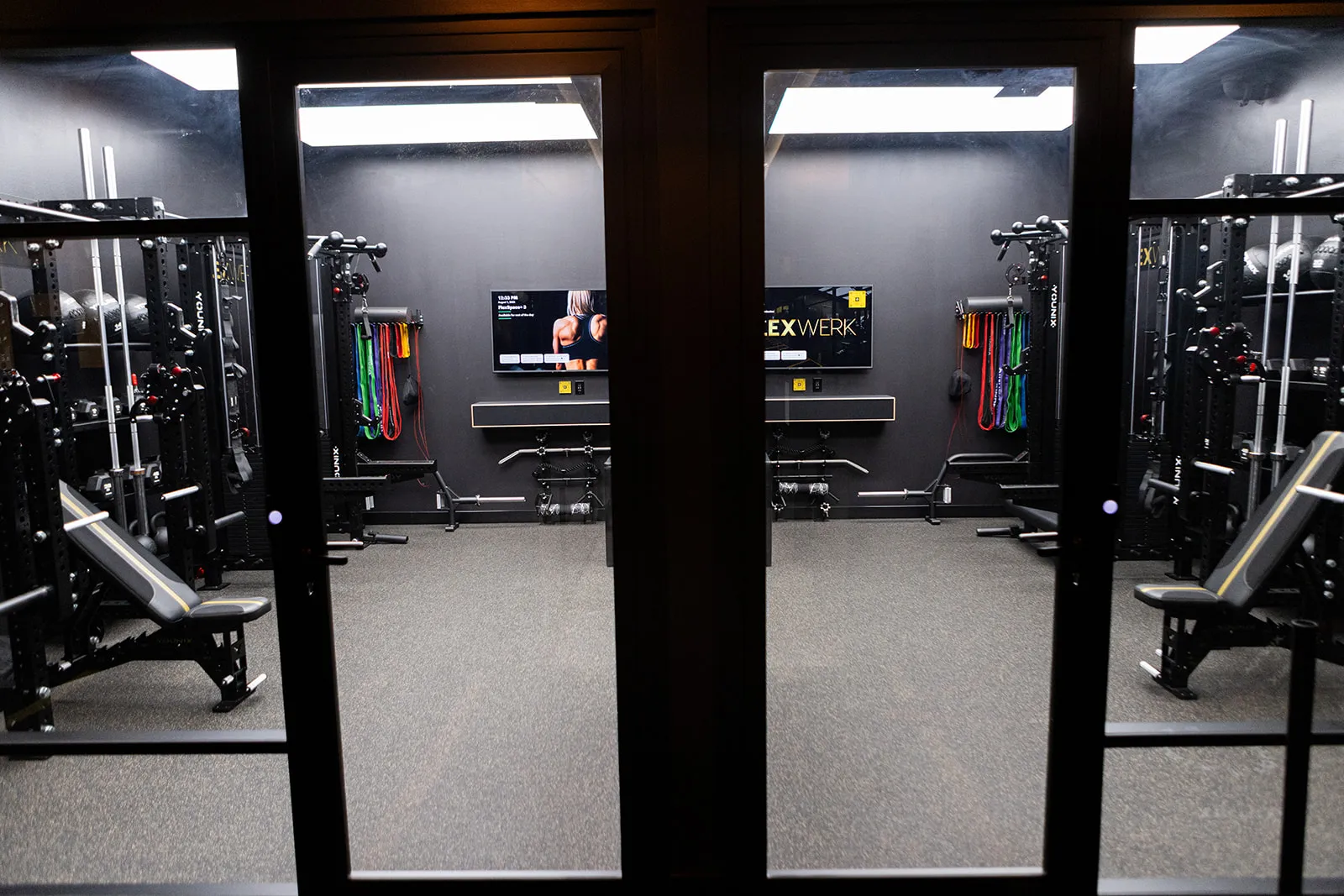
A training space is “premium” when everything about it signals that the hour belongs to the client: genuine privacy, deep and well-kept equipment, an environment the coach controls, an address that’s easy to reach and easy to respect, and zero friction from arrival to finish. Price tags and chandeliers are not on the list. Premium is an experience standard, and it’s worth defining precisely because it directly sets what the market lets you charge.
Privacy is the foundation everything else sits on
Ask clients what they’d change about training at a commercial gym and the answers cluster fast: waiting for equipment, being watched, hearing someone else’s music, feeling like one of a crowd. Privacy deletes the whole list at once, which is why it’s the single strongest premium signal a space can send.
Privacy operates on two levels. There’s practical privacy, no one takes your rack mid-superset, no camera-shy client has an audience. And there’s psychological privacy, beginners, postpartum clients, executives, and anyone self-conscious about starting behaves differently, works harder, and stays longer when the door closes. A private training suite is the purpose-built form of this: a self-contained room one professional books at a time.
It changes the coaching itself, too. In private, you can coach loudly, film form checks, let a client fail a rep without an audience, and have honest conversations about progress that nobody would start on a crowded floor. The room isn’t just nicer, it widens what a session can contain.
Equipment: depth and condition beat brand names
Premium equipment isn’t about logos; it’s about two questions. Can the coach run any program without improvising? And does everything look and work like someone cares?
Depth first. A serious 1-on-1 room needs a rack, a cable system, and a real dumbbell run as its spine, at FlexWerk, a Standard suite’s build supports 850+ exercises, and the Plus suite’s expanded build supports 1,100+. Add distinctive conditioning pieces, HYDROW rowers, CLMBR machines, curved treadmills in the cardio suites, and the space offers clients things their garage and their old gym can’t.
Condition second, and it’s ruthless: one frayed cable or wobbly bench downgrades the entire room in a client’s mind. Premium spaces feel maintained without you ever seeing the maintenance.
Control: whose room is it for that hour?
The subtlest premium marker is who the environment answers to. On a commercial floor, the house picks the playlist, the lighting, the temperature of the experience. In a premium space, the coach does, music that matches the client, lighting dialed to the session, a screen showing the client’s program or form video rather than cable news.
A quick field test for any space you’re evaluating: ask to change the music and dim the lights during your walkthrough. Facilities built for professionals say yes instantly; facilities built for members look at you strangely. The answer tells you whose room it really is.
Control extends to the business layer: filming. Coaches increasingly build brands on content, and a space that’s deliberately filming-friendly, private, well-lit, no strangers in frame, converts ordinary sessions into marketing assets. It’s a defining feature of what’s included in a FlexSpace, and it’s nearly impossible to replicate on a shared floor.
Location and friction: premium ends at the parking lot
A flawless room in an awkward location isn’t premium, because the client’s experience starts in the car. The location tests are mundane and merciless:
- Findability, a first-timer arrives without a phone call.
- Parking, obvious, close, and stress-free at 6 AM. (At Carmel City Center, garage parking sits a short walk from FlexWerk’s door.)
- Address equity, “Carmel City Center, on the Monon” lands differently than an anonymous industrial strip, and your rate rides partly on that landing.
- Hours that fit real lives, early weekday opens for pre-work clients, weekend mornings for everyone else.
Hours belong on this list as well. Premium clients cluster at the edges of the workday, so a facility that opens at 5 AM on weekdays, as FlexWerk does, protects the most valuable training slots in the market; a space that opens at 8 has silently surrendered them.
Friction inside the visit counts too. The premium standard is that a client needs nothing but themselves: no membership to buy, no day-pass negotiation, no waiver desk. Free guest access for trainers’ clients is exactly this principle turned into policy.
Why the definition matters: premium is a pricing decision
Here’s the commercial truth underneath the aesthetics. Personal training in the Carmel market commonly splits into tiers, roughly $40 to 70 per hour at big-box and community settings, and $75 to 125+ for premium private settings. Same certifications, often similar programming. The delta is largely the experience the client buys, and the space is the most visible part of that experience.
That means choosing a space is choosing a price tier. A skilled coach in a commodity environment gets commodity pricing pressure; the same coach in a premium environment gets premium pricing permission. (Trainers moving up-market usually raise rates for new clients first, the space justifies the new number from day one, with no awkward reset for loyal ones.) The honest caveat: the space only grants permission, your coaching, professionalism, and results have to cash the check, and a premium room with sloppy service is just an expensive contradiction.
The practical test costs nothing: book a free first hour in a FlexSpace, bring a current client, and watch whether they treat the hour differently. Clients tell you what premium is faster than any definition can.
Related questions
Does a premium space actually let trainers charge more?
Generally, yes. In the Carmel market, big-box-tier training commonly runs $40 to 70 per hour while trainers in premium private settings command roughly $75 to 125 or more, the environment is part of what clients are paying for.
Is premium mostly about expensive equipment?
No. Privacy and control matter more than any single machine. A modest private room a client has to themselves reads as more premium than a crowded floor full of top-end equipment.
How do I know if a space will feel premium to my clients?
Walk it as a client: arrival and parking, first impression at the door, who else is in the room, whose music is playing. If every answer says 'this hour is about you,' the space is premium.