
Can I Train Clients in My Home Garage Gym?
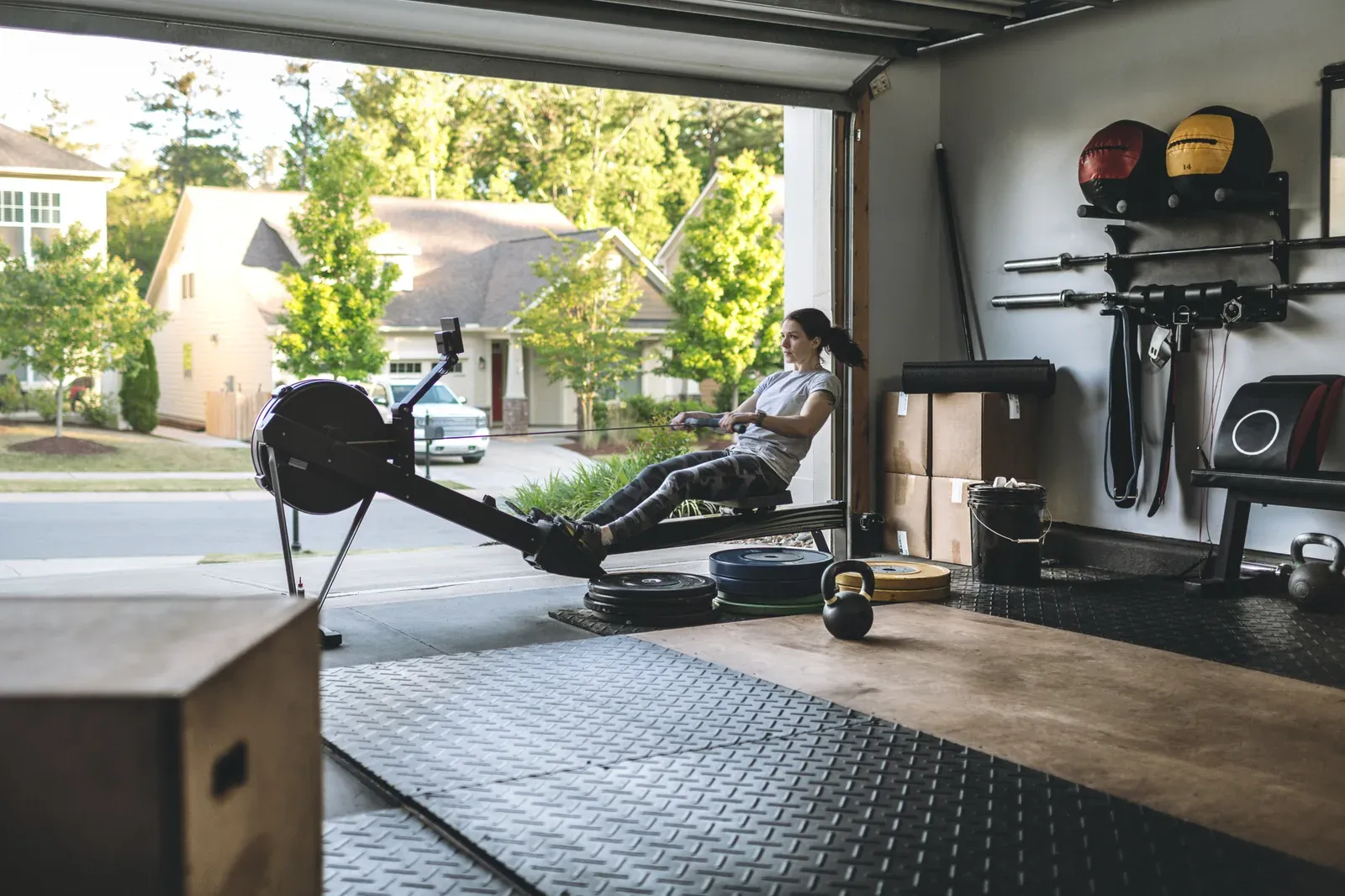
Yes, you can usually train clients in a home garage gym, but “usually” is doing heavy lifting. Between zoning rules, HOA restrictions, insurance exclusions, and the ceiling a residential setting puts on your rates, the garage is rarely as free as it looks. Here’s what to check before your first paid session, and an honest read on when it works and when it doesn’t.
The legal questions to answer first
The first sentence of any honest answer is: check your local rules before you take money. Training clients at home makes you a home-based business, and cities regulate those.
- Zoning and permits. Many municipalities require a home-occupation permit for businesses that bring clients to a residence. Rules commonly limit client traffic, signage, parking, and sometimes the share of the home used for business.
- HOA covenants. If you live in a managed neighborhood, common across Hamilton County, your HOA documents may restrict commercial activity regardless of what the city allows. A neighbor complaint is usually how trainers find out.
- Parking and neighbors. Even where it’s legal, a steady rotation of client cars at 6 AM tests goodwill fast. Some trainers stagger sessions specifically to manage this.
One more layer worth ten minutes: if you’re taking regular payments, you’re running a business in the eyes of your city and the IRS regardless of where sessions happen. A business license or home-occupation registration, basic bookkeeping, and a separate business bank account are typically expected, and they matter more at home, because commingling a residence and a business blurs exactly the lines you want sharp if anything ever goes wrong.
None of this is a reason to give up on the idea. It’s a reason to spend an afternoon reading your city’s code and your HOA covenants before you invest in flooring and a rack.
Insurance: the part most garage trainers get wrong
Your homeowner’s policy almost certainly does not cover a client getting injured during a paid session. Business activity is a standard exclusion, and a claim tied to undisclosed commercial use can jeopardize the whole policy, not just the training incident.
Training at home, you’d typically want:
- Professional liability (E&O) for claims tied to your coaching itself.
- General liability for slip-trip-fall type incidents on your property.
- A home-business endorsement or separate in-home business policy, because the first two don’t fix the homeowner’s-policy gap on their own.
Get answers from your insurer in writing, and have clients sign a waiver and health screen regardless. For a fuller breakdown of what coverage independent trainers carry, see what trainer insurance covers.
The business ceiling nobody mentions
Assume everything above checks out. The garage still has a quieter problem: it caps what you can charge and who you can attract.
In the Carmel market, personal training commonly runs $40 to 70 per hour at the big-box and community tier, with premium and private-setting trainers commanding roughly $75 to 125 or more. Clients pay premium rates partly for the experience, and a residential garage, however well equipped, reads as the budget tier to most of them. Executives, professionals, and referral-driven clients in particular tend to hesitate at training in a stranger’s home.
There are also practical limits:
- Equipment. A quality rack, a real dumbbell run, cables, and cardio pieces cost serious money and eat the space fast.
- Climate. Indiana garages are cold in January and brutal in July; climate control is a genuine build expense.
- Boundaries. Clients in your home means your home is a workplace, cancellations, early arrivals, and bathroom access all land on your family.
- Growth. One garage, one trainer, no way to scale hours past what your street tolerates.
When the garage genuinely works
Honesty cuts both ways: some trainers do well from home. The garage tends to make sense when most of these are true, you own your home in a permissive, HOA-free area; you serve a small roster of long-standing clients who already trust you; your style needs minimal equipment; and you’re treating training as a side income rather than a premium full-time business. In that scenario, near-zero marginal cost per session is a real advantage, and no rented space beats it on pure margin.
The garage struggles when you’re trying to grow: attracting new clients sight-unseen, raising rates, adding sessions, or building a brand that doesn’t depend on your address.
The middle path: rent the room only when you need it
The traditional alternative to the garage was a studio lease, trading zero rent for thousands a month in fixed overhead. Hourly private space removed that trade-off. At FlexWerk in Carmel, you book a private, fully equipped suite, custom lifting rack, cable system, dumbbells, connected cardio, only for the hours you actually have clients, and you keep 100% of what you charge. No lease, no membership, and none of the garage’s zoning, insurance-gap, or image problems, because the facility is a commercial space built for exactly this.
Plenty of trainers run a hybrid: keep the garage for their own workouts and a couple of grandfathered clients, and book a suite for new clients, premium-rate sessions, and anyone they’d rather not invite home. The economics of that split are clean, garage sessions keep their near-zero marginal cost, while suite sessions carry a known per-hour cost you price into a premium rate. And because FlexWerk runs 5 AM-9 PM on weekdays and 7 AM-4 PM on weekends, the booked block can absorb the peak early-morning and evening hours, which are precisely when a parade of clients at your house is most disruptive.
If you’re weighing the two, the cheapest experiment is to run one real session in each setting and watch how your client responds. The first hour at FlexWerk is free for fitness professionals, which makes that experiment cost exactly nothing.
Related questions
Is it legal to run a personal training business from my garage?
It depends on your local zoning rules and, if you have one, your HOA. Home-based businesses that generate regular client traffic commonly require a home-occupation permit, and some neighborhoods restrict them outright, check before your first paid session.
Does my homeowner's insurance cover training clients at home?
Almost never by default. Standard homeowner's policies typically exclude business activity, so you'd generally need professional liability coverage plus a home-business endorsement or separate policy. Confirm the specifics with your insurer in writing.
What's the alternative if the garage doesn't work out?
Hourly private space. You book a fully equipped suite only when you have a session, keep 100% of what you charge, and skip the zoning, insurance, and image problems entirely. At FlexWerk in Carmel, the first hour is free for fitness professionals.