
Can I Train Clients in an Apartment Gym?
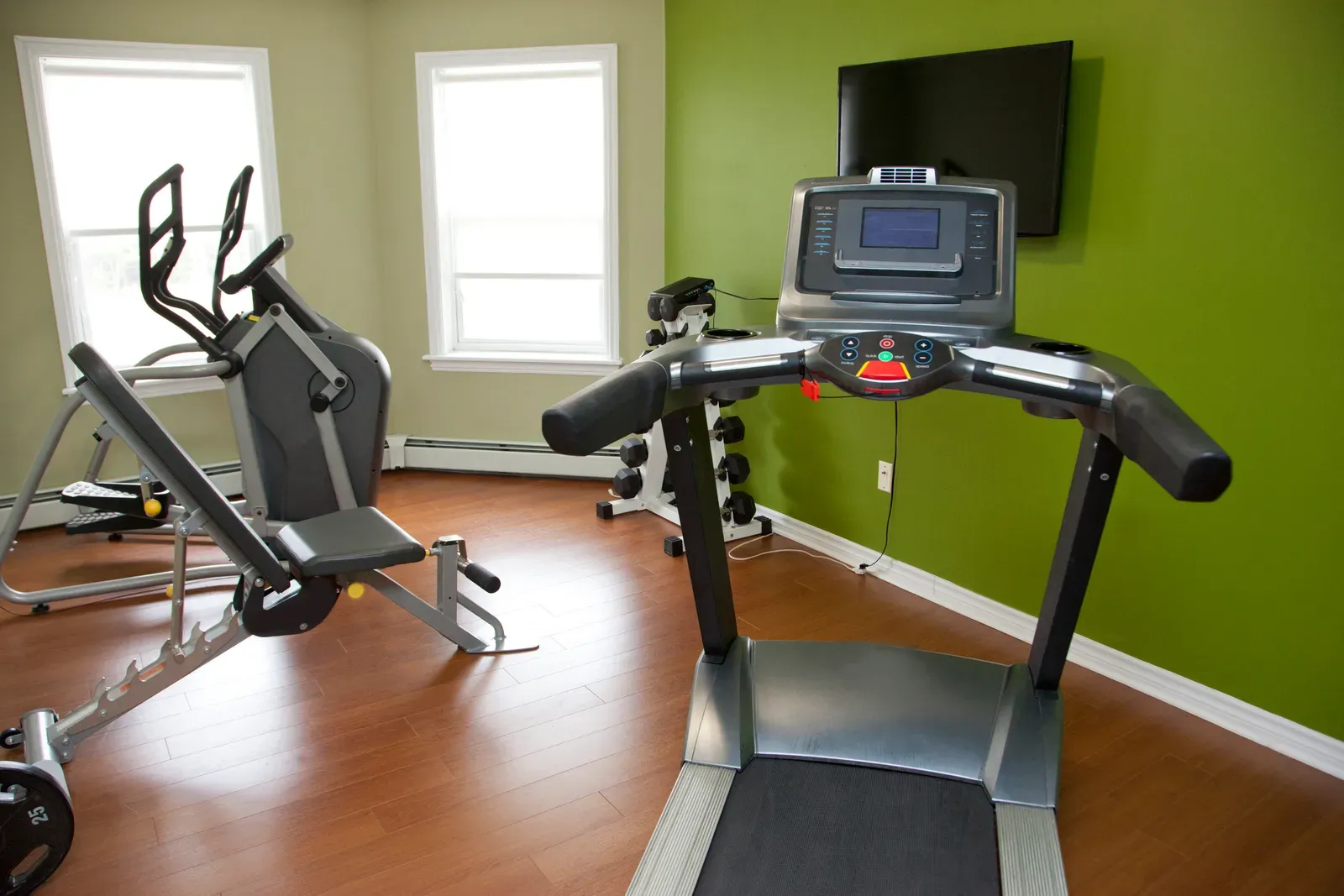
Almost never. Apartment and condo gyms are amenities for residents’ personal use, and nearly every lease, HOA agreement, and building policy bans running a business in them, which is exactly what a paid training session is. The clean alternative costs less than most trainers guess: private rooms rented by the hour in Carmel, from $18 with the first hour free for fitness professionals.
Why buildings ban commercial training
Follow the liability chain and the rule explains itself. A building’s insurance covers residents using the amenity personally; a paid session is commercial activity that sits outside that coverage. If your client gets hurt mid-session, the claims typically reach the building, the management company, and you at once, the building’s carrier commonly disputes an incident arising from unauthorized commercial use, and your own policy may not respond either, since many exclude venues you had no right to operate in. Nobody in that chain wins, which is why lease clauses, HOA rules, and posted amenity policies almost universally prohibit it, and why enforcement is usually swift once a pattern is visible: the same non-resident arriving weekly to instruct is not subtle. Insurance terms vary by policy, so confirm the specifics with your insurer before betting a client relationship on them.
The gray areas people try
A few honest distinctions. Working out with a friend who lives in the building, unpaid, is normal guest behavior nearly everywhere. Training yourself in your own building’s gym is what the amenity is for. The line buildings enforce is payment plus repetition: recurring paid sessions are a business, whether the client lives on the third floor or across town. Asking management for permission is the honorable route and occasionally produces a written yes, but rarely, for the insurance reason above. And relocating the same arrangement to a garage or a park trades one set of constraints for another, as covered in training clients in a home garage and training clients in a public park.
The hourly room that solves the whole chain
What the apartment-gym workaround is really reaching for is a nearby, low-cost, low-commitment room, and that exists legitimately. At FlexWerk at Carmel City Center, 885 Monon Green Blvd with garage parking a short walk away, fitness professionals book fully private training rooms through the FlexWerk app for $18 to $22 per hour: a custom lifting rack, cable system, and dumbbells supporting 850+ exercises in a Standard room and 1,100+ in a Plus, which is more equipment than any amenity room offers. There is no lease and no membership, your insurance covers a venue you actually have the right to use, clients get free guest access, and hours run Monday to Friday 5 AM to 9 PM and Saturday and Sunday 7 AM to 4 PM. More than 40 fitness professionals already run their businesses there.
One client hour at typical local rates covers the room several times over, with the whole liability chain intact. Claim the free first hour and move the session somewhere the building wants your business.
Related questions
What if my client lives in the building and signs me in as a guest?
Guest access covers social visits, not commercial activity. The moment money changes hands for a session, you are running a business in a residents-only amenity, which is what the rules prohibit regardless of who signed you in.
Can the property manager give me permission?
Occasionally, in writing, but rarely in practice: the building's insurance is scoped to residents' personal use, so approving commercial training creates risk the manager has no reason to take. If you ask, get any yes in writing and confirm your own coverage applies.
What does legitimate space cost instead?
At FlexWerk in Carmel, private training rooms run $18 to $22 per hour, cardio spaces start at $12, and the first hour is free for fitness professionals. No lease, no membership, and you keep 100 percent of what you charge.