
Massage Therapist Referral Partnership for Trainers
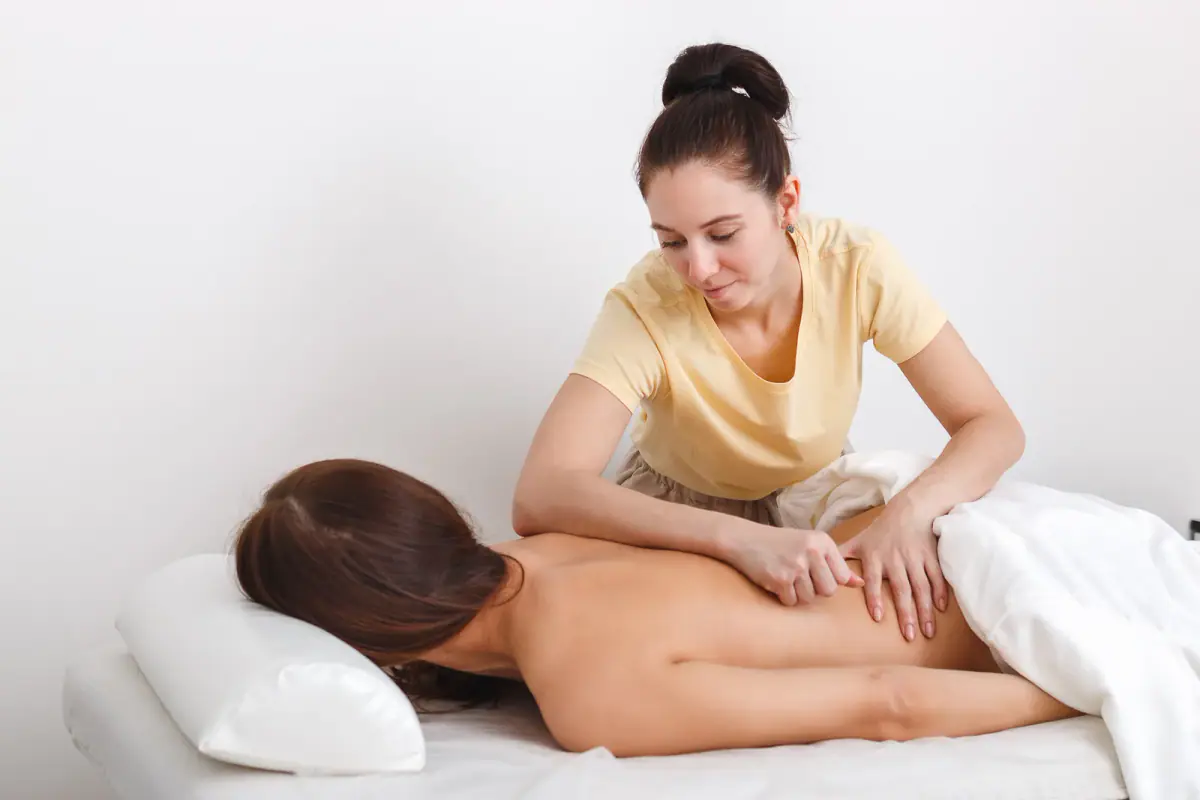
A massage therapist and a trainer make a natural referral pair because muscle soreness and recovery come up in nearly every training client’s week, and each professional sees the other’s best prospects. The partnership works when you keep your scopes clear, use a simple handoff, and send clients back and forth only when it helps them. Practitioners who share a space can make it easier still, which is where space for your practice comes in.
Why the overlap is real
Trainers hear it constantly: “my legs are wrecked after Monday” or “my shoulders are tight at my desk.” A massage therapist hears the same words from the other side, usually from clients who want to feel better and move better. When you train regularly, you create soreness a therapist can help with. When a therapist works on tension, the client often hears “you might get stronger if you trained.”
That symmetry matters. Neither of you is selling something the other cannot do, and a good experience with one makes the other look good.
Keep the scopes clear
Be honest about where each of you stops.
- Trainer: exercise instruction, programming, coaching and general education.
- Massage therapist: licensed hands-on soft tissue work.
- Physician or physical therapist: diagnosis and treatment of pain or injury.
Indiana’s definition of massage therapy in IC 25-21.8-1-4 includes “nonspecific stretching” and “stretching within the normal anatomical range of movement”, so a trainer doing assisted stretching as a stand-alone service may fall inside licensed massage scope. Check with the licensing agency for your situation. This is general information, not legal advice, and rules change. The simplest policy is to coach movement and refer hands-on work out.
A handoff routine that works
Keep it to four short steps:
- Ask first. “Would you like a recommendation for someone who works on recovery?” Never push.
- Name one person. One name is easier to act on than a list.
- Send a short note. Two lines: the client’s first name only with their permission, and the reason, such as “tight after starting a new program.”
- Close the loop. Ask the therapist what they saw, and tell them what you changed in training.
Do not share health information without the client’s written permission. A client’s goals and conditions are theirs.
How to open the relationship
Book a session as a customer first, then send a message after: “I train people in Carmel, and many ask where to go for recovery work. I would be glad to recommend you. Could I send a few clients your way, and would you do the same for strength training?” Offer to host a short talk, such as “movement basics for people who sit all day,” at their space or yours.
If either of you needs a room, hourly rentals avoid a long commitment. Many practitioners find that a sports massage therapist working in a gym setting can serve training clients without a separate lease. For the clinical side of referrals, a chiropractor referral script shows wording you can adapt.
Keep it fair and visible
Agree on a rhythm. A simple one: each side mentions the other once a month in their newsletter, each keeps a card or link to hand out, and you meet quarterly. If a client reports pain that does not ease, both of you send them to a physician.
Avoid paying each other per referral unless you have checked the rules for both professions. If you share clients, share the credit too. Over a year, a few good referrals each way can fill several weekly slots, and both businesses are more stable for it.
Related questions
Should a trainer ever stretch or massage a client?
Be cautious. Indiana's definition of massage therapy includes some stretching, so hands-on work beyond training cues may fall inside licensed scope. Check with the licensing agency, and refer out instead.
Do we need a written referral agreement?
A casual referral does not need one, but write down the basics if money, space or shared marketing is involved. Disclose any fee to clients.
What do I do when a client reports pain that does not go away?
Stop guessing. Suggest they see their physician, and tell them a massage therapist may help with soreness but is not a substitute for medical evaluation.