
S&C career map
Strength and Conditioning Coach Careers in Frisco, TX
A strength and conditioning career around Frisco usually starts with the CSCS and a job in school, college or private performance training, then branches into a private athlete roster. DFW coaches and scouts earned a median of $37,320 a year in May 2025, so many coaches combine a staff role with independent clients. Both paths are open to you, and the CSCS degree rule changes on January 1, 2030.
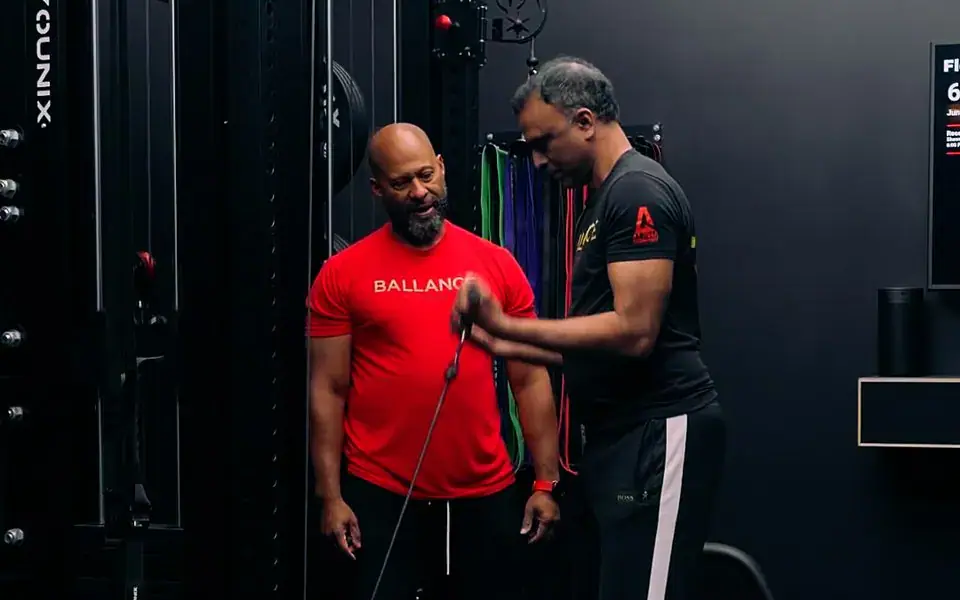
The CSCS is the credential most S&C employers name
The Certified Strength and Conditioning Specialist (CSCS) from the National Strength and Conditioning Association is the standard credential for this career. To sit for it, the NSCA handbook (effective July 1, 2026) asks for three things:
- A bachelor’s degree or higher from an accredited institution, or a degree in physical therapy or chiropractic medicine. The field of study is not restricted today.
- Current CPR/AED certification.
- A pass on both exam sections, Scientific Foundations and Practical/Applied.
The handbook also announces a change. Effective January 1, 2030, US candidates must hold a bachelor’s degree from a CASCE-accredited program. If you are still deciding on a degree, check that program’s accreditation before you enroll. If you already hold a degree, the current rule applies until the switch date, so confirm the details with the NSCA before you plan around it.
About 260 people a month in the Dallas-Fort Worth area search for strength and conditioning coach jobs, and about 20 a month search it in Frisco itself (Google Ads Keyword Planner, November 2026). The Frisco number is small, which tells you something useful: this is a field where you win through relationships and results, not through a crowded job-board search.
Where strength coaches work around Frisco
Strength coaches around Frisco work for four types of employer: schools, colleges, professional sports organizations and private performance facilities. Each type hires differently.
| Employer type | What the work looks like | What it usually asks for |
|---|---|---|
| School athletics | Teams in a school lifting area, often alongside a coaching or teaching duty | Degree, often a teaching or coaching credential, CPR/AED |
| College programs | Team training and assistant roles, often seasonal or graduate-level first | Degree, CSCS, internship history |
| Pro organizations | Small staffs, very competitive entry | CSCS, advanced degree, years of experience |
| Private performance facilities | Youth and high school athletes, small groups | CSCS or similar, a track record with young athletes |
Frisco gives you real context for this. Visit Frisco’s roster of professional sports presences lists the Dallas Cowboys, PGA of America, FC Dallas, the Dallas Stars and the Frisco RoughRiders. Frisco ISD reported about 62,700 students in the fall of 2025 across 12 high schools. None of that means those organizations are hiring, and nothing here implies they work with FlexWerk. It does mean a large number of athletes live within a short drive of any studio you pick, which is the part that matters for a private roster. The school and venue picture has its own page: see the Frisco sports performance space guide.
Entry points in school and college work are usually internships, volunteer hours and assistant roles. Expect to spend your first years collecting reps with real athletes and a mentor who will write your reference.
What the pay data says
The Bureau of Labor Statistics (BLS) reports that Coaches and Scouts in the Dallas-Fort Worth-Arlington area, 4,560 people, had a median of $37,320 a year in May 2025. The middle spread ran from $23,520 at the 10th percentile to $76,570 at the 90th. The national median was $47,320.
Read those numbers carefully:
- The category includes school and college coaches, scouts and other coaching jobs, so it is a weak proxy for a strength coach specifically.
- BLS has no hourly wage for this occupation, only annual figures.
- OEWS covers wage-and-salary jobs, so independent coaches do not appear in it at all.
The honest takeaway is that staff coaching jobs near Frisco often pay modestly at the start, and that is a big reason coaches add private athletes. The trade-off is that a private roster has no benefits, no paid weeks off and no built-in schedule. If you want the same wage comparison for general trainers, the Frisco personal trainer jobs guide covers job types and how to compare offers.
Building a private athlete roster
A private roster works when you treat the parent as the buyer and the athlete as the user. Most of your clients in this age group will be paid for by a parent, who wants to know three things: is my child safe, is this person qualified, and does this fit our week.
Build the roster in this order:
- Credentials first. Hold the CSCS or an NCCA-accredited training certification, plus current CPR/AED. Parents and school contacts check this before anything else. The CPR and AED requirement guide explains what trainers are usually asked to hold.
- A narrow offer. “Off-season speed and strength for high school athletes” beats “fitness for everyone.” Pick one age band and one or two sports.
- A schedule that fits school. Athletes train before school, after practice and on weekends. Your open hours need to match theirs, not yours.
- Small groups once individuals are full. Two or three athletes on a shared programming block lets you serve more families per hour. The small-group training space guide shows how a two-station studio handles that.
Keep your coaching inside your scope. You write training programs; you do not diagnose or treat an injury, and an athlete who is hurt goes to a licensed provider before returning to your program.
How hourly studio booking fits a coach’s career path
Booking a private studio by the hour lets you test the independent route without taking on a lease or buying a full rack, bench and plate set. FlexWerk Panther Creek opens in Frisco in 2027 with 9 FlexSpace Standard studios at $22 per hour (rack, bench, dumbbells, kettlebells and a personal TV) and 4 FlexSpace Plus studios at $26 per hour (two full training stations). You pay only for the hours you book, with no minimums, and you set your own rates and keep 100% of what clients pay.
This is not the best fit for everyone. If your work depends on specialized equipment beyond what the studios list, such as platforms or a sled track, confirm what you can bring or reserve before you commit. Two Werkout lanes sit on the floor plan, and extra equipment can be reserved in the FlexWerk app, but ask what is available for the work you actually do.
A common pattern for a coach on staff somewhere: keep the day job, book two or three evening hours a week, fill them with a few athletes, and grow only as the roster does. Founding 20 members, the first 20 pros to commit before opening, get first pick of studios and peak hours, which for athlete coaches means the after-school window. The interest list is free and there is nothing to sign: see FlexWerk Panther Creek.
For context on youth coaching pricing, the youth performance coach rates article looks at how coaches in this niche set theirs. The Carmel location has logged more than 40,000 coaching hours in 3.5 years, and over 100 coaches there have gone independent with FlexWerk, so the staff-to-independent move is a well-worn one.
A sensible order of operations
If you are starting from zero, this sequence keeps the risk low:
- Finish the degree, with the 2030 CASCE rule in mind if you are still enrolling.
- Add CPR/AED and sit the CSCS.
- Take an internship or assistant role to build references.
- Pick one athlete niche and start with three to five private clients on evenings and weekends.
- Review at six months. If your private hours are full and you want more, that is the signal to go further. If not, adjust the offer before you add costs.
Read your employment contract before step four, and check it again each year.
Questions Frisco pros ask
Do I need the CSCS to coach athletes privately in Frisco?
No law we found requires it. Texas has no state license we could find for strength coaches, and TDLR licenses athletic trainers, a different job. Still, parents, schools and facilities often ask for the CSCS because it is the credential most S&C employers name. Confirm current rules with the agency.
Can I work a school or college job and keep private clients?
Often yes, but read your contract first. Look for outside-work clauses, rules on using school athletes as paying clients, and whether your employer's insurance covers anything you do on your own time. Get permission in writing before you take a single private athlete.
Is the Coaches and Scouts wage a good guide to S&C pay?
Only a rough one. BLS lumps school and college coaches, scouts and others together, and it counts wage-and-salary jobs only, so independent coaches are missing. Treat the DFW median as a floor for staff roles and build your own numbers for private work.
How many athletes do I need to replace a staff salary?
It depends on your rate, your session length and how many hours you can fill. Work backward: set a yearly target, subtract hourly studio costs, divide by what you charge per athlete session. Booking only the hours you use keeps that math simple.
Sources
- NSCA, Certification Handbook (CSCS eligibility, effective July 1, 2026)
- U.S. Bureau of Labor Statistics, OEWS May 2025, Dallas-Fort Worth-Arlington (Coaches and Scouts, 27-2022)
- Visit Frisco, Sports City USA roster
- Frisco ISD, Facts and Figures
- Google Ads Keyword Planner (November 2026)
Panther Creek renderings are shown where noted; final design may vary. Photos labeled City Center were taken at FlexWerk City Center in Carmel, Indiana.