
Do Personal Trainers Need CPR and AED Certification?
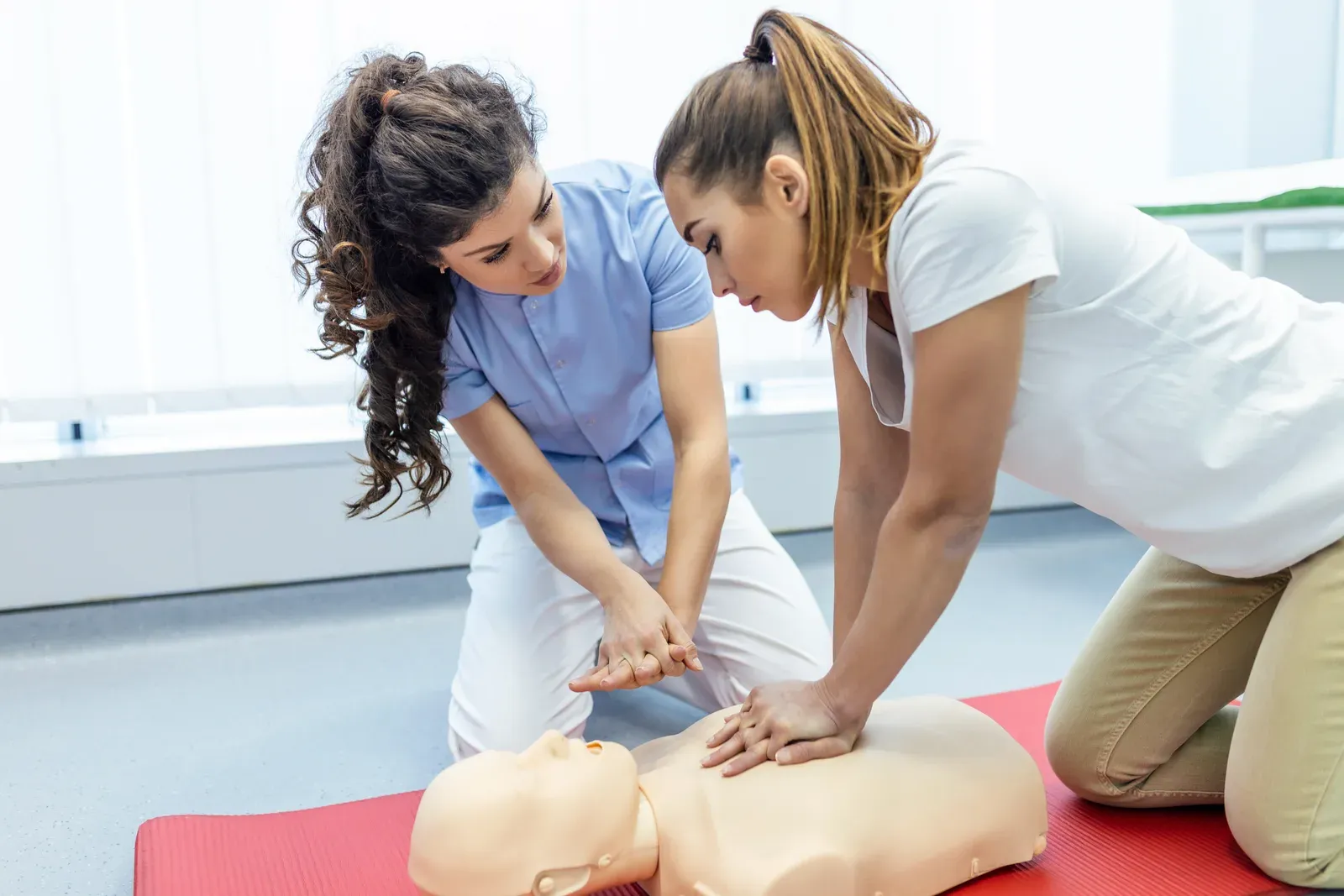
There is no general state law requiring personal trainers to hold CPR and AED certification in most of the country, but every major certifying body requires it to earn and keep your credential, and employers, facilities, and insurers expect it: so practically, yes, you need it. Requirements vary by state and by organization, so confirm the specifics with your certifier, and treat the card as non-negotiable either way.
Who actually requires it
The requirement rarely comes from state law, because personal training is largely unlicensed at the state level. It comes from everyone else in your professional life:
- Certifying bodies. The major credentialing organizations, NASM, ACE, ACSM, NSCA among them, require current CPR and AED certification to sit their exams and to keep the credential in good standing. Let the card lapse and your training certification’s standing can lapse with it.
- Employers and facilities. Gyms hiring trainers check for it as a matter of course, and facilities that rent space to independent trainers commonly ask for proof of certification alongside proof of insurance. If you are planning the independent route, running sessions out of a rented private suite where the first hour is free, assume the paperwork check includes your CPR card.
- Insurers. Liability carriers commonly expect current emergency certification, and demonstrating it keeps your professional profile clean if a claim ever arrives.
- Youth-sports organizations. Programs serving minors typically require emergency certification for coaches. Around Hamilton County, where the Grand Park complex in Westfield draws roughly 1.5 million visitors a year and feeds a deep pipeline of teen athletes into private coaching, trainers who work with young athletes should expect parents and programs to ask directly.
Because the rules are set organization by organization and vary by state, the reliable move is to check your own certifier’s current policy rather than assume; this article is education, not a legal ruling for your situation.
What to get, and how renewal works
Not all cards are equal, and the fitness industry has converged on a clear standard:
- CPR for adults, plus AED training, from a nationally recognized provider such as the American Heart Association or the American Red Cross. Certifiers publish lists of accepted providers; check yours before booking.
- A hands-on skills component. Fully online courses are the classic mistake: they are cheap, fast, and frequently not accepted, because compressions are a physical skill. Choose in-person or blended formats with a live skills check.
- First aid added on. The everyday incidents in a training business, strains, falls, cuts, lightheadedness, are first-aid scenarios, not cardiac ones. The combined course is the professional default.
- Two-year renewal, tracked. Certifications typically expire on a two-year cycle. Calendar the renewal when you certify, the same way you track continuing-education credits, and it never becomes an emergency.
Total cost is modest, a few hours and a double-digit to low three-figure fee every two years, which is trivial insurance against the one afternoon it matters.
Why it matters more when you train independently
Here is the part big-box employment quietly hides: at a commercial gym, there is a front desk, a manager, and usually a staff protocol between an emergency and the outcome. The moment you go independent, that scaffolding is gone. In a private room with one client at 5:30 AM, you are not part of the emergency plan; you are the emergency plan.
That is not a reason to avoid independence; it is a reason to be genuinely competent at the one skill you hope never to use. Early hours amplify the point. Client demand pushes independent trainers toward dawn sessions, which is why FlexWerk’s Carmel facility opens at 5 AM on weekdays, and an early-morning medical event in any setting means you act first and help arrives second. Know the response sequence cold, keep your phone in the room, and know the address you would read to a dispatcher. Our guide to what to do when a client is injured mid-session walks the full protocol, from first assessment to incident report.
There is a business dimension too. Clients increasingly vet independent trainers the way they vet any premium service, and “current CPR, AED, and first aid” on your credentials list reads as professionalism. Parents of youth athletes, adult children arranging training for older parents, and corporate wellness contacts all ask versions of the same question: is this person safe to be alone with someone I care about?
The bottom line for working trainers
Treat the question as settled: get certified before your first paid session, keep it current on a two-year cycle, choose a course with a hands-on skills check, and add first aid. Verify your certifier’s exact requirements, since policies vary by organization and state rules can differ too.
Then extend the card into an actual habit. In every space where you regularly coach, know where the nearest AED lives and how you would direct EMS to the door; ask the facility on your first visit, because the certification only matters if you can execute in the specific room you are standing in. Pair it with a one-page emergency plan and current emergency contacts for every client, and the whole system takes an evening to build.
Then file it where it belongs, as the quiet foundation under a career spent making people stronger. If you are building toward independent work, get the card, get insured, and go run a real session in a room of your own.
Related questions
Does CPR certification expire?
Yes, certifications typically run two years. Set the renewal reminder the day you certify, because an expired card can quietly invalidate your training certification's good standing.
Is an online-only CPR course enough?
Usually not for this profession. Major certifying bodies commonly require a hands-on skills component, and compression technique is a physical skill you cannot learn from a video alone. Choose a course with an in-person or skills-check element.
Should I add first aid to the CPR and AED course?
Yes. The incidents trainers actually see, strains, falls, cuts, dizziness, are first-aid situations far more often than cardiac ones, and the combined course usually costs little more.