
Space to Teach Women's Self Defense Classes in Carmel
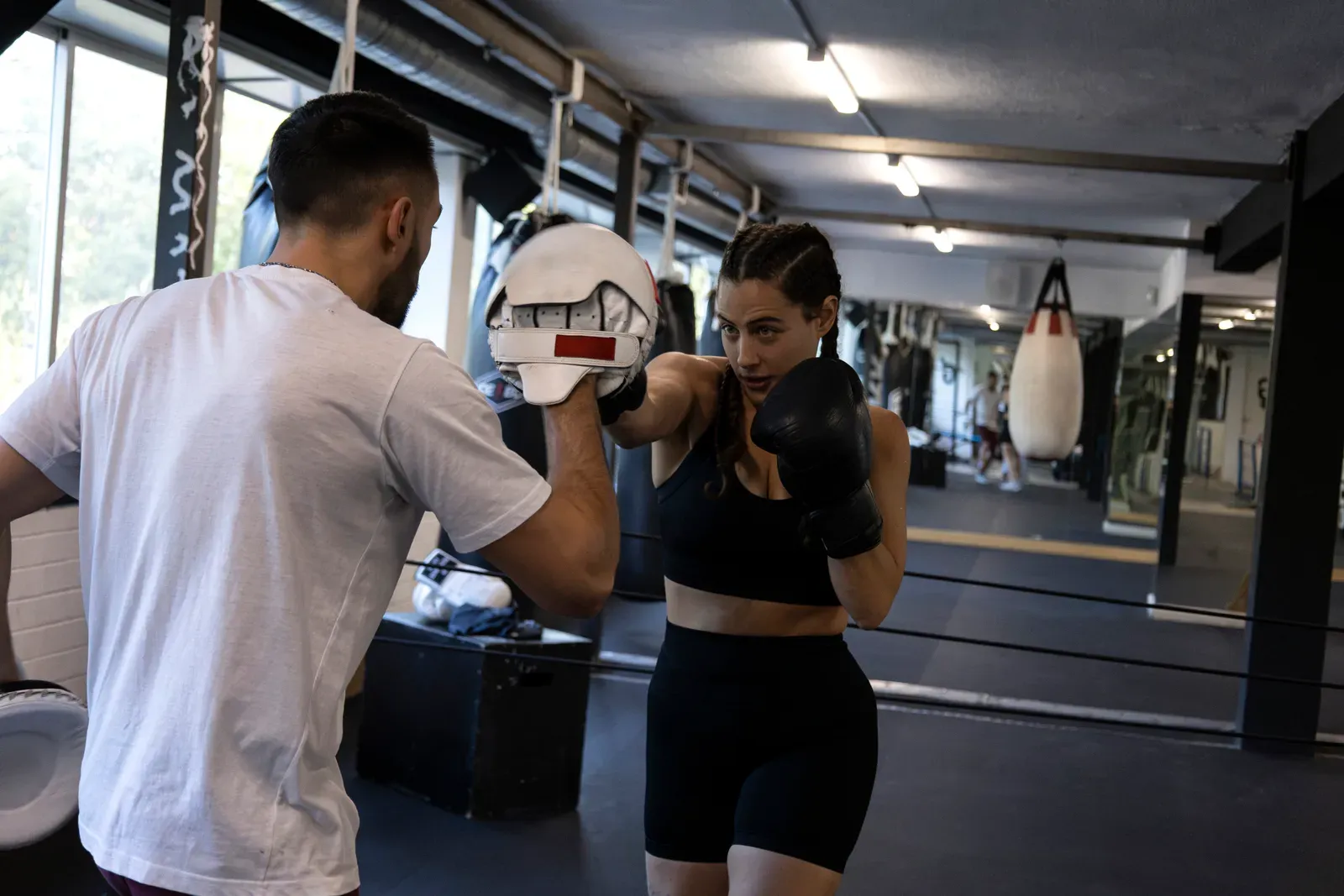
The women most likely to seek self defense training are often the least likely to walk into a martial arts school to get it. FlexWerk at Carmel City Center rents private training spaces by the hour, giving a self defense instructor a closed, controlled room for standing pad work, escapes, and awareness seminars with up to 4 students, no lease, and the first hour free. For this audience, the private room is not a convenience; it is the reason many students show up at all.
Privacy is the product in this niche
Self defense training asks students to be loud, aggressive, and briefly vulnerable, and most women will not rehearse any of that in front of strangers. The traditional venues fail them twice: a martial arts school wraps the material in a culture and commitment many never wanted, while a big-box group class delivers choreography with an audience. A private room removes the audience entirely. Behind a closed door, a nervous student will yell her first real “back off,” swing full force into a pad, and practice an escape repeatedly without embarrassment, which is where the actual skill acquisition happens.
The format also fits how this training is actually bought: not as a years-long practice but as a focused block, a handful of sessions purchased for a daughter leaving for college, a friend group after an unsettling incident, or a personal goal finally acted on.
What fits the room, and what does not
Teach standing material and say so plainly in your marketing. The rooms have standard gym flooring, not the padded surface throwing practice requires, so the honest curriculum split looks like this:
- Fits: strikes on your pads and shields, palm and elbow mechanics, escapes from standing grabs, footwork and distance management, verbal boundary drills, scenario walk-throughs, and awareness seminars
- Does not fit: throws, takedowns, groundwork, and any live sparring; that material belongs at a dojo built for it, and instructors who teach it split their teaching across both venues
All impact equipment is bring-your-own: pads, shields, gloves, and timers travel in with your session bag. A FlexSpace Standard at 150 sq ft handles privates and pairs; a Plus at 200 sq ft hosts up to 4 for the small seminar format. The neighboring martial arts instructor page covers the broader private-lesson model, and the boxing conditioning page maps the striking-for-fitness adjacent market.
Formats that sell in Carmel
The local market shapes the offer neatly. Carmel is a professional city of roughly 105,000 with a median household income north of $140,000, and the buyers in this niche cluster into predictable groups: parents booking pre-college blocks for daughters, professional women buying private or duet sessions, friend groups of three or four splitting a seminar, and workplaces along the corporate corridor arranging small-format sessions for staff. The four-guest ceiling keeps every format personal, which is the point; per-head pricing for the group tier is covered in the semi-private billing answer.
Scheduling works around real lives: hours run Monday to Friday 5 AM to 9 PM and weekends 7 AM to 4 PM, booked by the hour through the FlexWerk app, at 885 Monon Green Blvd in Carmel City Center with garage parking a short walk away and the Monon Trail steps from the door.
Teaching it responsibly
Credibility in this niche is built on honesty about what training can and cannot do. Competent instructors carry recognized instructor credentials in a self defense methodology, maintain liability insurance appropriate for contact drills, have every participant sign a waiver, and never promise outcomes; they teach awareness and avoidance first, physical skills second, and they say clearly that no course makes anyone invulnerable. The paperwork side is unglamorous and essential: what waivers actually do and what instructor insurance covers are both worth reading before your first seminar, and specifics vary enough that a conversation with your insurer is time well spent.
Emotional pacing is part of the craft too. This material can surface hard experiences, and a private room lets you slow down, pause, or redirect a session without an audience watching it happen, another quiet argument for the closed door. Instructors with counseling-adjacent situations in the room refer to licensed mental health professionals the same way trainers refer injuries: promptly, warmly, and without playing a role they are not trained for.
Skills fade without practice, so build the follow-up into the offer rather than leaving it to chance. A refresher session at three and six months keeps escapes and strikes usable, gives graduates a reason to return, and turns a one-time block into a standing relationship; many instructors also send short practice reminders between sessions so the material stays live at home.
The business case
Small-format self defense teaching prices well against a tiny cost base. Sessions in Carmel’s premium 1:1 tier commonly run $75 to $125 or more, seminar groups multiply that per head, and your facility cost is a single room at $18 to $22 per hour with no lease, no membership, and 100 percent of the fee kept; current rates are on the pricing page. More than 40 fitness professionals already run their businesses in the building, and the free first hour makes the trial run costless.
Book that hour, bring your pads and one student, and teach the session she has been putting off for years, with the door closed and nobody watching but you.
Related questions
What self defense curriculum fits a FlexSpace?
Standing work: strikes on pads, escapes from standing grabs, footwork, verbal boundary practice, and awareness seminars. Throws and groundwork need padded flooring, which the rooms do not have, so that material belongs at a dojo.
How many students can attend a session?
A FlexSpace Standard hosts 1 to 2 guests and a Plus hosts up to 4, which fits privates, pairs, and small seminar groups. Pads, shields, and gloves are bring-your-own.
What does the room cost?
Training spaces run $18 to $22 per hour through the FlexWerk app, with no lease or membership, and instructors get their first hour free.