
Training Couples and Small Groups in a FlexSpace Plus
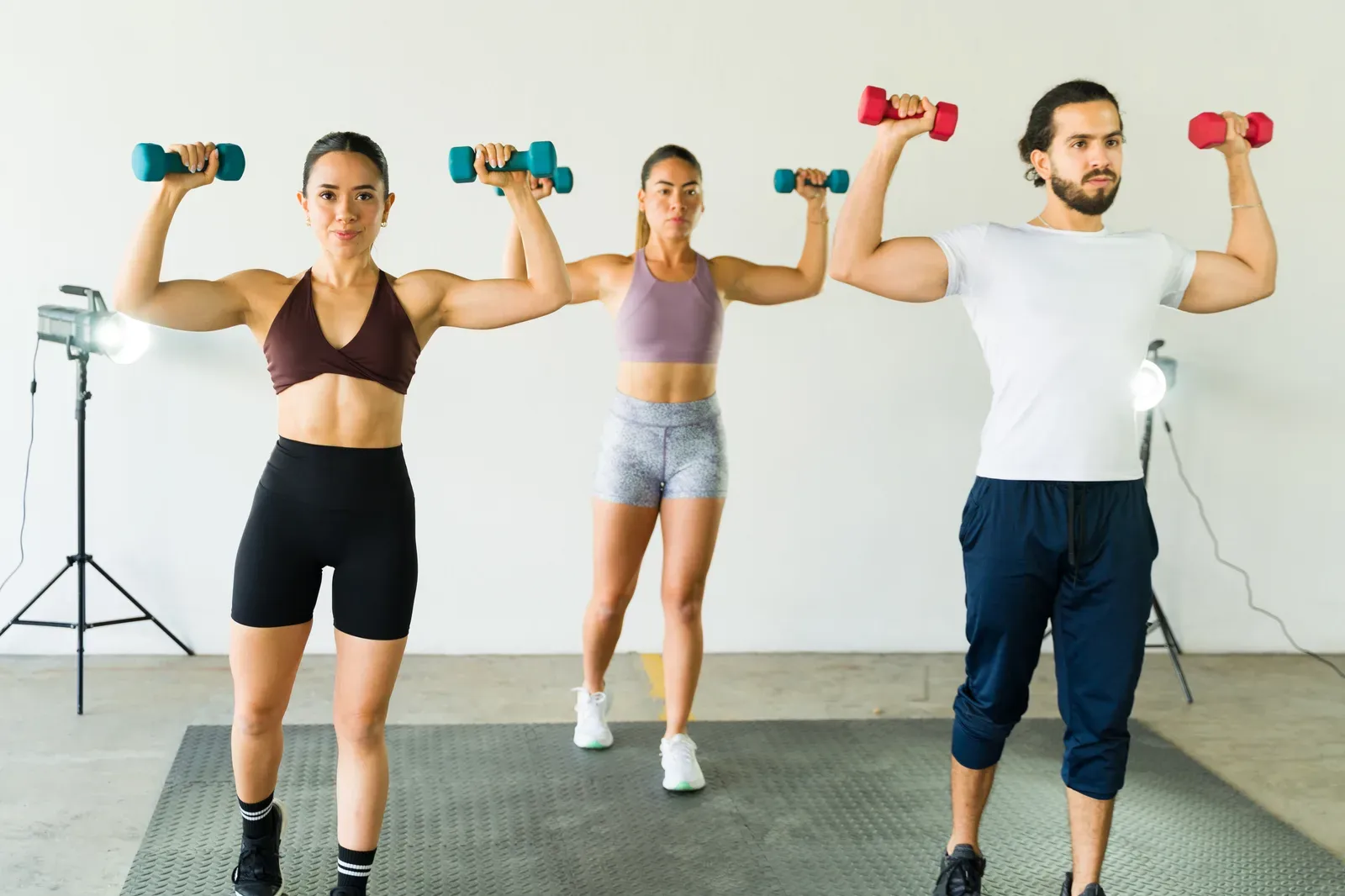
Couples and small groups are the highest-leverage hour in most training businesses, and the format almost every commercial gym is bad at hosting. In a FlexSpace Plus, you get 200 square feet, equipment for 1,100+ exercises, and up to four guests behind one closed door, booked only for the hours you actually coach. No floor-space politics, no strangers drifting through your circuit.
This piece covers why pairs and small groups respond so well to a private room, what the Plus suite gives you to work with, and the honest math and programming constraints of the format.
Why pairs train better in a room of their own
Semi-private training on a commercial floor is an exercise in apology. You claim a corner, someone takes your second station mid-superset, your two clients end up doing alternating sets on one bench while you improvise. The format’s whole appeal, shared energy, shared cost, a coach’s attention split two or three ways instead of thirty, gets eaten by logistics.
Close the door and the format works the way it’s supposed to. Couples talk to each other honestly during sessions, which they rarely do with an audience. Friend pairs push each other without performing for the room. Small groups develop the private-team feeling that keeps people rebooking, the session becomes theirs, at their volume, with their music, because in a private suite the playlist and lighting are yours to set.
There’s a quieter benefit for you: the group hears only your coaching. On a gym floor, your cues compete with three other trainers and the house speakers. In a suite, one voice.
And the format carries a retention advantage that solo training can’t match. When one half of a couple hits a motivation dip, the other half drags them to the session anyway, the commitment is social, not just personal. Coaches who run pairs consistently report longer client tenures for exactly this reason: quitting now requires two people to agree on it.
What you’re working with in a Plus suite
The FlexSpace Plus is the small-group build of the FlexWerk suite lineup:
- 200 sq ft of dedicated floor, sized for up to 5 guests plus you
- An expanded equipment build supporting 1,100+ exercises, custom lifting rack, cable system, and dumbbells
- WiFi, music streaming, a TV/monitor, and controllable lighting, all yours for the hour
- Genuine privacy, the door closes, and nobody outside your group comes in
Booking runs by the hour through the FlexWerk app, with no lease or membership behind it, and your guests come in free, clients of trainers receive free guest access. The facility is open 5 AM-9 PM weekdays and 7 AM-4 PM weekends, which matters for this format because couples overwhelmingly want early-morning and evening slots they can share.
The economics, worked honestly
The semi-private model earns its reputation. The standard structure: each participant pays somewhat less than your 1-on-1 rate, and the combined hourly gross exceeds what one private client pays. In a market like Carmel, where private and premium training commonly runs $75 to 125+ per hour, a pair paying a modest per-person discount still typically grosses well above a solo session, from the same sixty minutes of your day.
Because a suite rents by the hour rather than per head, your space cost for that hour doesn’t grow with the group. Two clients or five, one booking. That’s the structural reason small-group coaches gravitate to hourly private space; the pricing model is built around the hour, not the headcount.
Now the concessions, because the format has real ones:
- Scheduling is harder. Two or four calendars have to agree. Expect more reschedules than 1-on-1, and write your policy accordingly.
- Coaching load rises. Four people at four fitness levels is a genuinely harder hour than one client. Underpricing semi-private because “they’re sharing” is the classic mistake, you’re doing more, not less.
- Group chemistry is a variable. A mismatched pair can quietly poison both retentions. Curate who trains with whom; don’t just accept any bundle.
Programming inside 200 square feet
A Plus suite rewards coaches who program deliberately. What works well: paired strength work rotating through the rack and cables, dumbbell circuits with stations you set before the group arrives, EMOM and interval formats where the equipment demand is staggered rather than simultaneous. What doesn’t: sprawling six-station circuits or anything that needs a turf runway. If your group model is eight people and agility ladders, this isn’t your room, that’s a boot-camp facility conversation, and it comes with a lease.
The practical cap is where the suite is honest with you: up to four guests, and most coaches find two to four is the sweet spot where everyone touches iron every round. Set up before the session, one advantage of a private room is that nobody dismantles your layout while you greet clients at the door.
Trying the format before you commit to it
If you’ve been running 1-on-1 and semi-private is the growth lever you keep circling, the barrier to testing it is unusually low. Ask two compatible clients if they’d split a session, price it so each saves a little and you earn more, and book your first hour free in a Plus suite to run the experiment with nothing on the line but an hour of programming. One real session will tell you more about whether you enjoy coaching groups than a month of spreadsheet modeling.
Related questions
How many people can train in a FlexSpace Plus?
A Plus suite is 200 sq ft and hosts up to 4 guests, with an expanded equipment build supporting 1,100+ exercises, sized for couples, pairs, and small semi-private groups.
Do my clients pay anything to come in?
No. Clients of trainers receive free guest access, you book the suite, they walk in with you, and you charge them whatever your semi-private rate is.
Is small-group training actually more profitable than 1-on-1?
Commonly, yes, on a per-hour basis: each person pays less than a private rate, but two to four people together typically gross more per hour than one. The trade-off is more coaching complexity per session.