
Speed and Agility Coach Private Space in Carmel
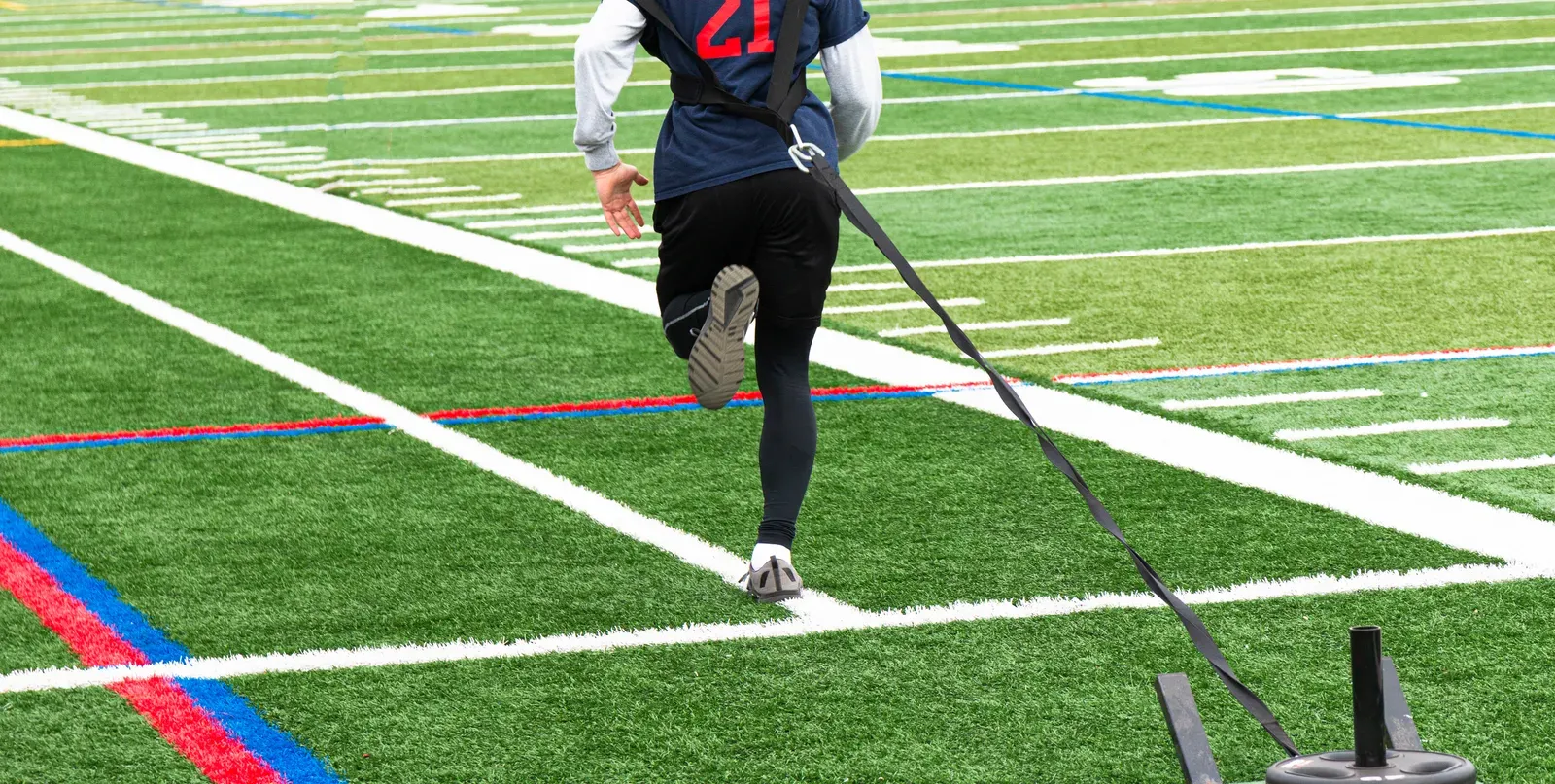
Speed training sells itself to every field-sport family in the county, then runs into a facility problem: fields are seasonal, field houses rent in team-sized blocks, and nobody coaches first-step mechanics well on a crowded gym floor. A speed and agility coach can run acceleration mechanics, resisted sprint work, and the strength that drives both in a private hourly facility with a turf corridor, booking by the hour instead of leasing anything. At FlexWerk in Carmel, the first hour is free for fitness professionals.
What the turf corridor genuinely supports
The corridor handles the acceleration phase, which is where most athletes leak the most time anyway. It runs alongside the private training rooms and suits sled pushes and drags with your own sled, band-resisted starts, first-step and projection-angle mechanics, lean-in posture drills, and short cone patterns for change-of-direction footwork. That list covers the coached, filmed, repetition-heavy technical work that fields are actually bad at hosting, because fields have weather, teams, and no walls to keep a session private.
Every implement travels with you: sled, bands, harness, low hurdles, cones. The facility’s rule for specialty gear is bring-your-own, which serious speed coaches prefer since their tools are calibrated to their method.
A tight hour runs in blocks: filmed acceleration mechanics first while the athlete is fresh, resisted work with sled or bands second, then strength in the room while the corridor footage waits for review. The athlete leaves with a clip, the parent sees visible product, and you get a session structure that repeats cleanly across an entire roster.
What it does not support, said before a parent asks
Full sprint distances do not fit a corridor, and pretending otherwise would be malpractice. Maximum-velocity work, flying runs, and team-sized speed sessions need a field house or a field, and the strongest local practices run the two-venue model on purpose: field time for max-velocity and team days, private hourly space for acceleration mechanics, strength, and the individual technical work that gets athletes noticed. The corridor’s honest scale is laid out in the turf space rundown, and coaches who lead with that honesty win the trust that referral pipelines run on.
The strength half of speed
Acceleration is a strength expression, so half of a real speed practice happens on the rack. The training rooms carry a custom lifting rack, cable system, and dumbbells supporting 850+ exercises in a 150 sq ft Standard and 1,100+ in a 200 sq ft Plus, covering the squat, hinge, and single-leg strength that first-step power is built from, plus cable-resisted patterns that load sprint actions directly. The workflow that sells the service is film and review: phone on the corridor, playback on the room TV over WiFi, and a before-and-after clip that shows a family exactly what changed. Testing days, timed splits and standardized retests, turn that progress into numbers; the athlete testing day guide covers running those as an event.
Pick two or three testable markers per athlete, a timed ten-yard start, a standing jump, a strength benchmark, and retest on a fixed calendar. Numbers protect you from the vagueness that sinks most speed programs, and they hand a family a reason to re-enroll that owes nothing to salesmanship.
Grand Park is the client pipeline
The market for this niche sits fifteen minutes of ambition away. Grand Park in Westfield spans 400 acres with 31 multipurpose fields and 26 diamonds and draws around 1.5 million visitors a year, which means a constant churn of field-sport athletes whose parents already pay for club seasons and are actively shopping for the edge between rosters. Add Carmel’s own youth-sports machine, community programs with more than 15,000 annual participants, and a median household income north of $140,000, and the semi-private speed group becomes a routine family purchase. Winter matters too: with around 22 inches of snow a year, the November to March window pushes every field-sport athlete indoors, straight at the coach who has a warm, private, bookable room.
If your athletes are track athletes chasing marks rather than field-sport athletes chasing rosters, that sibling practice is mapped in the track and field coach guide.
The hourly business model
The math favors small groups and zero overhead. Rooms rent for $18 to $22 per hour through the FlexWerk app, you keep 100 percent of what you charge, and a Plus room’s four-athlete capacity lets a semi-private group rate stack well above your room cost while each family pays less than a private rate. There is no lease, so the seasonal rhythm of club sport, heavy in the off-season, quiet during tournaments, costs you nothing in the quiet weeks. Hours run Monday to Friday 5 AM to 9 PM and weekends 7 AM to 4 PM, and the facility at 885 Monon Green Blvd has garage parking a short walk away for the parents doing drop-off. More than 40 fitness professionals already run their businesses in the building. Bring youth-appropriate liability coverage and current waivers, since most of this roster is under 18, and let parents watch: clients of professionals receive free guest access, and a watching parent is a renewing parent.
The model’s limit is worth restating as strategy: you are not selling a field, you are selling precision. The coach who tries to run team-sized speed camps in a private facility disappoints everyone; the coach who runs fours with film and fixed retest dates builds a waitlist.
Claim the free first hour, bring your sled and one athlete with a slow first step, and film the fix; that clip is your marketing plan.
Related questions
Are sleds and speed tools provided?
No. The rooms stock the rack, cable system, and dumbbells; sleds, bands, harnesses, and low hurdles are bring-your-own, carried in for the session and out when you leave.
Can athletes hit full speed there?
No, and a coach should say so plainly. The turf corridor handles starts, first steps, and resisted acceleration; maximum-velocity work needs a field house or field, which is the honest two-venue model.
How many athletes can I train at once?
A Standard space suits one or two athletes and a Plus holds up to 4, which fits the semi-private speed groups most coaches run. Team-sized sessions belong at a field.