
Private Space for Occupational Therapists in Carmel
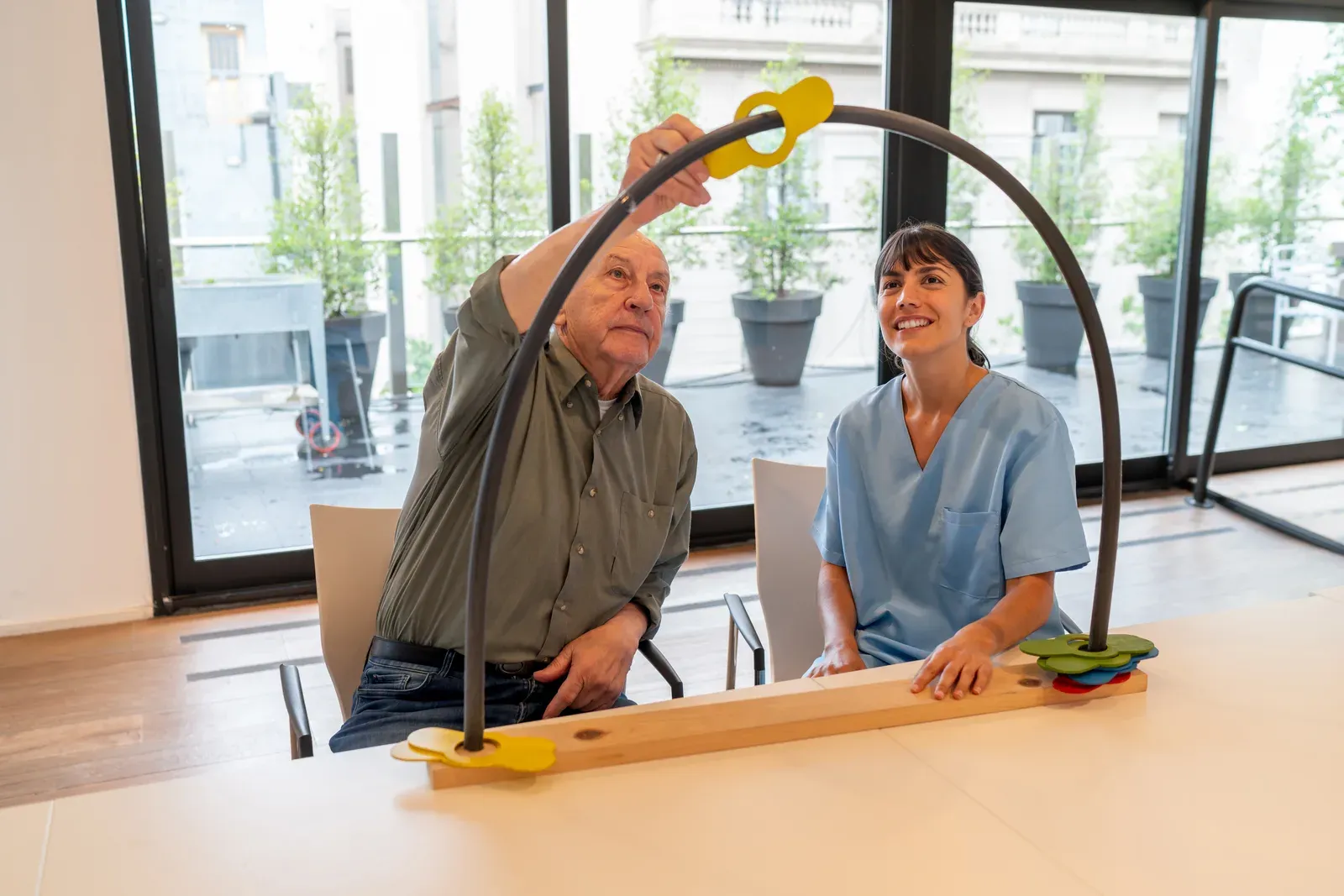
If you are an occupational therapist looking at occupational therapy space rental in Carmel, the options have historically been bad: a clinic sublease priced for full-time occupancy, or home visits that eat your day in driving. FlexWerk at Carmel City Center rents private, door-closed suites by the hour, which gives an OT building a cash-based or contract practice a professional environment that costs nothing in the hours you are not seeing clients. Your first hour is free, so testing the room against your caseload is a zero-dollar experiment.
Where independent OT work actually happens today
Most OTs who step outside hospital or school employment end up practicing in one of three places, and each has a real cost. Home visits are personal and contextual, but the drive time between a client in Westfield and a client in Fishers is unbilled, and you control nothing about the environment. A sublease inside someone else’s clinic means fixed monthly rent against a caseload that may only need a room ten hours a week. And borrowed community spaces, church rooms and senior-center corners, undercut the professionalism your rate depends on.
An hourly private suite is the fourth option. You book the room when a client books you, the cost attaches to revenue instead of to the calendar, and the setting reads as premium because it is.
Who books a private-pay OT visit in Hamilton County
The clients who seek out an independent OT here look a lot like Carmel itself. The city has roughly 105,600 residents with a median household income of $141,505, which means families who can and do pay out of pocket for one-on-one attention insurance visits rarely allow. Typical caseloads for independent OTs in a market like this include:
- Older adults working on the strength, endurance, and confidence that keep them independent at home
- Adults returning to work and daily routines after injury or illness, once formal clinic care has ended
- Clients whose goals are functional, practical, and specific, the exact work that gets rushed in high-volume settings
You know your own niche better than any list. The point is that the demand side of this market skews toward exactly the client who values a private room and an unhurried hour, and toward families who research providers carefully and refer loudly when the experience justifies the fee.
What the suite gives you, and what it deliberately does not
Every FlexSpace is a fully private room with a door, not a curtained bay, which matters when clients are discussing health history, fear, and frustration. Standard suites run 150 square feet for one or two guests with a lifting rack, cable system, and dumbbells; Plus suites run 200 square feet for up to four people, useful when a spouse or adult child should be in the room. Every suite has WiFi, a TV you can use for reviewing home-program material, music streaming, and controllable lighting. Clients of professionals get free guest access, so there is no facility fee layered onto your rate.
What the suite is not: a clinic. There are no treatment tables, modalities, or adaptive equipment on site. Whatever your practice model requires, you bring, the same way visiting practitioners handle equipment questions in any rented gym space. Practice within your licensure and scope; FlexWerk provides the private space, not clinical oversight or medical equipment. Before your first client visit, confirm your setting and documentation requirements with the Indiana licensing board, make sure your professional liability policy covers care delivered in rented non-clinic space, and let an attorney look at your client agreements. That diligence is routine for cash-based practitioners, and it is yours to own, not the facility’s.
The economics, without the spreadsheet theater
Scheduling works in your favor before the math does. Suites book through the FlexWerk app with facility hours of 5 AM to 9 PM on weekdays and 7 AM to 4 PM on weekends, so early sessions for working clients and midday visits for retirees both fit inside one practice. Booking a morning block of visits in the same suite keeps your day in one place, which is exactly the overhead a home-visit practice can never recover from the road.
The math of hourly space is simple enough to do in your head. A sublease bills you for every hour of the month whether clients come or not, so a slow ramp-up phase actively loses money. An hourly suite means a week with four visits costs you four bookings, and a week with fifteen costs fifteen, while you keep 100 percent of what you charge. That structure lets you keep a hospital or school position while the private caseload grows, which is how most careful practitioners make this transition. When you are ready to think through rates, the premium one-on-one tier in Carmel commonly runs well above big-box personal training prices, and the setting you deliver in is a large part of what justifies the difference.
There is also a referral dimension that surprises people. More than 40 fitness professionals run their businesses at FlexWerk Carmel, and trainers regularly meet clients whose needs sit outside a trainer’s scope. An OT sharing the same hallway is the easiest referral those trainers will ever make, and the relationship runs both ways when your clients graduate to general fitness work. Physical therapists have already proven this pattern in rented space, and the cash-based PT playbook translates to OT practice almost line for line.
What to do this week
Skip the business plan for now and go look at the room. Book the free first hour, bring the tools you would actually carry to a client visit, and run the session in your head: parking in the garage a short walk away, the walk past the Monon, the door closing behind your client. If the room fits your practice, the rest is scheduling.
Related questions
Can an occupational therapist see clients in a rented training suite?
Many OTs building cash-based or community practices use rented private space for the movement and function portions of their work. Confirm the specifics with the Indiana licensing board, your liability insurer, and an attorney, because requirements vary by practice model and state.
Does FlexWerk provide any clinical or adaptive equipment?
No. Suites come equipped for strength and conditioning work, with a lifting rack, cable system, dumbbells, and connected cardio. Any clinical or adaptive tools your practice requires are yours to bring, and FlexWerk provides the private space, not clinical oversight.
Is there a low-risk way to test the model?
Yes. Your first hour is free through the Fit Pro funnel, so you can walk the suite, stage a mock visit, and decide whether the room fits your practice before spending anything.