
Soccer Conditioning Coach Space Near Grand Park
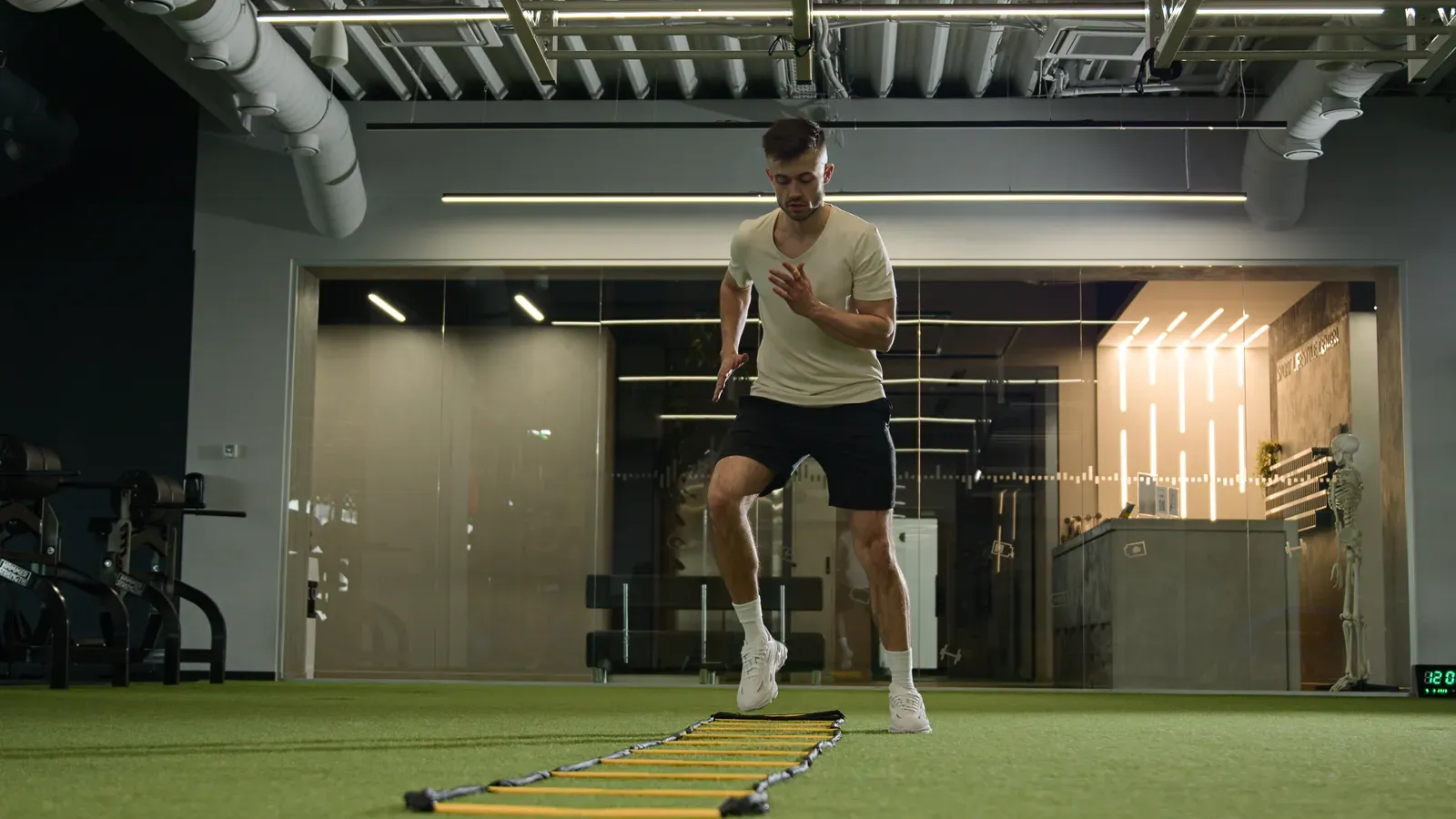
Club soccer in Hamilton County produces thousands of technically trained players and almost no strong ones, because the club calendar has no room for the work. A private hourly training room gives soccer conditioning coaches a home for the strength, power, and post-clearance conditioning that club players need and club schedules cannot deliver, beside one of the densest youth soccer scenes in the country. At FlexWerk in Carmel, the room books through an app and the first hour is free for fitness professionals.
The club calendar’s blind spot
A serious club player’s week is full: team training multiple evenings, matches on weekends, and in this area, showcase and tournament traffic layered on top. Grand Park in neighboring Westfield, a 400-acre campus with 31 multipurpose fields drawing on the order of 1.5 million visitors a year, hosts the nation’s largest college soccer showcase and keeps the local calendar saturated with soccer year-round. What all that volume does not include is individual physical development. The campus model is built for teams and events, clubs program tactically because that is their job, and the athlete’s strength, power, and resilience are left to whoever the family hires. Usually, nobody.
The gap shows up in two expensive ways: players who plateau physically behind their technical level, and players who get hurt doing the cutting and landing the sport demands of legs nobody prepared. Both are the conditioning specialist’s market, and the wider campus-adjacent opportunity is mapped in training clients near Grand Park.
What a soccer conditioning practice runs in a private room
A FlexSpace Standard is a 150 square foot private room with a custom lifting rack, cable system, and dumbbells; a Plus holds up to four players in 200 square feet. The soccer menu:
- Lower-body strength: squatting, hinging, and heavy single-leg work, the foundation of sprint speed and shot power
- Landing and deceleration quality: controlled strength and plyometric progressions aimed at the knee-loading actions the sport is notorious for; reduction-focused programming is squarely a qualified coach’s job, while anything injured belongs with clinicians
- Trunk and hip control: cable-resisted rotation and anti-rotation for striking, shielding, and change of direction
- Engine work: cardio spaces with HYDROW rowers, CLMBR machines, and curved treadmills, where interval structures build the repeat-sprint capacity matches actually test
- Return-to-play conditioning: once a physician or physical therapist has cleared the athlete, the rebuilding phase needs a private, focused home, and the coach who provides it becomes every local clinician’s favorite referral
Ball work stays on the pitch. This room is the physical layer, and saying so plainly keeps your positioning clean with clubs rather than competitive against them.
The scope line that makes this practice referable
Return-to-play is where soccer conditioning coaches either build a referral network or burn one. The line is simple: FlexWerk is a training facility, not a medical one, and rehabilitation is clinical work that belongs with licensed providers. Your practice starts at clearance, runs the conditioning phase with documentation, and refers back instantly when anything looks clinical. Coaches who hold that line get a steady stream of cleared athletes from clinicians who need somewhere trustworthy to send them; coaches who blur it get neither referrals nor insurance peace of mind. Carry liability coverage appropriate to your credentials, and keep the athlete’s medical team in the loop.
The market next door
The demographics do the prospecting for you. Travel soccer families here already budget for club fees, private technical sessions, and tournament travel; a conditioning line item extends an existing habit rather than creating one. Community youth sports in this county run past 15,000 annual participants, Carmel High School just finished 2025-26 as the country’s top-ranked all-sports athletic program, and the showcase economy at Grand Park means high-school players chasing college rosters, the exact demographic that buys physical development, are constantly cycling through the area. FlexWerk sits on the family commute at Carmel City Center, 885 Monon Green Blvd, garage parking a short walk away.
Building it by the hour
Soccer’s rhythm rewards the hourly model. Winter and summer breaks are your building windows with standing multi-week blocks; in-season drops to one maintenance session a week around the club calendar; tournament weekends go quiet. Rooms book in real time through the FlexWerk app at $18 to $22 per hour with no lease, so cost tracks volume through every phase, and facility hours, Monday to Friday 5 AM to 9 PM and weekends 7 AM to 4 PM, fit before-school lifts and post-training evenings alike. Semi-private pairs and trios in a Plus room match how teammates already train and improve your hourly economics, and every room’s WiFi, TV, and filming-friendly setup turn testing days into the clips that market the practice. More than 40 fitness professionals already run their businesses in the building; the pattern is waiting.
The Indiana calendar hands this practice one more advantage: winter. Field-based speed and technical work goes indoors or goes dormant from November into March, and coaches who built their business on outdoor sessions spend those months improvising; the seasonal survival plan in a winter home for outdoor trainers exists for a reason. A soccer conditioning practice anchored in a private room holds its schedule straight through the snow, which is exactly when players have the training bandwidth to build strength anyway. Speed work on turf and field sessions in season remain part of a complete program; the room is the year-round spine the weather cannot touch.
Claim the free first hour, bring one cleared and plateaued club player, and run the baseline session that shows the family what the club calendar has been skipping.
Related questions
Can you run rehab for injured players here?
No. FlexWerk is a training facility, not a medical one. Rehabilitation belongs with licensed clinicians; a conditioning coach picks up after the physician or physical therapist clears the athlete, and refers back the moment anything looks clinical.
Does ball work happen in the room?
No. Technical and tactical work stays on the pitch with the club. This room owns strength, power, and conditioning, the physical layer club schedules chronically underserve.
What does the space cost a coach?
Rooms rent for $18 to $22 per hour through the FlexWerk app, cardio spaces from $12, with no lease or membership. The first hour is free for fitness professionals.