
A Sensory Friendly Workout Space You Can Book by the Hour
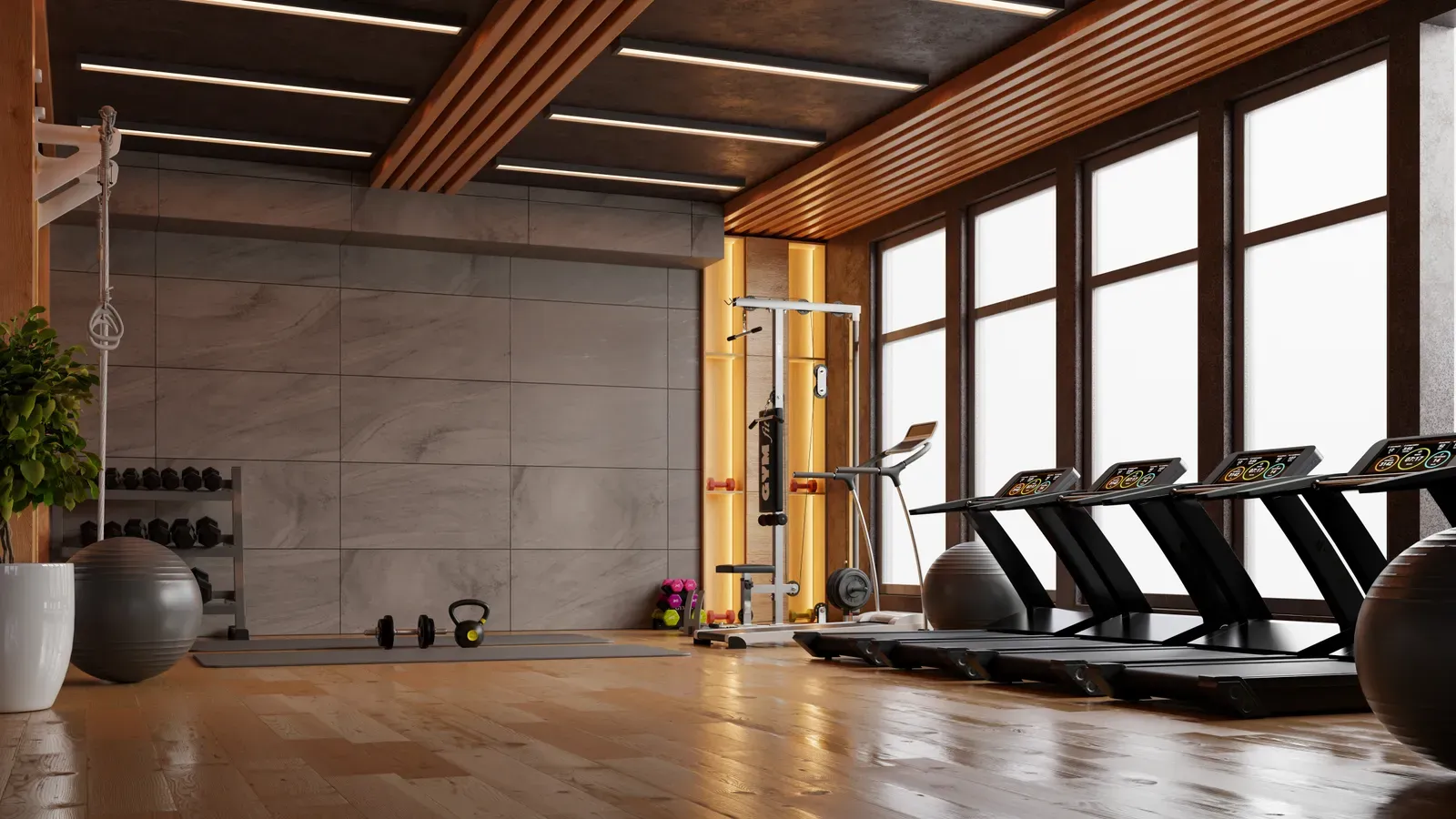
Commercial gyms are sensory worst cases: layered playlists over clanging plates, unpredictable crowds, fluorescent glare, and a dozen simultaneous social negotiations nobody wrote down. For many autistic adults and people with ADHD, the workable alternative is structural: a private workout space booked by the hour, one predictable room with the door closed, your own headphones, and no crowd to process. At FlexWerk in Carmel, that is $18 to $22 per hour with no membership.
What a standard gym asks a nervous system to do
Name the loads honestly and the problem explains itself. A shared gym floor demands continuous background processing: tracking who is waiting for what, decoding etiquette that differs by station, filtering announcements and other people’s music, absorbing sudden noises, and staying perceivable to strangers the entire time. For plenty of people that is merely tiring; for others it consumes the exact capacity the workout needed, so training either does not happen or costs a recovery period afterward that nobody budgets for.
None of that is a fitness problem. Strip the environment down to one person, one room, one hour, and the actual activity, moving your body, is often the easy part.
What one reserved room removes
FlexWerk was not built as a therapeutic facility, and this page will not pretend otherwise; what it was built as turns out to matter, a building of private rooms rented one booking at a time. Book a space and for that hour the environment contracts to something finite and knowable:
- No crowd noise. The door closes on the shared world. The room’s music streaming is entirely optional; many renters train in silence or their own headphones.
- No turn-taking ambiguity. Every piece of equipment in the room, the lifting rack, cable system, and dumbbells, is yours for the hour. There is no queueing etiquette because there is no queue.
- No being perceived. Nobody watches, nobody approaches mid-set, nobody initiates small talk while you are mid-rep.
- A repeatable script. Same booking flow in the FlexWerk app, same room format, same equipment layout category, hour after hour. Routine is a feature here, not an accident.
The same architecture serves people whose barrier is self-consciousness rather than sensory load; that side of it is covered in working out alone with gym anxiety.
What it does not remove, said plainly
An honest map beats a perfect brochure. The private part of the visit is the room itself; the approach is shared. You park in a garage a short walk from 885 Monon Green Blvd, enter a building where more than 40 fitness professionals run sessions, and pass along an interior corridor where other renters and trainers exist. Rooms have glass entry doors. First visits involve first-visit unknowns, and the best tool for those is the host conversation that starts every booking: ask exactly what arrival looks like, where your room sits relative to the entrance, and which hours tend to be quietest inside the Monday to Friday 5 AM to 9 PM and weekend 7 AM to 4 PM window. Off-peak slots, midmorning and early afternoon, are the calm end of the schedule, the same quiet leveraged by the shift workers in the night shift workout schedule.
Making the hour predictable end to end
Predictability compounds when you design for it. Book the same weekday and hour so the visit becomes a fixed routine; reserve through the FlexWerk app once a host has set you up, which takes seconds and involves no phone calls after the first one. If it helps, script the whole visit once, park, walk, room, warm up, train, leave, and let the script run unchanged each week; the environment is stable enough to support that, which is precisely what a shared floor never offers. Build a session template and repeat it, same warm up, same movement slots, so decisions happen once instead of weekly; the room’s WiFi and TV are there if video guidance is part of your system. And keep the exit as clean as the entrance: no membership, no contract, nothing to cancel, so the arrangement never grows administrative tentacles.
Cost sits at $18 to $22 per hour, cardio spaces from $12, with no membership, so the arrangement stays exactly as small as you want it. If you are 18 or older and local to the Carmel location, a host can confirm you for a free first hour, which doubles as a low-stakes trial run of the whole sequence: you get to test the parking, the corridor, the room, and the exit once, for free, before deciding whether the routine is worth keeping. Eligibility details are in who qualifies for the free first hour, and the full booking path is in how to book a private workout space.
If a coach would help, choose one deliberately
Some people want the private room plus one consistent, chosen person in it, a coach who learns how you communicate and runs the session the same way every time. On FlexWerk’s fitness side, finding a coach works through matching that weighs personality and communication style alongside goals, and it starts with a free consultation where you can name what you need up front.
The gym was never too loud for you to train; it was just the wrong room. The right one has a door, a booking with your name on it, and nothing in it you did not choose.
Related questions
Is FlexWerk a sensory certified or therapeutic facility?
No, and it does not claim to be. It is a facility of private rooms booked one renter at a time, and that structure happens to remove the crowd noise and unpredictability that make standard gyms hard.
Can I control the sound in the room?
Yes. The room's music streaming is yours to use or leave off, and your own headphones work fine. With the door closed, you are not absorbing a shared floor's noise mix.
What parts of the visit are not private?
Arrival, the corridor, and the walk from parking are shared with others in the building. A host can describe the full arrival sequence in advance so the first visit holds no surprises.