
A Plus Size Friendly Gym: Private by Design, Not by Slogan
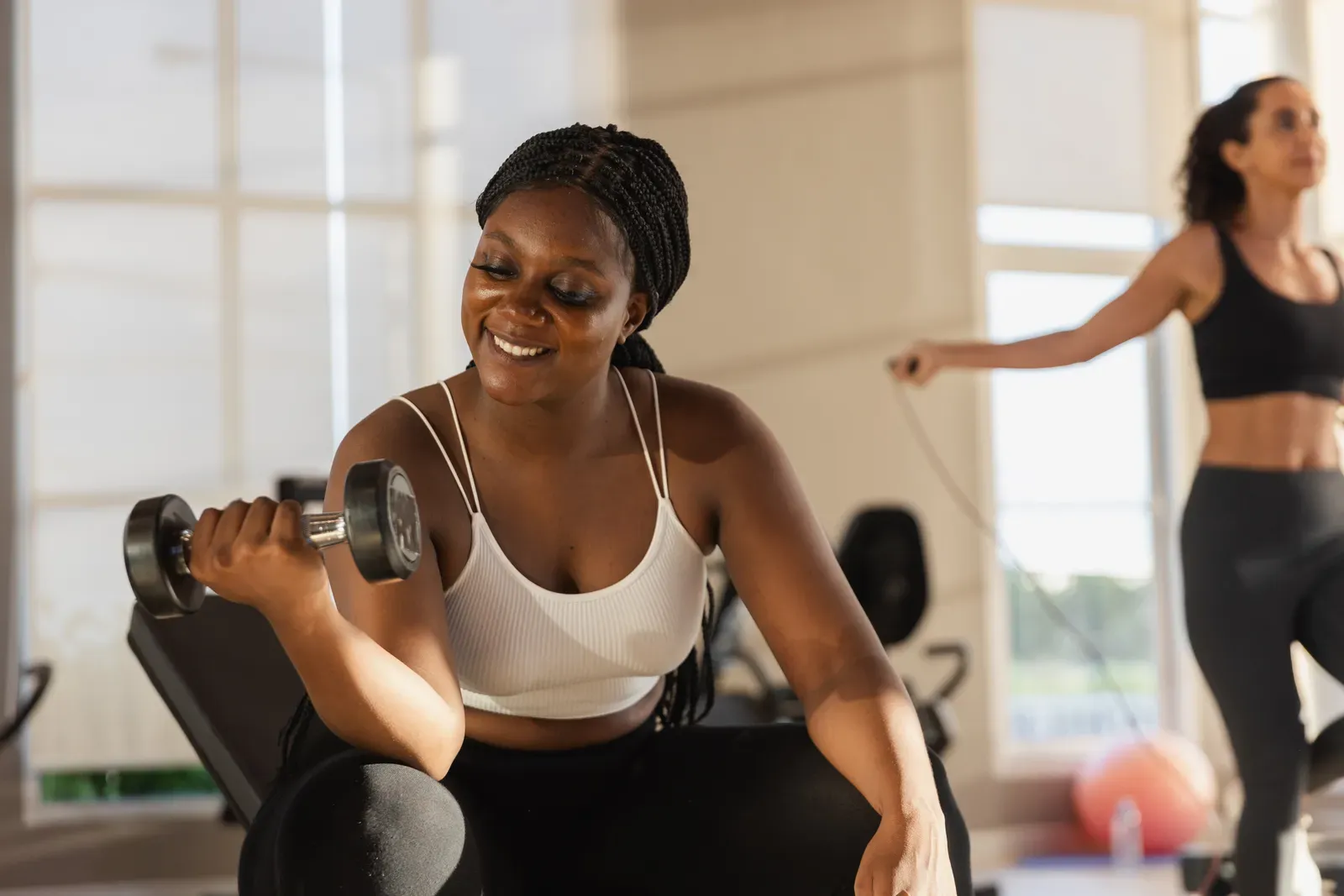
Every big gym now advertises a judgment free floor, and every plus size beginner knows the fine print: the judgment was never in the policy, it was in the eyes. A private workout space solves the problem structurally instead of rhetorically: you rent the entire room by the hour, so nobody is watching because nobody else is there. At FlexWerk in Carmel, that is $18 to $22 per hour, no membership, no contract, and no crowd to brave.
Judgment free by architecture, not by policy
There is a real difference between a promise and a floor plan. A slogan asks hundreds of strangers to be kind and asks you to believe they will be; most are, and it only takes one glance to unravel a fragile new habit. A private room does not ask anyone for anything. The door closes, and the entire category of being perceived, the up-and-down look, the imagined commentary, the feeling of taking up space near the fit crowd, stops existing for the hour. What is left is just you and equipment, which was the whole idea in the first place.
That structural privacy is why this model keeps working for people the gym industry has failed repeatedly: the same mechanism serves anyone whose barrier is the audience, as explored in working out alone with gym anxiety. The habit gets to grow in private and debut whenever you choose, or never, and both outcomes count as success.
Equipment at your pace, not the room’s
Inside a FlexSpace, the equipment meets you wherever you are starting. The dumbbell rack runs from genuinely light to heavy, so early sessions can begin wherever feels right with no one clocking your selection. The cable system adjusts smoothly and supports hundreds of movements seated or standing. The custom lifting rack is there the day you want it, not a test you must pass first. Cardio spaces run curved treadmills, which are self-powered and move exactly as fast as you walk, plus HYDROW rowers and CLMBR machines, all in private rather than in a mirrored cardio line.
Just as important is what the room lets you do between exercises: sit down, breathe, take five minutes, re-watch a tutorial on your phone over the room’s WiFi, start again. Rest without an audience is rest without shame, and it is where new exercisers actually build capacity. One standing note: if you have health conditions or have been sedentary a long while, loop in your physician before you begin; that is good advice for every beginner, at every size.
A realistic first month
Forget transformation-show intensity; the first month has one job, which is making the second month likely. A pattern that works: two booked hours a week. Begin each with ten to fifteen minutes of walking on the curved treadmill at conversation pace, then twenty minutes of simple strength, a sit-to-stand pattern, a light press, a cable row, a carry, at easy effort, stopping every set while it still feels doable. Finish with a stretch and leave feeling better than you arrived; that feeling is the engine of the whole project. Progress by adding a little time or a little weight when a week feels comfortable, not by punishing yourself into soreness.
Because the room is booked, the habit has a shape: a calendar slot, a reserved space, a door with your hour behind it. That structure, more than any surge of motivation, is what carries February.
A companion changes the math without changing the privacy. The rate is per room, not per person, so a friend or spouse in the same boat splits the cost and doubles the accountability, and a FlexSpace Standard fits 1 or 2 people; the sharing details are in bringing a friend to a private workout space.
The money and the booking, plainly
Here is the honest cost picture. Spaces rent for $18 to $22 per hour and cardio spaces start at $12; there is no membership, joining fee, or contract, so quitting costs nothing, and so does coming back. Two sessions a week runs more than a budget big-box membership, and the difference buys the thing that determines whether you actually go: a private room. An unused membership is the most expensive kind of cheap. If you settle into a rhythm, ask a host about VIP pricing, which exists by qualification for regulars.
If you are 18 or older and local to the Carmel location, your first hour is free once a host confirms eligibility; details live in who qualifies for the free first hour, and the whole booking path, a short host conversation, then self-serve reservations in the FlexWerk app, is walked through in how to book a private workout space. The building is at 885 Monon Green Blvd in Carmel City Center, garage parking a short walk away, open Monday to Friday 5 AM to 9 PM and weekends 7 AM to 4 PM.
If you want a guide in the room
Some beginners want privacy plus a person: someone to design the plan, adjust it to your body, and take the guesswork away entirely. That is coached training on FlexWerk’s fitness side, in the same private-room environment, starting with a free consultation at personal training for beginners. Either path shares the feature that matters most: no audience while you find your footing.
You do not need a thicker skin to start training. You need a room without spectators, and those rent by the hour.
Related questions
Is this actually different from a judgment free gym?
Yes, structurally. A judgment free gym asks a crowd to behave; a private space removes the crowd. You book the room, the door closes, and nobody is watching because nobody is there.
I have not exercised in years. Is a private space wasted on me?
The opposite: it is built for exactly this stage. You can move at your own pace, rest as long as you need, and learn equipment without an audience. If you have health conditions, talk with your physician before starting.
What does it cost compared with a gym membership?
Spaces run $18 to $22 per hour, cardio spaces from $12, with no membership or contract. Two or three sessions a week costs more than a budget membership, but it is a room you will actually use.