
Marching Band Conditioning Space in Carmel, Indiana
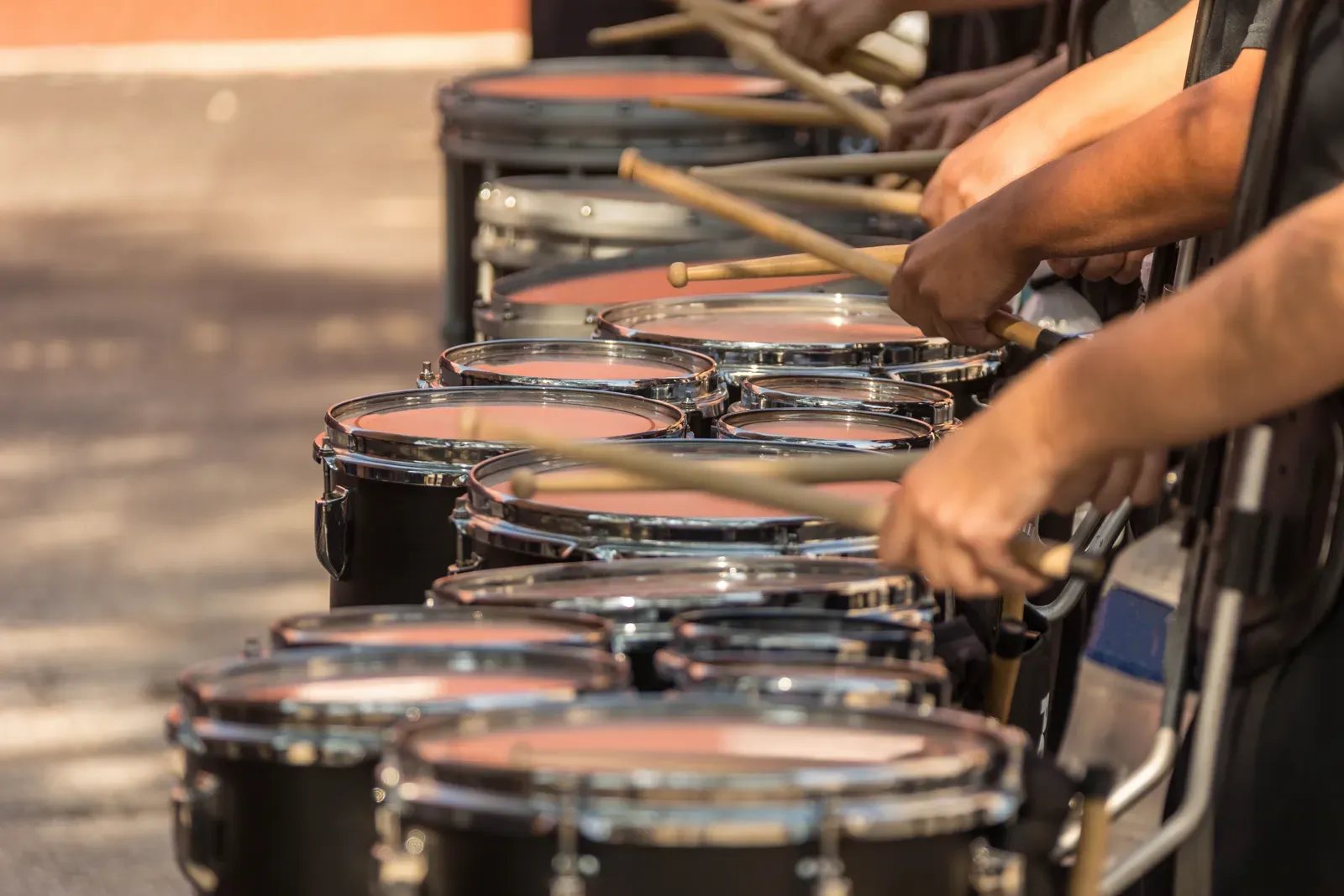
Carmel’s marching arts programs compete at the national championship level, and anyone who has watched a competitive show up close knows what it costs physically: performers moving at pace for ten-plus minutes while carrying instruments, holding posture, and controlling breath. A conditioning coach can run strength and endurance blocks for marching performers in a private hourly room, with a clean boundary: no instruments, no drill, just the physical base underneath the show. At FlexWerk in Carmel, the first hour is free for fitness professionals.
The athletic demands nobody trains for
Marching performers are athletes whose sport rarely trains them as athletes. A competitive season demands sustained aerobic output at performance intensity, carrying strength for instruments that ride on shoulders and harnesses through hours of rehearsal, posture endurance that would humble most gym-goers, and lower-body durability across a summer of asphalt. Band camp arrives in Indiana’s humid upper-80s and 90s, and performers commonly show up to it untrained, because the rehearsal calendar teaches the show, not the body. That gap between what the activity demands and what anyone prepares for is this niche’s entire market.
What a conditioning block looks like, and what stays out
The boundary makes the service legible to programs and parents alike: nothing musical happens in the room. No instruments, no drill, no choreography; rehearsal belongs to the program’s staff on the program’s field. What the private room handles is the base underneath. Strength work runs on the custom lifting rack, cable system, and dumbbells, squat and hinge patterns for the marching engine, loaded carries and holds that mimic instrument demands with weight you control, and the upper-back and trunk work posture endurance is built from. Engine work runs in the cardio spaces, where HYDROW rowers, CLMBR machines, and curved treadmills start at $12 per hour and interval structures can mirror the sustained output a show demands. Keep the work squarely in fitness scope, and route any pain or health question to the performer’s physician.
A Standard space suits one or two performers; a Plus at 200 sq ft holds up to 4, the natural size for a section’s friend group training together.
Baseline the visible things in the first session: a carry hold for time, a sustained-output piece on the curved treadmill, a posture photo. Retest at mid-season and the family sees exactly what the training bought, in the same filmed, on-screen format every other athletic niche uses.
The calendar is a gift to an hourly practice
The marching year has sharp phases, and hourly booking tracks each one. Late spring through July is the build window, preparing bodies for band camp before the heat does its worst. Fall is in-season maintenance around rehearsals and competition weekends. Winter belongs to the indoor ensembles, percussion and guard seasons that keep serious performers training year round. Between phases, your bookings simply pause, because rooms rent for $18 to $22 per hour through the FlexWerk app with no lease waiting to be fed. Facility hours, Monday to Friday 5 AM to 9 PM and weekends 7 AM to 4 PM, leave room around school and rehearsal schedules, which is where this clientele actually lives.
Why Carmel is the market for it
This niche only works where marching arts are taken seriously, and few places take them more seriously. Carmel’s programs compete nationally at the highest level, the surrounding county funds youth performance the way it funds youth sport, community programs count more than 15,000 annual participants, and median household income north of $141,000 means families already paying for lessons and camps can fund the conditioning layer too. The adjacent niches prove the pattern: performance athletes with sport-specific conditioning gaps are exactly the model behind the cheer strength guide and the broader youth athletic development playbook. The facility sits at 885 Monon Green Blvd at Carmel City Center with garage parking a short walk away, an easy after-school stop for the parents running the logistics.
The way into this market is transparency with the programs themselves. Directors guard their performers’ schedules fiercely, so position the service as the layer that supports the show rather than competing with rehearsal: share your scope, your waiver and insurance setup, and your no-instruments rule up front, and let parents carry the recommendation from there. Nothing about the pitch needs a program’s endorsement, but nothing about it should surprise a director either.
Building the practice
Start with credibility, not volume. Youth-appropriate liability coverage and current waivers are table stakes, parents are welcome in the room since clients of professionals receive free guest access, and the filmed progress loop, phone footage reviewed on the room TV over WiFi, gives families visible evidence the sessions work. Price small groups the semi-private way: up to 4 performers in a Plus room, each paying less than a private rate while your combined hourly take stays strong, and you keep 100 percent of what you charge. Keep the offers tied to the marching calendar, a band-camp prep block, an in-season maintenance pass, a winter ensemble block, so the service reads in the language families already schedule by; performers preparing for collegiate marching auditions add a spring micro-season most coaches never think to serve. More than 40 fitness professionals already run hourly businesses in the building, so the operating rhythm is established.
Claim the free first hour in the spring, bring two performers a season out from band camp, and build the engine the show is going to demand of them in August.
Related questions
Can ensembles rehearse drill or instruments in the space?
No. Rehearsal stays with the program on the program's field or floor. The private room handles conditioning only: the strength, endurance, and carrying capacity underneath the show.
How many performers can train at once?
A Standard space suits one or two, and a Plus holds up to 4 for small-group blocks. Whole-section conditioning belongs with the program's own staff and facilities.
What does it cost a coach to run sessions?
Training rooms rent for $18 to $22 per hour and cardio spaces start at $12, booked through the FlexWerk app with no lease. Fitness professionals get their first hour free.