
Gymnastics Conditioning Coach Space in Carmel, by the Hour
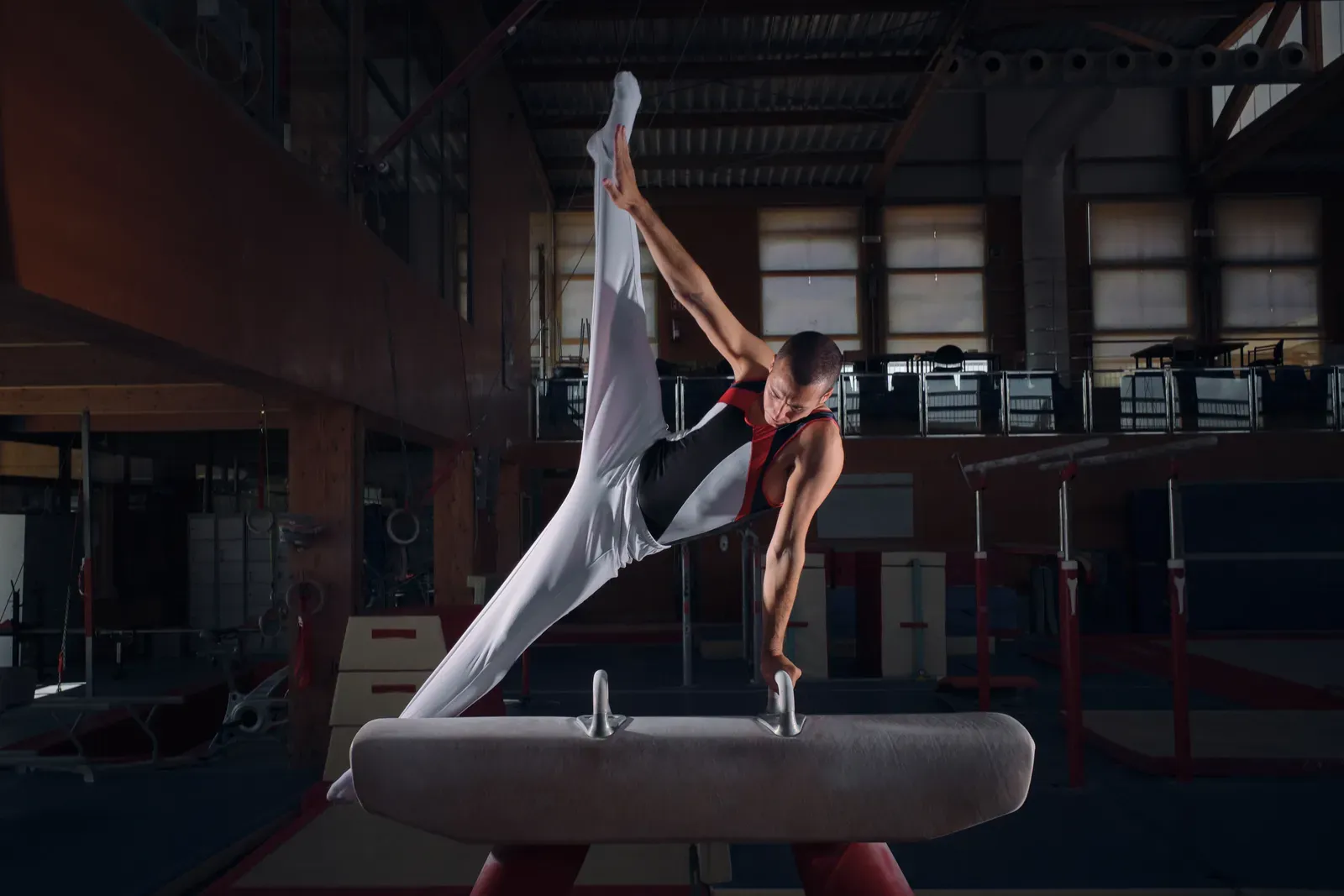
Gymnastics has a conditioning problem hiding in plain sight: the athletes train more hours than anyone in youth sport, yet dedicated strength work gets squeezed into the exhausted tail end of practice. A private hourly training room lets a gymnastics conditioning coach run focused strength and flexibility blocks between club practices, with no apparatus, no tumbling, and no competition for floor space. At FlexWerk in Carmel, that room books through an app, and the first hour is free for fitness professionals.
Why club practice cannot carry the conditioning load
A club’s floor exists to produce skills. Rotations move athletes through events, coaches chase skill deadlines for the next meet, and the strength block, when it survives the schedule at all, arrives after three hours of training when quality has already left the building. The result is familiar to anyone inside the sport: athletes with world-class work ethic and surprisingly untrained basic strength, because pulling, pressing, and squatting patterns were always someone else’s job.
A standalone conditioning hour flips that. The athlete arrives fresh, the coach programs progressively instead of opportunistically, and the work gets measured, loaded, and advanced the way strength actually develops. One deliberate hour a week beats twenty scattered minutes of end-of-practice conditioning, and parents watching a plateaued athlete understand that quickly.
What a gymnastics conditioning hour looks like here
A FlexSpace Standard is a 150 square foot private room with a custom lifting rack, cable system, and dumbbells; a Plus adds space for up to four athletes. The gymnastics-relevant menu is deep:
- Pulling strength: rack-based hanging and rowing progressions and cable pulls, the foundation under bar work that clubs rarely load systematically
- Pressing and support strength: dumbbell and cable pressing for the shapes the sport demands
- Leg power: squatting and hinging patterns that convert directly to vault runs and dismount landings, built with controlled loading rather than repetition volume
- Trunk control: loaded carries and cable-resisted core work that go beyond bodyweight shaping
- Flexibility blocks: unhurried mobility work, with your own specialty stretch tools brought along
Video review runs on the room’s TV, and the filming-friendly setup, controllable lighting and WiFi included, makes progress documentation part of the product.
The boundary that keeps everyone honest
Say it plainly in your marketing and your parent conversations: no skills happen here. There is no apparatus, no sprung floor, and no padded landing surface, so tumbling, swings, and event work stay at the club under the club’s supervision. That is not a limitation to apologize for; it is the division of labor that makes the private hour valuable. You are not competing with the club’s coaching, you are feeding it stronger athletes, and coaches who frame it that way tend to get referrals from club staff instead of friction.
The same clean-boundary model powers the neighboring practices in cheer conditioning and figure skating dryland, and plenty of coaches serve two of the three.
The Hamilton County gymnastics market
The client pipeline here is unusually deep. Hamilton County’s youth sports economy is among the busiest in the state, with community programs counting more than 15,000 annual participants and a family culture that already pays specialists for private lessons across every sport. Carmel High School just finished the 2025-26 school year ranked the country’s top all-sports athletic program, which tells you how seriously this town takes athletic development. Competitive gymnasts train year-round, so unlike seasonal sports, a conditioning practice built on gymnasts holds its revenue through the calendar, with meet season simply shifting the emphasis from building to maintaining. The sibling audience is worth a line too: former gymnasts who left the sport but kept the identity make superb strength clients, and their parents already know your name from the club lobby.
Making the business work by the hour
The economics reward exactly the schedule gymnastics creates. Club practices run evenings; your conditioning hours fit the after-school window before practice, weekend mornings from 7 AM, and school-day slots for homeschooled and virtual-school athletes. Spaces book for $18 to $22 per hour through the FlexWerk app with no lease, you keep 100 percent of your session rate, and a Plus room turns teammate pairs into semi-private sessions that improve both your hourly take and each family’s price. The facility at 885 Monon Green Blvd, steps from the Monon Trail with garage parking a short walk away, is open Monday to Friday 5 AM to 9 PM and weekends 7 AM to 4 PM.
Club relationships decide whether this practice grows or stalls, so build them deliberately. Introduce yourself to the club’s coaching staff before your first athlete’s parents do it for you, describe exactly what you train and exactly what you refuse to touch, and offer to share testing summaries with the family’s permission. Club coaches guard their athletes’ technique jealously, and they should; a conditioning specialist who visibly stays in lane becomes the name they hand to the next plateaued kid’s parents, while one who freelances skill advice becomes a cautionary tale by Friday. The referral direction should eventually run both ways, and it will if your athletes keep showing up stronger.
Two professional notes before the first session: carry liability coverage appropriate for youth athletes, and keep your scope inside your strength-and-conditioning credentials, referring anything medical to the athlete’s physician. Then claim the free first hour, bring one gymnast and a simple strength assessment, and let the results make the case to the rest of the team’s parents.
Related questions
Is there any gymnastics apparatus in the room?
No. There is no apparatus of any kind, no sprung floor, and no padded surfaces, so skills and tumbling stay at the club. The room carries a lifting rack, cable system, and dumbbells: the tools of the conditioning hour.
Can a parent stay for the session?
Yes. Clients of professionals receive free guest access, so a parent can sit in on a youth session, which is standard practice for most gymnastics conditioning coaches.
How do coaches pay for the space?
By the hour through the FlexWerk app, $18 to $22 per hour with no lease or membership, and the first hour is free for fitness professionals. You keep everything you charge.