
Off Ice Training Space for Figure Skating Coaches in Carmel
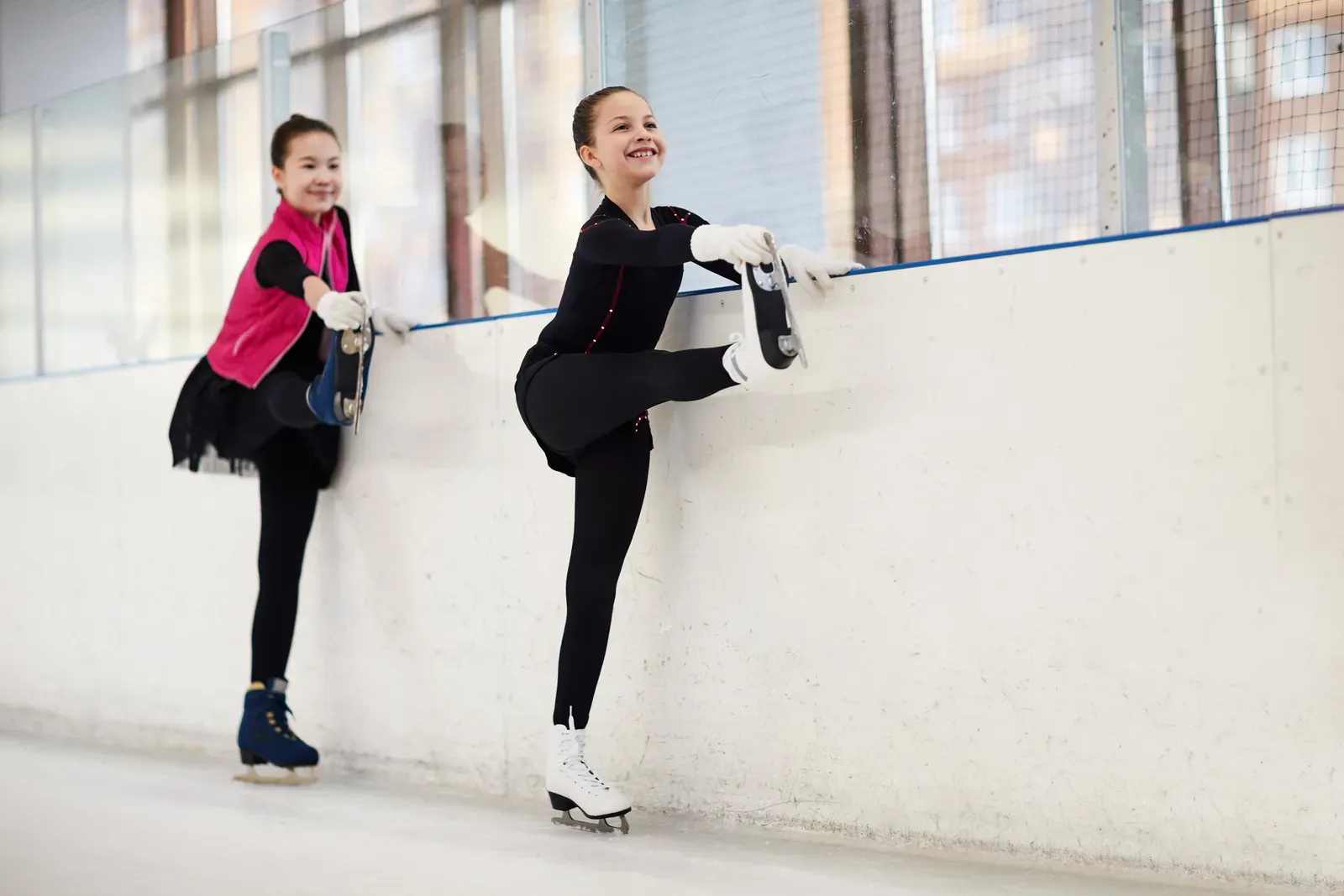
Every serious figure skater does dryland, and almost none of them do it in a decent room. A private hourly training space gives off ice coaches a real home for jump conditioning, core strength, and flexibility work, replacing the rink hallway and lobby corner where dryland usually happens. At FlexWerk in Carmel, across town from the local ice rink, that room books by the hour with a free first hour for fitness professionals.
The rink hallway problem
Rinks are in the ice business. They sell freestyle sessions, club ice, and lessons, and the dry space around the boards is an afterthought: a lobby with skate traffic, a back hallway, maybe a multipurpose room shared with birthday parties. Off ice coaches make it work because they always have, running rotation drills next to vending machines while parents watch from folding chairs.
The work deserves better, and so does the business. Off ice training is where jump technique gets built at low risk, where the strength behind landing forces develops, and where a skater’s competitive ceiling quietly gets set. A coach who moves that work into a private, professional room is not buying luxury; they are matching the environment to the stakes, and pricing accordingly.
What an off ice session looks like in a private room
A FlexSpace Standard gives one or two skaters 150 square feet of reserved private space; a Plus gives up to four skaters 200 square feet for small-group dryland. The staples of the discipline all fit:
- Off ice jump work: rotation mechanics, air position, and landing drills on a firm floor, the standard dryland surface, with slow-motion review on the room’s TV
- Landing strength: squatting and hinging progressions with the rack and dumbbells that prepare legs for repetitive landing forces
- Core and air-position work: cable-resisted rotation and trunk control that translates directly to cleaner air shapes
- Flexibility blocks: the spinal and hip mobility this sport demands, with your own stretch tools brought along
- Conditioning: skaters needing engine work can use cardio spaces with HYDROW rowers, CLMBR machines, and curved treadmills
What stays at the rink: anything on ice, obviously, plus harness-assisted jump work and any specialty apparatus. Spinner boards, resistance bands, and jump-drill props travel in your coach bag, which is how dryland gear has always worked.
Why video makes the private room pay for itself
Skating is a form sport, and the rooms here are deliberately filming friendly: controllable lighting, WiFi, and a TV for instant playback. A coach can film a rotation drill, review it with the skater thirty seconds later, and send the clip to the skater’s on-ice coach the same afternoon. That closing of the loop between dryland and ice work is precisely what parents believe they are paying a specialist for, and in a private room, it actually happens. Coaches who build content into their practice will find the same room doubles as a set, as covered in content creation space for fitness coaches.
The Carmel skating calendar and client base
Carmel supports a year-round skating community anchored by the local rink, and the surrounding market is built for specialist coaching: median household incomes north of $140,000, families who already pay for private lessons and choreography, and a youth-sports culture dense enough that Carmel High School finished 2025-26 as the country’s top-ranked all-sports athletic program. Skating families are also used to brutal schedules, which makes the facility’s hours genuinely useful: Monday to Friday 5 AM to 9 PM and weekends 7 AM to 4 PM, so a dryland session can bracket early freestyle ice or fill the after-school gap before evening club sessions.
Indiana winters keep skaters indoors from November to March in any case, and the dryland hour is the rare part of their training that never depends on ice availability. Test season and competition prep create predictable surges, and hourly booking absorbs them without a lease absorbing you.
The coach’s economics
The model is the same one more than 40 fitness professionals already run at the Carmel facility: book the room for $18 to $22 per hour through the FlexWerk app, charge your specialist rate, keep 100 percent of it. Pairs and trios of clubmates in a Plus room raise your hourly income while lowering each family’s cost, and back-to-back scheduling around rink sessions keeps your day dense. The address at 885 Monon Green Blvd, with garage parking a short walk away, reads professional to a parent on the first visit in a way no rink hallway ever will. Skaters who cross-train with the hockey side of the building’s clientele are covered in the hockey off ice training guide.
Work with the on-ice coach, not around them. The skaters who benefit most from dedicated dryland are the ones whose primary coach knows exactly what is being trained and why, so open that channel early: a short monthly summary of what the athlete is working on off ice, plus the review clips, positions you as the specialist who extends their program rather than a freelancer competing for lesson hours. Test and competition season then becomes your busiest window instead of your quietest, because you are the one the coach calls when a skater needs two extra weeks of landing strength before a program goes to judges.
Bring your liability coverage, your waivers, and your drill props. Then claim the free first hour, bring one skater and a jump-drill plan, and film the difference a real room makes.
Related questions
Can skaters practice off ice jumps in the room?
Yes. Off ice jump training on a firm floor is standard dryland practice, and the private room gives it space, privacy, and video review on the TV. Anything requiring ice, harness systems, or specialty apparatus stays at the rink.
What equipment does the room provide?
A custom lifting rack, cable system, and dumbbells, plus WiFi, music streaming, a TV, and controllable lighting. Spinner boards, bands, and other skating-specific tools travel in the coach's bag.
What does the space cost a coach?
The first hour is free for fitness professionals. After that, rooms rent for $18 to $22 per hour through the FlexWerk app with no lease or membership.