
What a Personal Training Studio Costs to Open
A personal training studio built for one operator costs meaningfully less to open than a general gym, mainly because it skips the cardio fleet and the wall-to-wall floor a walk-in gym needs, but the real number still commonly lands in the tens of thousands to low six figures once a lease, buildout, and a season of overhead are counted, before an Indiana location even enters the math. Running your own numbers against a booked hourly room before committing either way keeps the decision honest.
What a personal-training studio does not need to buy
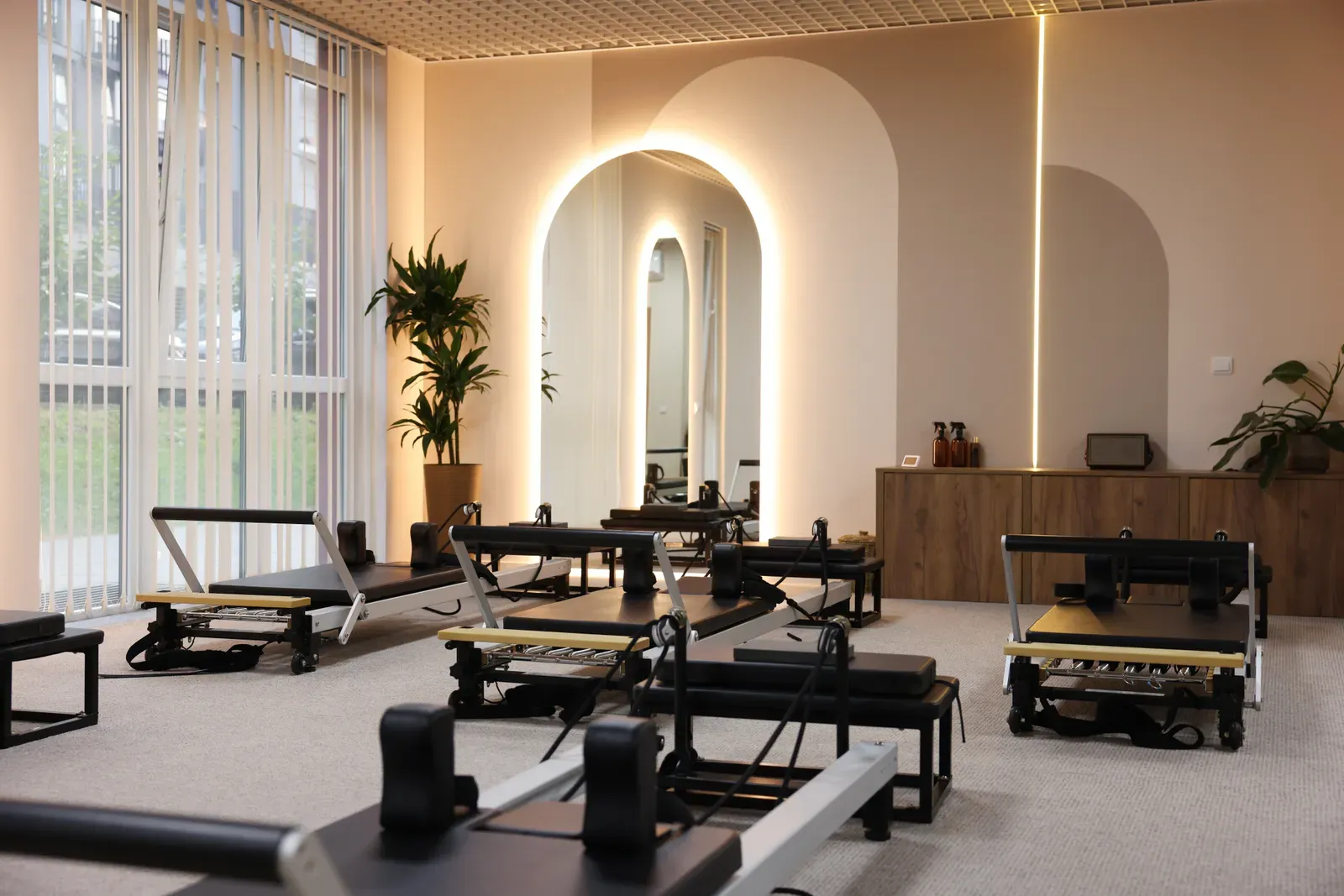
Unlike a general gym floor, a studio built around one-on-one or small-group sessions has no real reason to fill a room with cardio machines that nobody is walking in off the street to use on their own. Sessions are scheduled, not drop-in, so the floor plan can be smaller, one or two well-equipped bays, a rack, plates, dumbbells, and open space for movement work, rather than the wide equipment fleet a membership gym needs to serve people arriving unscheduled all day. Unlike a pilates studio’s reformer-heavy budget, a personal-training studio’s equipment list stays comparatively simple, and that single difference removes one of the largest, and most easily overspent, line items on a general gym’s equipment sheet.
The buildout that remains
What is left still costs real money: flooring that survives dropped weight, mirrors for form work, HVAC sized for a room that heats up fast under load, lighting, sound, and the permitting and inspection process that comes with any commercial build-out. None of it is exotic, but a light version of this list commonly runs into the tens of thousands even for a small footprint, and a full renovation of raw space, new electrical service, new HVAC, and a subfloor built to handle serious loading, runs well beyond that. Add insurance at facility scale, signage, booking software, and a marketing budget for opening month, and a lean personal-training studio still clears a meaningful threshold before its first paid client ever walks through the door.
The soft costs a spreadsheet forgets
Beyond the visible line items sit the ones a first-time owner rarely prices correctly: an attorney to review the lease before signing, a longer permitting and inspection timeline than the contractor first promises, and an operating reserve to cover rent during the weeks between opening the doors and building a full client calendar. None of these show up in a buildout quote, and all of them show up on the bank statement within the first two months of a lease, precisely when revenue is thinnest and confidence in the whole decision is most easily shaken.
Why Indiana’s price tag depends heavily on where you build
Commercial rent in Indiana is not one number. Space in an affluent, high-growth suburb of the Indianapolis metro prices closer to what that area’s household incomes and corporate density can support, while a smaller Indiana town or a less developed commercial strip prices considerably lower on the same square footage. That variance cuts both ways, a lower-rent market saves on the lease line but often supports lower session rates too, so the savings rarely translate into a proportionally better margin, and the affluent-suburb end of it is exactly the story behind Zionsville’s scarce, pricey studio inventory.
The utilization problem unique to a one-operator studio
Here is the math a general gym does not face the same way: a training studio built for one coach’s schedule sits empty most of a normal business day, because sessions cluster into early mornings, lunch hours, and evenings with gaps between them, while the lease bills for every hour in between regardless. A twelve-hour-a-day lease supporting six or eight booked session hours is not an inefficiency to fix with better scheduling, it is the structural shape of a single-operator business, and it is the single clearest argument for paying only for the booked hour instead of the whole day, month after month, whether the calendar is full or thin.
Financing the gap, or skipping it entirely
Most first-time studio owners cover this kind of buildout with some mix of personal savings and a small business loan, and a loan-funded path brings its own considerations worth weighing honestly, covered in the debt-versus-no-debt comparison for a fitness business specifically. The hourly path sidesteps that financing question altogether: there is no buildout to fund, so there is nothing to borrow against and no lender relationship to manage on top of everything else a new business already demands.
Sizing the studio to the model that actually fits
A coach who has done this math once rarely unsees it: hourly private space bills for exactly the hours a one-operator practice uses, six booked hours costs six hours of rent and eight costs eight, with nothing owed for the hours a lease would otherwise bill empty. Indiana’s checklist for starting independently covers the rest of the setup, this page is specifically about what the room itself would have cost.
Price your actual weekly session count, buildout, soft costs, financing or the lack of it, and the operating reserve included, against both a lease and an hourly room before deciding which one earns your business, not which one simply looks like the more serious choice on paper.
Related questions
Does a personal training studio cost less than a general gym to open?
Usually, mainly because it skips the cardio machine fleet a walk-in gym needs, but a real buildout, lease, and opening season of overhead still commonly reach the tens of thousands to low six figures.
Why does a one-operator studio waste so much of its leased hours?
Because sessions cluster into mornings, lunch, and evenings with real gaps between them, while a lease bills every hour of the day regardless of whether a client is in the room.
Does Indiana's commercial rent vary much by location?
Considerably. A high-growth Indianapolis suburb prices closer to its income and corporate density, while a smaller Indiana town or a less developed strip prices well below that on comparable square footage.