
Trainer Headshots in a Gym Room: Props, Light, and Timing
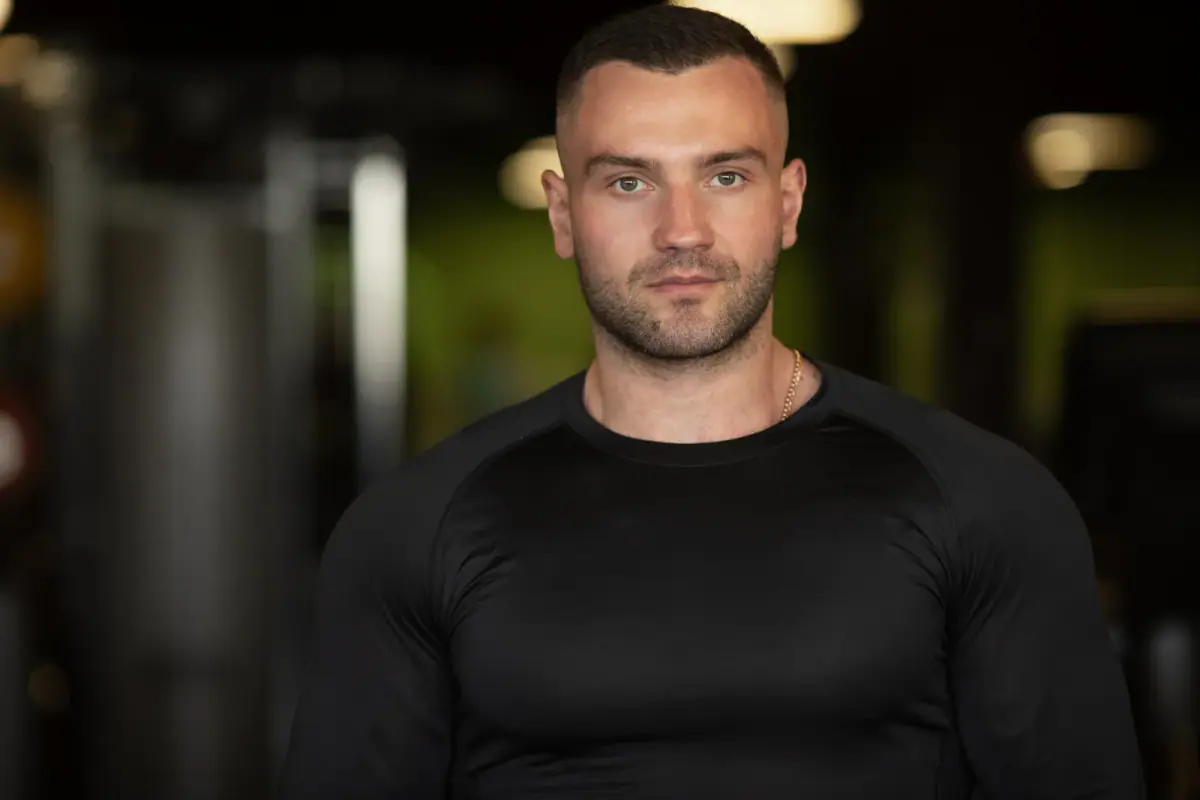
Good trainer headshots in a gym room come from a plan: five specific shots, soft even light, two outfits, and a booked hour when the room is quiet and you look your best. The rented room supplies an authentic setting and a closed door. Everything else is preparation, which is what this page lays out.
The five-shot list
Write these down before the day, because a list keeps the photographer, or your phone on a stand, from drifting.
- The clean portrait. Head and shoulders, plain wall, a relaxed expression. This is the one for directories, email signatures and booking pages.
- The warm half body. Arms folded or hands loose, smiling, with the room softly blurred behind you.
- The action shot. One movement you coach well, held mid motion, such as a row on the cable system or a loaded carry with dumbbells.
- The coaching shot. You cueing a friend or a client who has signed a photo release.
- The wide shot. You in the room, so a prospect sees what a session looks like.
Do them in that order. The portrait needs you fresh, and the action shot is better once you have warmed up and your face has colour.
Light that flatters without a studio
Each room has controllable lighting. Use it to avoid the two common mistakes: harsh light straight overhead that carves shadows under the eyes, and a mixed light colour that turns skin orange on one side. Turn the room to one even setting, then place yourself so the main light falls on your face from slightly above and to the side. Take a test frame and check the screen before you commit.
If you want more control, bring a small portable light, and read lighting for filming workouts in a small room for the glare problems to expect. Keep the background simple: a plain wall for portraits, the rack and cable system for the wide shot.
What to bring
- Two outfits, with a spare top in case of a stain.
- A lint roller and a comb.
- One or two props that say something true about your coaching: your own kettlebell, a notebook for programming, a resistance band. Do not stage a prop you do not use.
- A phone stand if you are shooting yourself, and a friend if you can find one. A second person catches a stray strap or a crooked collar.
Timing and cost
Book a mid morning weekday slot: the doors open Monday to Friday from 5 AM to 9 PM, and the middle of the day is usually calmer than the commute hours, though you should confirm the specifics with the host. One hour from $18 is enough for five shots if you plan; take 90 minutes if you want two outfits and a client shot. A fitness professional’s first hour is free via get-started, which covers the whole shoot.
After the shoot
Pick two images from each category, not twenty. Use the clean portrait everywhere for a month so people begin to recognise you, then rotate in the action shots on social posts. For more room shoots, renting a gym for a photoshoot goes into crews and bigger productions.
Quick fixes for common problems
If your eyes look tired, tilt your chin slightly down and bring the camera to eye level. If your shirt wrinkles, pull it taut behind you and ask the photographer to shoot from the front. If the room feels too bright in the photo, dim it a step. If you feel stiff, shake out your hands between shots and think of the next client, not the lens.
Related questions
How many different shots does a trainer actually need?
Five cover most needs: a clean head and shoulders for directories, a smiling half body for your site, an action shot, a coaching shot with a client, and a wide room shot.
Should I wear gym clothes or something dressier?
Bring two looks. One is your normal coaching outfit, and the other is a clean, simple top you would wear to meet a new client. Avoid busy logos and tight patterns.
What time of day is best for photos?
Pick a slot when you look rested, not a slot that is merely free. A mid morning weekday booking avoids the rush hours and gives you time to repeat shots.