
Lighting for Filming Workouts in a Small Room
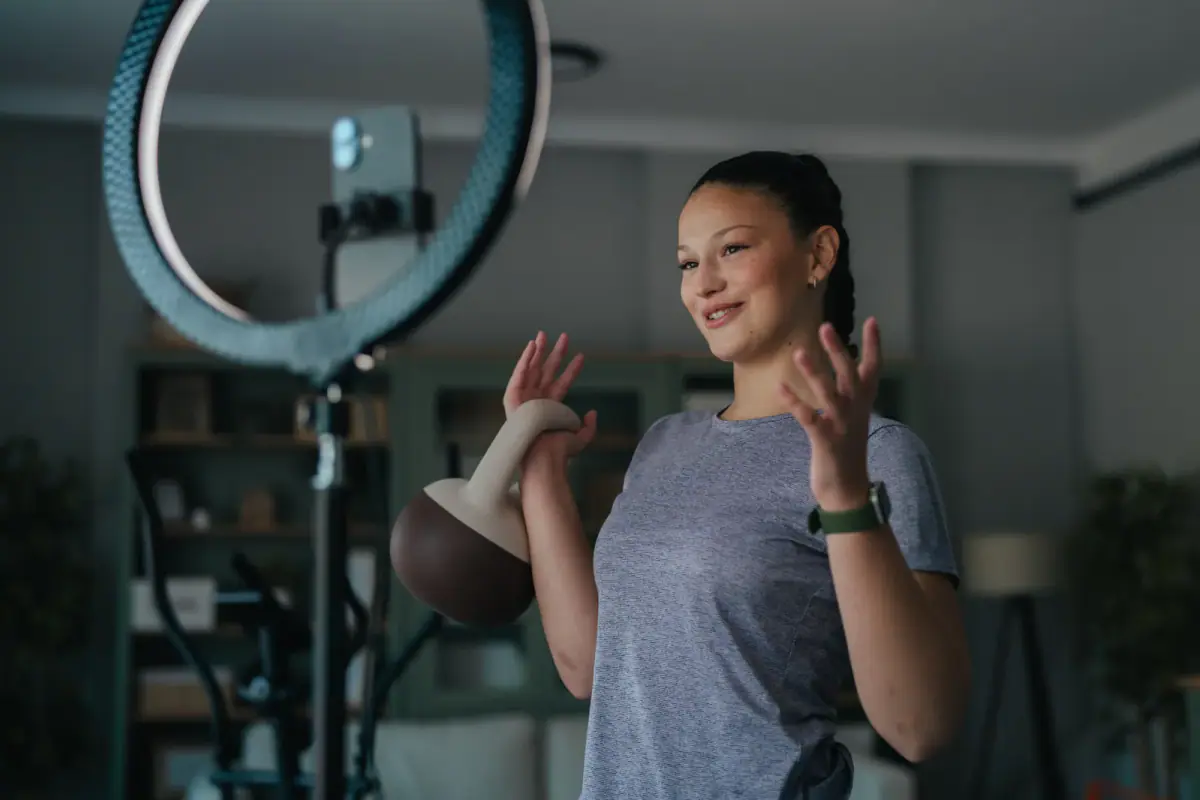
In a small training room, good workout video lighting comes from removing mixed light first and adding one soft light second: switch the room to a single bulb type, face your subject toward the main light, and test a ten second clip. A room of 150 to 200 square feet is small enough that one or two inexpensive lights cover it, and the real problem is usually the overhead fixtures, which cast shadows under the eyes and across the arms.
Start with what is already in the room
Overhead light on its own flattens faces and drops dark pools under the brow. Worse, it often mixes with other sources such as a screen glow or a doorway, and each one has a different color. Walk the room and take inventory:
- Overhead fixtures: are they all the same bulb type?
- Screens and monitors: these cast a cool tint on whoever stands near them. Turn them off or dim them.
- Open doors and windows: they change during a shoot. Close them or film at a steady time of day.
If the room has lighting you can control, as the spaces at FlexWerk do, set it to one level and leave it there for the whole session. Consistent light makes your clips look like a series.
Add one light, placed with intent
If the test clip still looks flat, add a single soft light.
- Position it to the side, about forty-five degrees from the camera, and slightly above head height.
- Aim it at the subject, not at the ceiling, so it does not mix with the overhead light.
- Keep the room light a little dimmer than the new light, which gives shape instead of a washed look.
- Watch your own shadow. In a small room, you or the camera can block the light.
A second light is a luxury. If you add one, use it as a gentle fill from the opposite side, at lower strength.
If this, then that
- Faces look tired: raise the main light slightly, or lower the camera a touch.
- Colors look off: match every bulb, then lock white balance.
- One side is too dark: move the subject a step toward the light.
- Glare on equipment or screens: shift the camera a few inches.
- Clip looks grainy: add light, since low light is the cause, not the camera.
Check before you record
Film ten seconds of the exact movement, in the exact spot, and watch it on the phone at full screen. Shadows and glare that are invisible in the room show up there. Fix one thing at a time and re-test.
For a fuller walk through of the lighting steps in any gym room, light a fitness video in a gym room goes deeper, while camera angles for demos shows where to put the phone once the light is set. Clear sound matters as much as clear light, so audio for workout videos is worth a look too. Once the setup is right, write the position of each light down so you can repeat it next week without thinking.
A repeatable setup note
Once the lighting looks right, write it down: which fixtures are on, where the extra light sits, how far the subject stands from it, and the camera height. Take a photo of the setup from behind the camera. Next time, you can rebuild the same look in five minutes, and your videos will match from week to week. Consistency matters more than perfection, because viewers learn to recognize your look. If you share the room with other bookings, the note also saves you time on arrival.
Related questions
Do I need to buy lights at all?
Not at first. Turn off the mixed sources, use the room light you can control and face your subject toward it. Add one soft light only when a test clip looks flat or shadowed.
Why does my skin look orange or green on camera?
Different bulbs in one room produce different color temperatures. Switch everything to one type, or turn off the odd ones, then lock the camera white balance.
How do I avoid glare from screens and metal?
Move the camera a few inches, tilt the light, or angle the surface away. Then check a test clip, because glare shows up on camera before the eye sees it.