
How Should a Trainer Respond to a Negative Review?
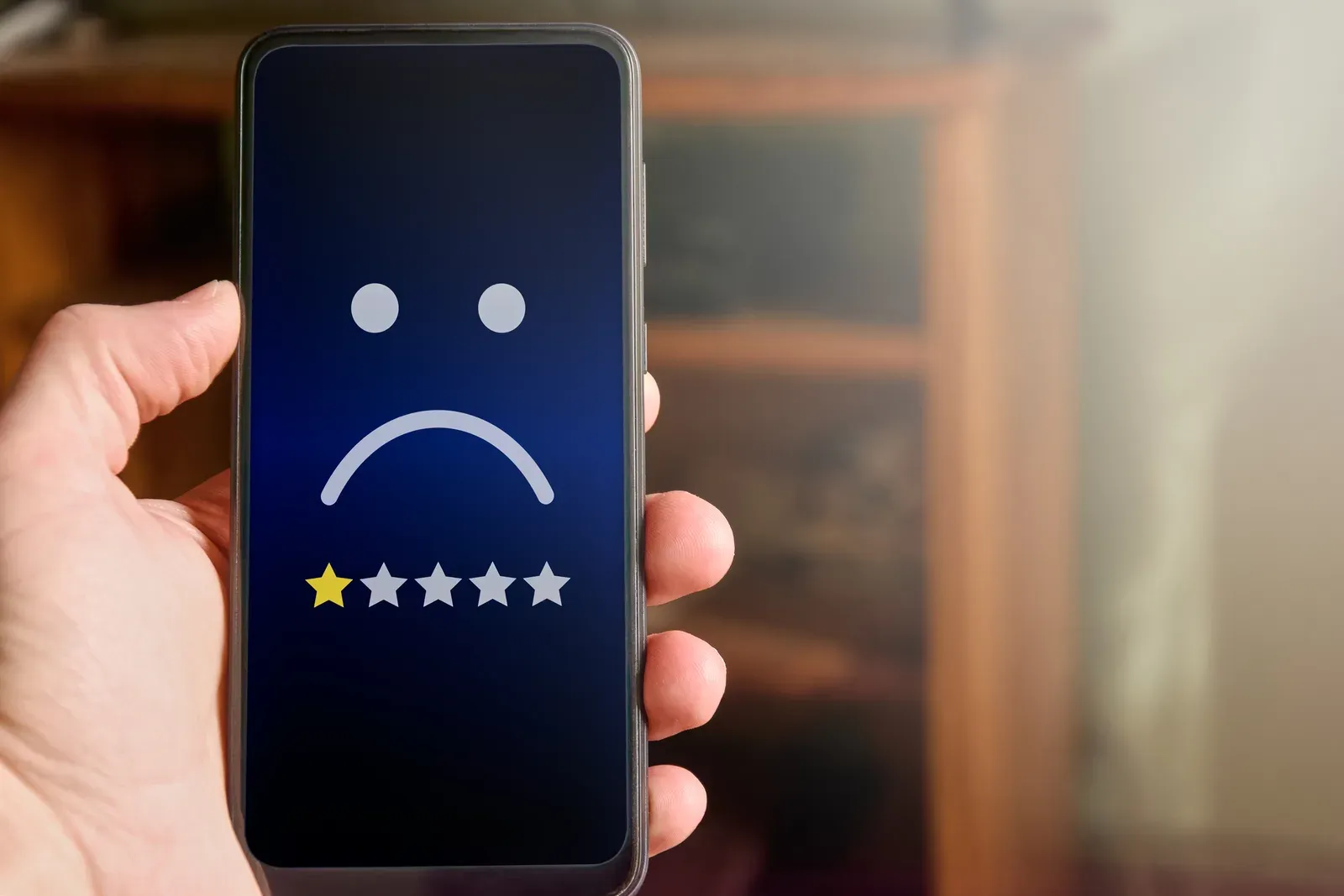
Respond to a negative review once, publicly, within a day or two, in a calm and professional tone: thank them for the feedback, state your side briefly without arguing or revealing anything about the client, offer to make it right offline, and then stop. The response is not really for the reviewer. It is for the hundreds of future prospects who will read the exchange and judge your character by the calmer voice in it.
For an independent trainer, whose business is trust delivered one relationship at a time, a single bad review feels enormous. It almost never is, unless the response makes it so. Here is how to handle it.
Write for the audience, not the reviewer
The moment a review goes public, the reviewer becomes the least important reader. Prospects researching a trainer expect to find an imperfect review or two; what they are scanning for is how you behave under criticism, because that predicts how you will treat them when something goes sideways. A measured, generous reply next to an angry review routinely wins the reader’s sympathy outright.
This matters double in a tight local market. Around Carmel and the rest of Hamilton County, your prospects and the reviewer plausibly share a school pickup line, an office at one of the city’s 100+ corporate headquarters, or a OneZone Chamber networking room, and word of a trainer who flamed a client online travels fast through networks that dense. The flip side is just as true: handled gracefully, most review disputes end quietly, and some end with the review updated. Your local reputation is a compounding asset on the level of your training environment and your results; treat every public word as part of it.
The response template
Keep it to four moves and roughly four sentences:
- Thank and acknowledge. “Thank you for taking the time to share this; I am sorry your experience did not match what I aim for.”
- State your side, briefly and factually, if needed. One sentence, no rebuttal energy: “We hold a different memory of the scheduling conversation, and I take the confusion seriously.” If you erred, say so plainly; an honest “I got this wrong” is disarmingly rare.
- Move it offline. “I would welcome the chance to make this right; please call or email me directly.” Then actually resolve it, whether that means a conversation or, where warranted, a refund handled by the policy you set in advance; having a clear process for refund requests before you need one keeps this step calm.
- Close warm and stop. “I wish you nothing but good training either way.” No postscripts, no second replies, no debate in the comments.
What never goes in the response: the client’s goals, attendance, payment history, body, health, or anything else you know because they trained with you. Even when a review misrepresents those facts, correcting them publicly means disclosing a client relationship’s private interior, and every prospect reading learns that training with you is not confidential. Discretion under fire is the whole brand; it is the same instinct that leads privacy-minded clients to choose suites with a door over open floors in the first place.
Special cases: fake, mistaken, and malicious reviews
Not every one-star is a real client. If the review is from someone you never trained, a mistaken identity, or plainly retaliatory, respond once, neutrally (“I have no record of working with you; please contact me, as I take this seriously”), and report it through the platform’s process, since reviews that violate policy, spam, fake engagement, harassment, can sometimes be removed. Do not accuse the reviewer of lying in public even when they are; state your record and let the platform and the readers do the math.
The genuinely unfair review from a real client, the one that stings most, usually traces to a mismatched expectation or a relationship that should have ended sooner. It is worth an honest post-mortem: clearer policies, earlier conversations, and the occasional professional goodbye, covered in how to fire a client, prevent most of these before they reach a keyboard.
Bury it in genuine proof
The durable answer to one bad review is fifty good ones. A steady system for earning reviews, asking happy clients at milestone moments, one at a time, without scripts or incentives, does more for your rating than any dispute ever will, and the rules for gathering that praise properly are laid out in client testimonial rules. Volume also buys resilience: a lone negative among four reviews defines you, while the same review among sixty is a rounding error that arguably adds credibility, since perfect ratings read as curated. Locally, visible proof compounds fast; FlexWerk’s consumer side, for instance, has built a 4.9-star Google rating across roughly 69 reviews, and that kind of accumulated, clickable trust is what makes any single complaint small.
One last discipline: after the reply is posted and the offline conversation is done, stop checking. Re-reading a bad review weekly is a tax on your coaching energy that pays nobody, and the prospects reading your calm response are already drawing the conclusion you wanted. The review economy rewards volume, recency, and grace, and all three are within your control this quarter.
So take the sting, wait a day, write the four sentences, resolve it offline, and get back to stacking proof. And if part of that proof is the experience itself, book a free first hour and run your sessions somewhere clients rave about unprompted.
Related questions
Should I respond to a review that is factually false?
Yes, with one calm public correction of the facts and no argument, then flag it to the platform if it violates policy. Fake or mistaken-identity reviews can sometimes be removed; angry rebuttals never help.
How fast should I reply to a bad review?
Within one to two business days. Fast enough to show you are attentive, slow enough that you are no longer writing angry. Never reply in the first hot hour.
Can I ask a reviewer to take a negative review down?
After a genuine offline resolution, you may politely mention that they are welcome to update it. Asking before resolving, or pressuring at any point, usually deepens the damage.