
How Do Online Coaches Use In-Person Space? (The Hybrid Model)
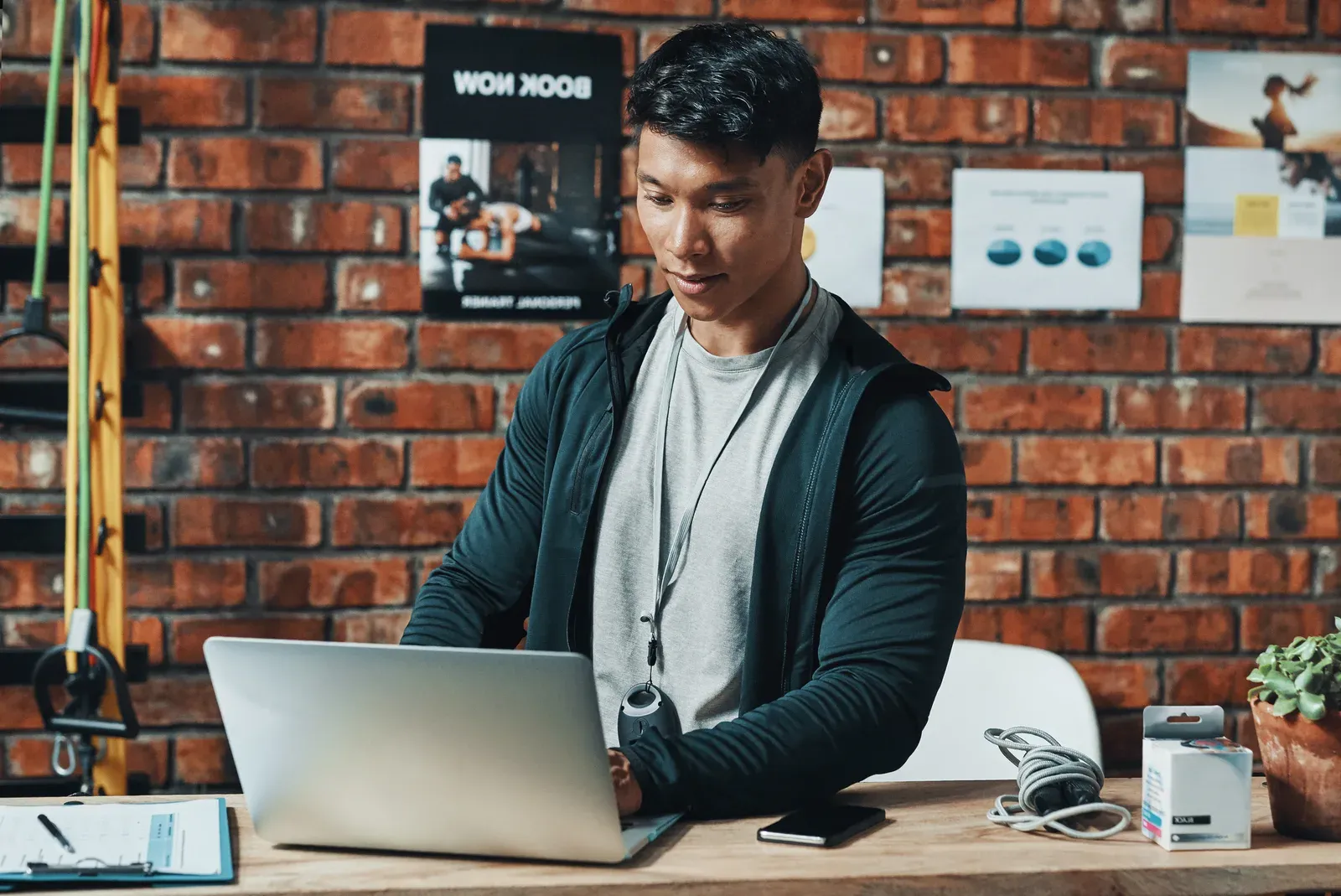
Online coaches use in-person space four ways: as a filming set for content, as an assessment lab for onboarding and check-ins, as the delivery mechanism for a premium hybrid tier, and as home base for a handful of high-rate local clients. The unlock is hourly booking, you pay for the room only in the hours it’s producing content or revenue, which makes physical space a line item instead of a liability. Here’s how each use actually works.
The hybrid model in one paragraph
Pure online coaching scales but struggles with differentiation, churn, and price ceilings; pure in-person coaching commands high rates but caps your hours. The hybrid model splits the difference: online programming as the base product, with in-person touchpoints layered on where they add the most value. Coaches who run it typically sell tiers, online-only at the bottom, online-plus-quarterly-in-person in the middle, weekly in-person at the top, and use the same booked hours to produce the content that fills the top of their funnel.
Use one: the filming set
Content is the growth engine of every online coaching business, and the number-one complaint about producing it is the setting, filming on a commercial gym floor means strangers in frame, house music under your audio, and managers who may object.
A private suite solves all three. FlexSpaces are deliberately built to be filming-friendly: a room with a door, lighting you control, your own music (or silence, when you’re recording voiceover), WiFi, and a TV/monitor for playback. Coaches commonly batch-film, one booked hour a week produces exercise-library clips, form breakdowns, and short-form social content, then shoot client testimonial-style check-ins during regular sessions with permission. One practical habit from coaches who batch well: script the shot list before the hour starts. A booked hour with a plan produces a month of content; an unplanned one produces b-roll. Because the equipment in every suite spans a custom rack, cable system, and dumbbells (850+ exercises in a Standard suite, 1,100+ in a Plus), you’re never short of material.
Use two: assessments and check-ins
Movement screens over video calls are workable; in person they’re better, and clients know it. Online coaches with local or regional clients often anchor the relationship with in-person touchpoints:
- Onboarding assessments, movement screening, baseline lifts, and goal-setting done face to face, then coached remotely.
- Quarterly check-ins, re-testing, technique tune-ups, and program recalibration.
- Technique intensives, a focused hour on the lifts that don’t coach well over video.
Coaches typically price these touchpoints either à la carte for online-only clients or bundled into higher tiers; both work, but bundling tends to protect attendance, a client who has prepaid an in-person quarter shows up for it.
Booked hourly, an assessment practice costs almost nothing to run: a coach doing four onboardings a month needs four hours of space. There’s no version of a lease that beats that math, which is the core of how hourly gym rental works.
Use three: the premium tier and the local anchor roster
The quiet financial truth of hybrid coaching is that in-person time is the most defensible thing you sell. Online programming competes with every coach on the internet; an hour in a private suite with you competes with nobody. That’s why hybrid tiers price meaningfully above online-only, and why keeping five to ten local anchor clients on weekly in-person sessions gives many online coaches their most stable revenue while the online side compounds.
The setting does real work here. In the Carmel market, private and premium-setting training commonly commands roughly $75 to 125+ per hour versus $40 to 70 at the big-box tier. A hybrid client walking into a private suite, their coach’s music on, their program on the screen, experiences the top tier they’re paying for. The same session on a crowded floor undercuts the price you’re asking.
Two FlexWerk specifics help the model along: clients of trainers receive free guest access, so your in-person tier never requires the client to buy a gym membership, and cardio suites with HYDROW rowers, CLMBR machines, and curved treadmills give conditioning-focused coaches connected equipment their clients can’t access at home.
Making the numbers and logistics work
The hybrid model lives or dies on marginal cost, so run it deliberately:
- Batch your in-person hours. Stack assessments, anchor clients, and filming into one or two days. FlexWerk’s hours, 5 AM-9 PM weekdays, 7 AM-4 PM weekends, leave room to build those days around your online clients’ time zones.
- Book against revenue. Only book hours attached to a paying session or a content plan. The app books in real time, so there’s no standing reservation to feed.
- Price the tier, not the hour. Hybrid clients buy outcomes and access; fold your space cost into the tier price rather than itemizing it.
- Let the space sell the tier. Bring an online client in once, a single free-guest-access session, and the upgrade conversation tends to have already happened by the time they leave.
Where it doesn’t fit: if your entire client base is out of state and you have zero content ambitions, physical space is a luxury. But most online coaches are one filming day and a few local anchors away from the hybrid economics working clearly in their favor.
The cheapest way to test the model is to run it once, your first hour is free, which is enough time to film a week of content or onboard your first hybrid client.
Related questions
Why would an online coach pay for physical space at all?
Four reasons come up constantly: filming professional content, running in-person assessments, offering a premium hybrid tier, and keeping a few high-value local clients. Hourly booking means the space only costs money when it's earning money.
Can I film content in a FlexSpace?
Yes. Suites are deliberately filming-friendly, private rooms with controllable lighting, your own music, WiFi, and a TV/monitor, so many coaches batch content during regular booked hours.
Do I need a lease or membership to use FlexWerk this way?
No. FlexSpaces rent by the hour through the FlexWerk app with no lease, no membership, and no long-term commitment. The first hour is free for fitness professionals.