
Lighting for a Training Room: Bright Enough for Form Cues
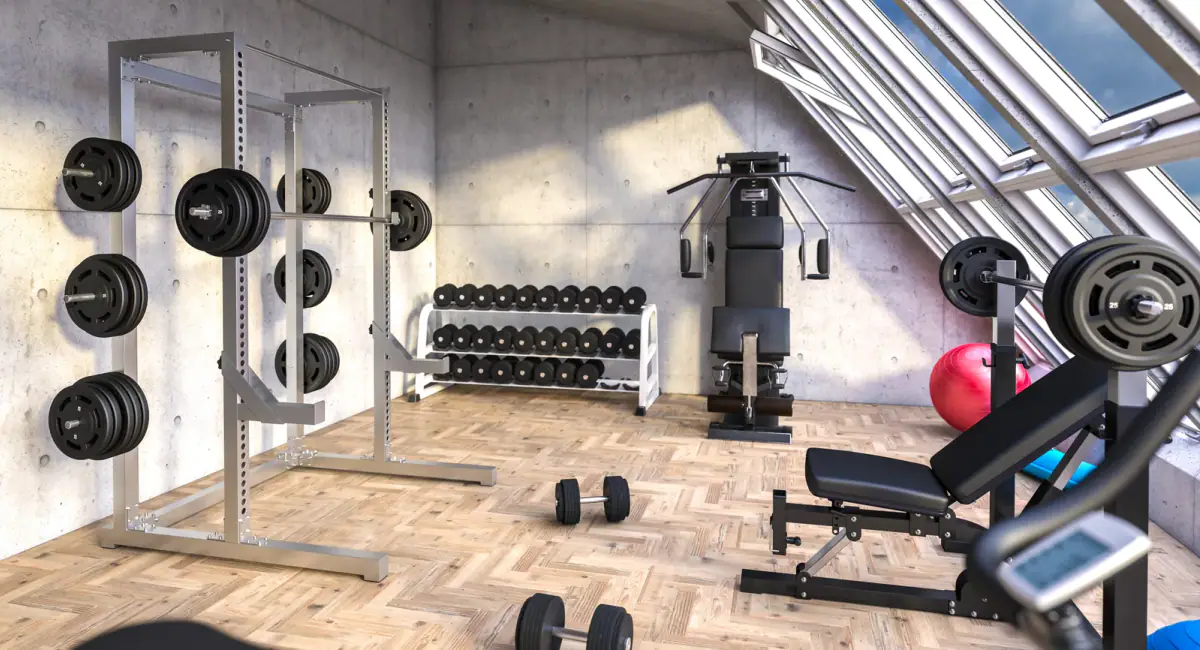
The right lighting for a training room is even, neutral white light with no glare on the floor or screen, bright enough that you can see each joint and the path of a bar without squinting. You cannot cue what you cannot see. Dim corners hide a rounded back, hard overhead light throws shadows across the face, and a bright window behind your client turns them into a silhouette.
What good light lets you see
Think of light as a coaching tool. With the right light you can read:
- Joint angles. Knees, hips and shoulders show as clear shapes, not shadows.
- Bar path. A bar’s line against a plain wall is visible from the side.
- Face and breath. You see effort, color and focus, which tell you when to end a set.
- Foot position. Heels, arches and toes show whether weight sits where it should.
If you strain to see any of these, the light is costing you coaching quality.
The four problems to watch for
| Problem | What you notice | Fix |
|---|---|---|
| Glare | Bright spots on the floor or equipment | Lower the level or change your position |
| Shadows | Dark patches under the chin or between the legs | Stand so the main light is at your side |
| Backlight | Client in silhouette against a bright window | Turn the client or close the blind |
| Dim bulbs | Squinting, slow reading of movement | Raise the level or add a lamp |
Controls beat fixed lights
Every FlexWerk space has controllable lighting, which means you can set a level for coaching and another for relaxed mobility work or filming. That matters because a fixed light is a compromise: set high for a barbell session, too stark for a stretch. When you tour any room, find out who controls the light, how many settings there are and whether you can change them mid session.
When you are filming as well as coaching, the demands change. Lighting for filming workouts in a small room explains glare and mixed light when a camera is involved.
A two minute light check on tour
- Stand in the middle of the room and turn slowly. Note dark corners.
- Stand where your client will lift. Look across their body from the side.
- Hold a hand in front of a white wall. If the shadow is hard, the light is harsh.
- Look at the floor from where you stand. Any bright spots?
- Test every control and ask what each one does.
Fit the light to the session
For strength work, aim for bright, even light so you can watch each rep. For mobility or recovery, drop it down for comfort. For consultations and assessments, keep it neutral so skin and posture look natural. If a client has trouble with bright light, give them a choice.
Cost and booking
Rooms start at $18 an hour, and a first hour for fitness professionals is free through get-started. Use it to coach a real set and then go and stand where you cued from, because that is where the light needs to work. The tour checklist covers light along with equipment, privacy and booking, and WiFi and tech covers the connected systems in the room.
Related questions
Is brighter always better for coaching?
No. Even, glare free light that lets you see joints and bar path clearly beats raw brightness, which can wash out detail or tire the eyes.
What color of light works best?
A neutral white that shows skin and clothing naturally. Very warm light hides detail and very cool light feels harsh, so choose the middle.
Do I need to change the light for filming?
Often a little. Filming adds glare and shadow problems that coaching does not, and the room's lighting controls let you set a scene before you record.