
Equipment List for a Strength Training Room, Trainer Edition
A strength training room worth renting for lifting clients needs four things: a rack that fits your tallest client, a bench, a dumbbell range that covers your strongest client’s working sets, and a cable or band option for accessory work. Everything else you can carry in a bag. This list gives you thresholds to check in person, so you can say yes or no to a room in ten minutes.
The four non-negotiables
- The rack. It must hold a barbell at heights that suit short and tall clients, with safeties that catch a failed squat. Check the pin holes or catch settings, and the clearance above the head for presses.
- The bench. A stable bench that does not wobble under a loaded press. Ask whether it adjusts, because incline work depends on it.
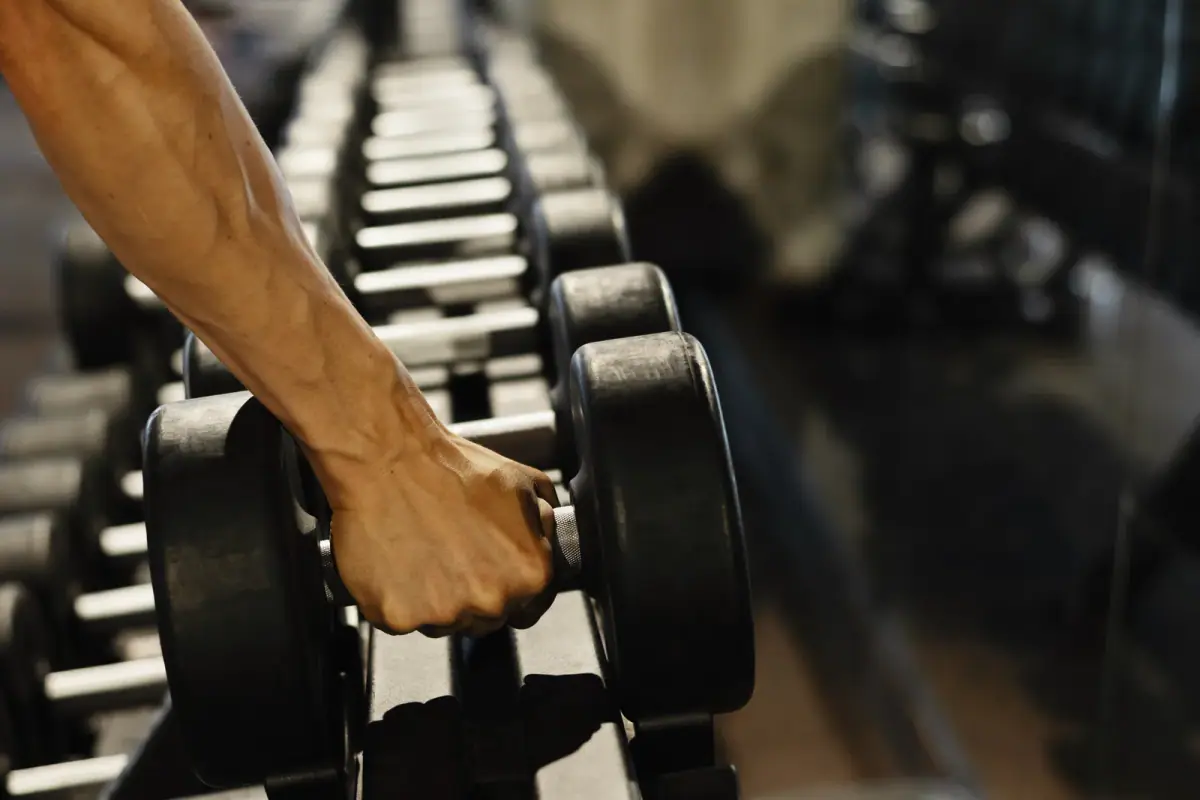
- The dumbbells. The range matters more than the count. Lay out your lightest warm up and your strongest client’s heaviest working weight, then check that the steps between them are small enough for progression.
- A cable or band option. Cable stacks let you load pulling, pressing and core work at any height. If the room has no cable system, you need a plan for bands.
FlexWerk’s strength spaces list a custom lifting rack, a cable system and dumbbells, with 850+ exercises in a Standard and 1,100+ in a Plus. Confirm the bench and any specific item in the room before you commit your schedule, since each coach’s programming is different.
The hand-check table
| Check | Pass looks like | Fail looks like |
|---|---|---|
| Rack height range | Fits your tallest and shortest client | One fixed height |
| Safeties | Adjustable and solid | Missing or loose |
| Dumbbell steps | Small jumps through your range | Big gaps at the top |
| Cable heights | Several, with attachments | A single fixed point |
| Floor | Solid, flat, clear | Cluttered or uneven |
| Light | Even and controllable | Glare or dark corners |
Print this or save it as a note, then walk the room with a stopwatch.
What to carry yourself
Resistance bands, ankle straps, grips, a small set of attachments, a tape measure and your assessment forms travel with you, as covered in bringing your own equipment. Do not rely on storing equipment on site: ask the host, and assume a bag per session.
Match the list to your programming
Not every coach lifts the same way. A powerlifting-style coach needs a heavy bar setup and a heavy dumbbell top end. A general fitness coach needs breadth, a cable system and light to medium dumbbells. Read how to audit a room against your programming for the full method, and what is in a FlexSpace for what these rooms hold.
Try before you commit
Photos tell you little. Deliver one real session first. A fitness professional’s first hour is free through get-started, and rooms start at $18 an hour after that. You keep 100% of what you charge, so a room that does the job pays for itself in one session.
A ten minute walk-through
Bring your tallest and your strongest client’s numbers on a card. Set the rack to the tallest client’s squat height, load a bar if the room allows it, and check the safeties. Pick up the weights at both ends of the dumbbell range. Pull a cable at three heights. Note anything that rattles, sticks or wobbles, and tell the host before you book your regular slot, not after.
Related questions
What is the one piece I should refuse to compromise on?
A rack that fits your tallest client and holds the bar at several heights. Without it, squat and press work become unsafe or impossible, and no portable item replaces it.
How wide should the dumbbell range be?
Wide enough to cover your lightest warm up and your strongest client's heaviest working set, with small steps in between. Check both ends in person.
What can I carry instead of expecting the room to hold it?
Bands, straps, small attachments and assessment tools. Bring them, because storage is a separate question to settle with the host.