
Equipment List for a Mobility and Stretching Room
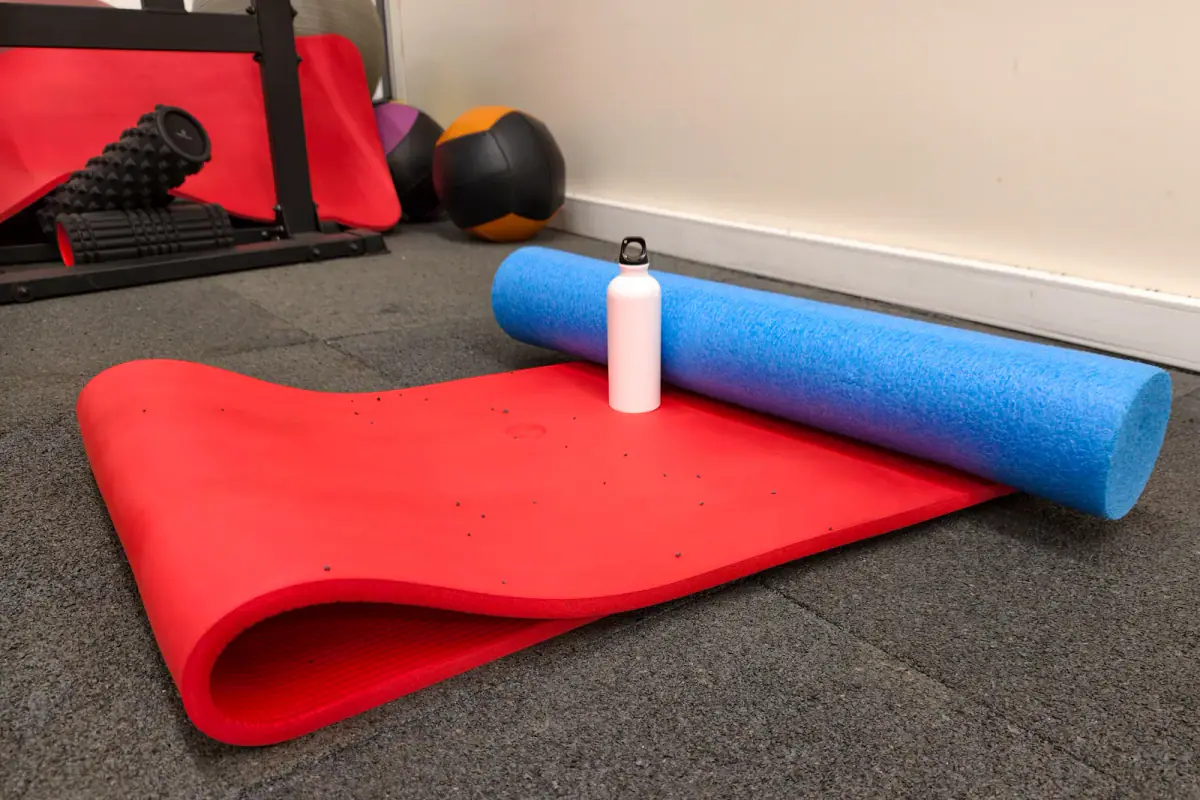
A mobility and stretching room needs a small, portable kit: a foam roller, straps, a bolster, a firm ball and something clean for the client to lie on, plus a decision about whether you bring a table. The room supplies the space, the lighting and the quiet, and you supply the tools. The list below is built so everything fits in one bag and gets wiped between clients.
The core kit
- Foam roller. One standard size is enough to start. A firmer one suits people who tolerate pressure.
- Straps. Two long ones for hamstring, calf and shoulder work. Check the length against your tallest client.
- Bolster or firm cushion. It supports the knees or the back in supported positions and makes passive work comfortable.
- A small firm ball. For targeted pressure on feet, hips and shoulders.
- Blocks or a folded cushion. For clients who cannot reach the floor yet.
- A clean lying surface. Check with the host about what you can lay on the floor, and ask what you may bring in. A fold-away table or pad that you carry yourself solves the question.
The room’s lifting rack, cable system and dumbbells can help too: a cable handle at a low setting works as a resistance source for a controlled stretch, and a rack upright makes a handy anchor for a standing hold. Treat those as extras you may borrow with the room, and the core kit as yours.
The table question
A table suits hands on, assisted stretching, where the client lies still while you move a limb. It changes the booking, because you need space on all sides and a way to carry it. If you work with active mobility, guided movement or coached stretching, you can skip the table and use the floor. The table decision page walks through the trade-offs, and bringing your own equipment covers what to ask the host about carrying it in.
Before you sell assisted stretching as a stand-alone service, note that Indiana’s massage therapy definition includes “nonspecific stretching” and “stretching within the normal anatomical range of movement”, so a stand-alone assisted stretching service may fall inside licensed massage scope. Ask the licensing agency before you build a business on it. This is general information, not legal advice.
Comfort items that sell the hour
Clients rate a session on how it felt, so the small items count: warm light, quiet music, a clean spot to lie, and a clear route to the door. Each space has controllable lighting and music streaming, so set both before the client arrives. Keep the bag open and your tools in the order you will use them. Bring wipes, and wipe every shared item before and after.
What to skip
Skip heavy gear you will not use. A mobility service does not need a full dumbbell range, and carrying too much makes you slow to set up. Pick tools for the three methods you sell and drop the rest.
Booking and cost
Rooms start at $18 an hour, and you keep 100% of what you charge. A fitness professional’s first hour is free through get-started or see the stretching studio rental page for the format. For a related service, read recovery sessions in a rented room.
Related questions
What is the minimum kit for a mobility session?
A foam roller, a pair of straps, a bolster or firm cushion, a small ball for targeted pressure and a clean surface to lie on. Everything else is optional.
Do I need a table?
Only if you do hands on assisted work. A table changes the setup and the transport, so see the dedicated table page and ask the host about bringing one in and out.
Who cleans the gear between clients?
You do. Bring wipes or a spray, and wipe each item between clients, because cleaning is part of a mobility service and it should not depend on the room.