
AED and Emergency Plan for Clients With Heart Conditions
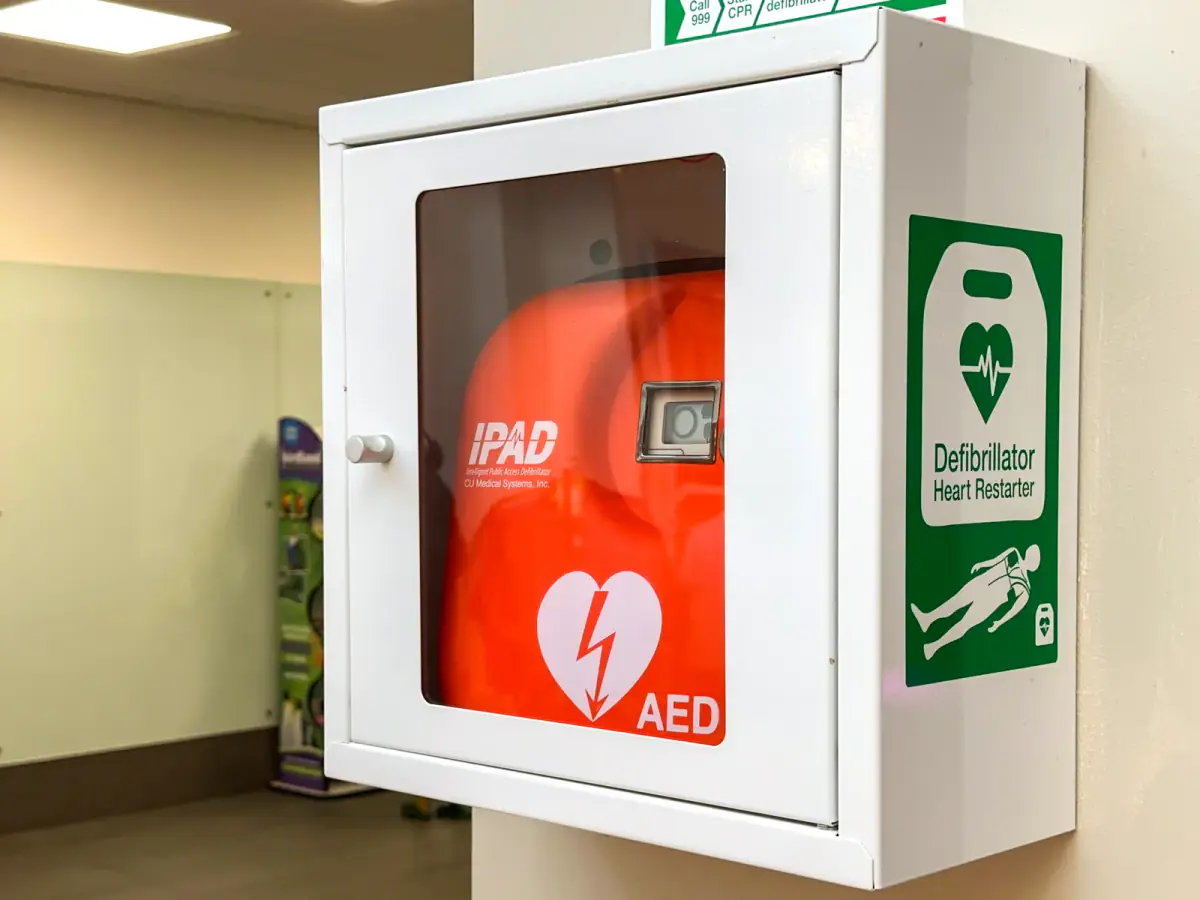
If you or a client has a heart condition, confirm three things before the first session in any rented room: where the AED is, how a 911 call is placed from inside the space, and who does which job if something goes wrong. An emergency plan for a post cardiac rehab client is a one-minute script agreed in advance, and it only supports training that a cardiologist has already cleared in writing. If you rent a private workout space by the hour and bring a coach, make the plan part of booking, not an afterthought.
Confirm the AED before you book, not after you arrive
The facility owns the AED, and policies differ from building to building, so treat every fact as something to verify. Ask these in writing:
- Is an AED on the premises, and where exactly is it kept?
- Can someone reach it from the room in under a minute without keys or codes?
- Who inspects it, and when were the pads and battery last checked?
- Does the building have staff on site at your session hours?
At hourly facilities, staffing can be thin at the edges of the day, so the answer to the fourth question changes the plan. For FlexWerk specifics, reach the pro support team through the app or at (888) 353-9975 and ask them directly; do not rely on a general description for something this important.
Settle 911 access inside the room
A closed-door room is private by design, which also means a collapsed client may not be seen by anyone. Decide in advance:
- Whether cell service is reliable at the spot where you will train.
- How responders enter the building and which entrance they should be sent to.
- What street address and entrance detail you give the dispatcher, written on a card in your bag.
A card with the street address and the entrance description is worth carrying to every session, wherever it happens.
Assign the three jobs
If this happens, then that: if the client collapses or loses responsiveness, one person calls 911 and stays on the line, one person gets the AED and starts the steps it speaks aloud, and one person goes to the door to guide responders in. In a two-person session, the coach does the first two together by putting the phone on speaker. A guest in the room can take the third job if you tell them beforehand.
Anyone who might use the AED should hold current CPR and AED training; the trainer CPR and AED requirement explains why certifiers and insurers expect it.
What goes in the plan, and what stays with the doctor
The plan covers emergencies. It does not cover the question of whether the training is appropriate, which belongs to the cardiology team. Ask the physician first:
- Which activities and intensities are approved for me or for my client?
- What symptoms mean stop immediately, and which ones mean call the office?
- Is there a heart rate or effort ceiling, and how should it be monitored?
- Should medication timing change around exercise?
The fields a good note carries are laid out in the medical clearance letter guide. For clients who finished a lung program instead, the equivalent routine is described in the pulmonary rehab maintenance guide. If you want coaching built around a plan like this, the consumer side of the company at flexwerkfitness.com offers a free consultation.
Next step: write the three jobs on a card, put it in your bag, and ask the facility for its AED location the day you book.
Related questions
Should a rented space have an AED on site?
Ask before you book. Many facilities keep one in a common area, but whether it exists, where it hangs and who checks it are facts you confirm with the facility rather than assume. Our pro support team can answer for FlexWerk.
Who should know the plan before the first session?
Everyone in the room: the client, the coach and any guest. Each person should know who calls 911, who fetches the AED and who meets the responders at the door.
Does having an AED mean it is fine to train without clearance?
No. An AED is a backstop for the rare worst case. The cardiology team's written clearance and limits are what make training appropriate in the first place.