
PT to trainer handoff
Post-Rehab Personal Training in Frisco, TX
Post-rehab personal training means a trainer builds a fitness program for a client who has finished physical therapy, working inside the limits the therapist set. It does not mean treating an injury, which only a licensed physical therapist may do. A good handoff has a clear scope, the client's permission to share information and a way to reach the therapist if something changes.
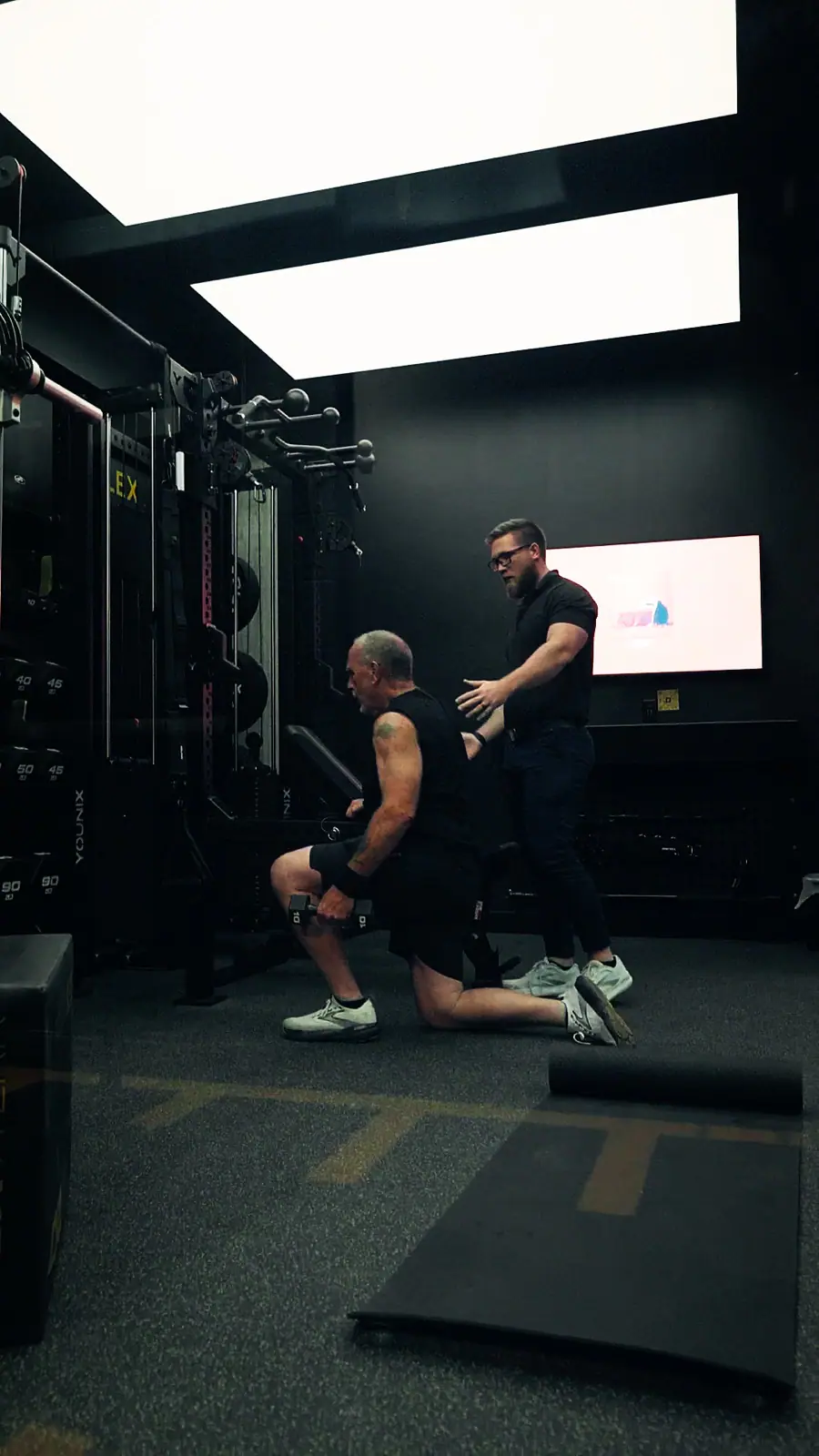
What is post-rehab personal training, and what is it not?
It is general fitness programming for someone who has been discharged from physical therapy and wants to keep building strength, endurance or confidence. It is not physical therapy. Texas regulates physical therapy as a licensed profession through the Texas Board of Physical Therapy Examiners, and a trainer holds no such license. Confirm the exact scope rules with the Board if you are unsure.
Put plainly: the therapist treats and clears. The trainer programs and coaches. If a client reports a new pain, a loss of function or anything that sounds like treatment, you stop and send them back to their therapist or physician. You do not test, diagnose or treat, and you do not promise outcomes.
The population is nearby. Keyword Planner (November 2026) puts “physical therapy frisco tx” near 320 searches a month. And about 9.9 percent of Frisco residents are 65 or older (U.S. Census Bureau, ACS 2024 1-year), the group most likely to need a careful return to strength work. Those two numbers show where the handoff happens, not what any client needs.
What does a clean handoff look like, step by step?
Five steps cover most cases. Keep a written record of each.
- The client decides. The client asks both people to talk. Nothing is shared without their permission. Ask the client to sign whatever the therapist’s office requires to release information.
- The therapist gives guidance. One page or one conversation: what is cleared, what to avoid, what to watch for and when to check back.
- The trainer does an intake. A health history, goals and a plain-language question: “What did your therapist tell you to avoid?” Write down the answer in the client’s words.
- A first program stays inside the limits. Start below what was cleared, not at it. Note loads, ranges and how the client felt.
- The trainer reports back. With permission, send a short update at an agreed interval, and send it immediately when something unexpected happens.
The questions that make this work are specific. A vague “she’s cleared for exercise” is a prompt to ask more.
| Ask the therapist | Why it helps |
|---|---|
| Which movements or positions should we avoid for now? | Sets the boundaries of the first program |
| What loads or ranges are cleared? | Gives you a starting point instead of a guess |
| What symptoms mean stop and call you? | Defines the escalation path |
| When do you want an update, and how? | Sets the reporting rhythm |
| Is there anything the client should not do alone? | Decides whether sessions need extra supervision |
What should a trainer never do in a post-rehab session?
Never treat, diagnose or promise. That is the line, and the rest follows from it.
- Do not describe an exercise as treatment for an injury or condition.
- Do not interpret imaging, test results or pain as a clinical finding.
- Do not change what the therapist cleared without asking them first.
- Do not keep working through pain the client reports.
- Do not share the client’s information with anyone else without permission.
Also check your coverage. Ask your insurer whether post-rehab clients fall within your policy, and read the guide to insurance when renting gym space for what to ask. A trainer who holds current CPR and AED certification is in a stronger position when clients are older or returning from an injury.
Why does being under one roof make the handoff easier?
Because it shortens the distance between the two people who need to talk. A conversation that takes three phone calls across town can happen in the same building before or after a session. FlexWerk Panther Creek is built for independent coaches, therapists and trainers, and it has the Lounge, a place to meet clients and colleagues between sessions, and the app where each pro books their own studio hours.
That is a convenience, not a referral system. Therapists and trainers at Panther Creek are independent. Each one runs their own business, sets their own rates and chooses who to work with. Nothing here means a therapist endorses a trainer or the reverse, and none of it replaces the client’s permission or the written guidance.
A practical example. A therapist and a trainer each book an hour back to back. The client finishes with the therapist, walks to the next studio and the trainer, who already has the cleared list, starts the first session. The therapist’s contact is in the trainer’s notes if anything changes.
What does the trainer’s first post-rehab session cover?
Mostly listening and low-risk movement. Spend the first session on the intake, a short warm-up and a few simple patterns the client can do comfortably, such as a sit-to-stand, a light row or a supported hip hinge. Leave out anything the therapist flagged. Ask how each movement felt and write it down. End by telling the client what you will do next time and what you will ask their therapist. A calm first session builds trust faster than an impressive one, and it gives you a baseline to report back with the client’s permission.
How do you build the relationship before the first client?
Do it in the open, with one client at a time, and let it grow from results people can see. Meet a local therapist for coffee. Ask what their typical discharge looks like and what they wish clients did next. Offer them your intake form and your reporting format. Do not ask for referrals in the first meeting.
Therapists who run cash-pay practices have a particular reason to want a trusted trainer, since their clients often finish a plan and then ask what to do next. The cash-pay physical therapy practice guide explains that model, and the physical therapy space checklist shows what therapists look for in a studio. For the trainer side, how trainers find clients in Frisco covers referral partners as one channel among several.
If you want to be one of the first pros in the building, the Panther Creek page has the interest list. It is free, and there is nothing to sign. FlexWerk Panther Creek opens in 2027.
Questions Frisco pros ask
Can a personal trainer work with someone recovering from an injury?
A trainer can build a fitness program for a client who has been discharged from physical therapy, within the limits the therapist set. A trainer cannot diagnose or treat the injury. Ask the client for the therapist's guidance and stay inside it.
What should a physical therapist tell a trainer at discharge?
With the client's permission, share movements to avoid, loads and ranges that are cleared, warning signs that mean stop and call, and a date for follow-up. Keep it to what the trainer needs to program safely, not the full chart.
Does a trainer need a doctor's note for a post-rehab client?
Texas has no rule we found that requires one. Your insurer, your facility or your own policy may. Ask the client's therapist or physician for written guidance anyway, because a record of what was cleared protects the client and you.
Should a trainer and a therapist pay each other for referrals?
Do not set up payments for referrals without checking the rules that apply to the therapist's license and your own situation. Licensing boards and attorneys can say what is allowed. A simple, unpaid, client-led referral avoids the question.
Sources
- Texas Board of Physical Therapy Examiners, TX JAM jurisprudence assessment module
- Texas Occupations Code 453.301, direct access (text republished by texas.public.law; official source statutes.capitol.texas.gov)
- U.S. Census Bureau, ACS 2024 1-year, Frisco city (via Census Reporter)
- Google Ads Keyword Planner, November 2026
Panther Creek renderings are shown where noted; final design may vary. Photos labeled City Center were taken at FlexWerk City Center in Carmel, Indiana.