
Tai Chi Instructor Space Rental in Carmel
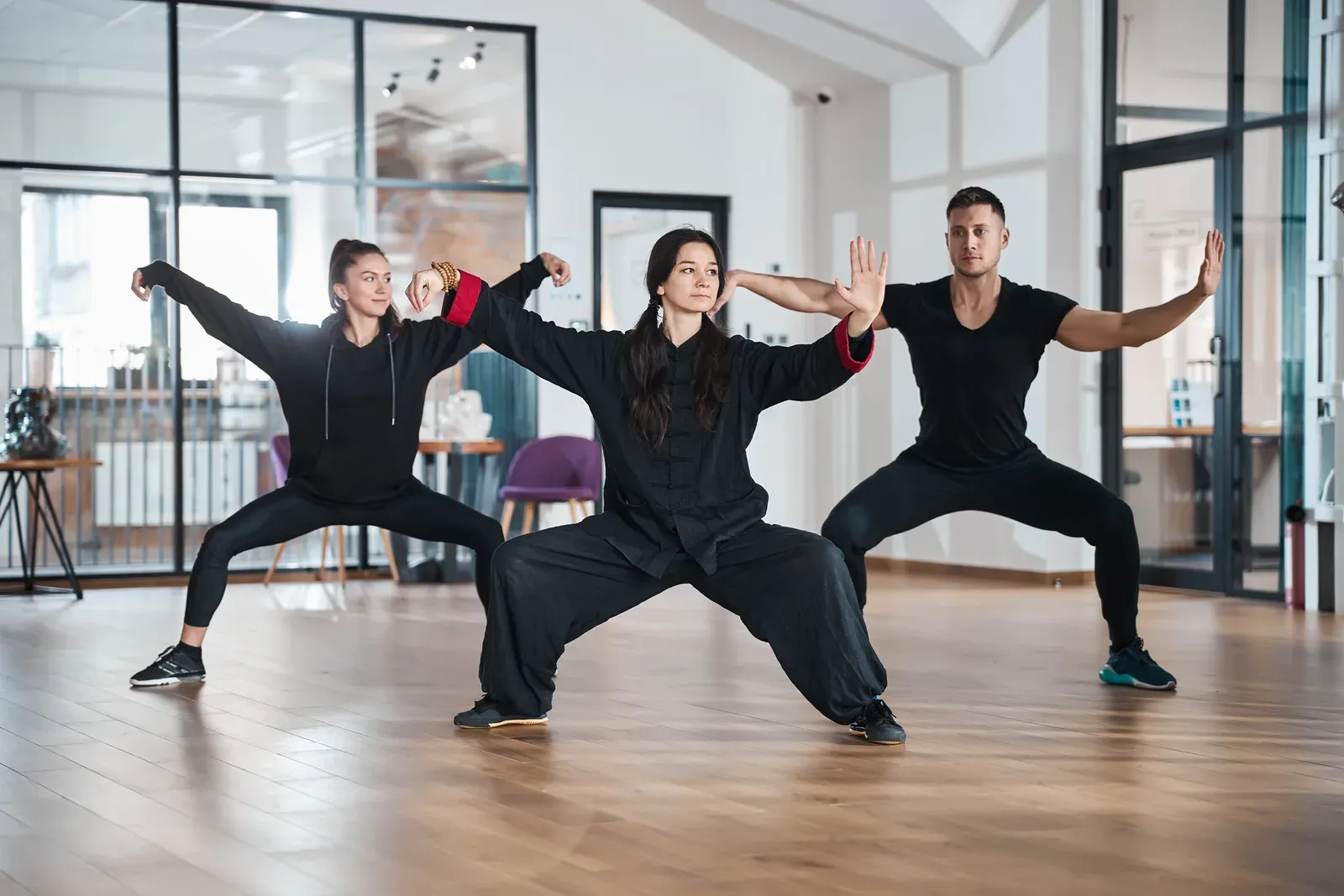
An open, quiet room at FlexWerk in Carmel gives a tai chi or qigong instructor a private space to teach slow, deliberate movement without dodging equipment or competing with a loud class next door. The format needs almost nothing extra, floor space, quiet, and a door that closes, which is exactly what an hourly private room is built to provide, and the first hour is free for a fitness professional.
Why a busy gym floor works against this style
Tai chi and qigong depend on open sightlines, slow weight shifts, and a calm room, the near opposite of a typical commercial gym floor with machines in every direction and a class running its own soundtrack nearby. Students need to see the instructor clearly and move without stepping around a bench or a rack mid form. A private room removes the obstacle course entirely and gives an instructor a fixed, predictable layout to teach the same sequence the same way every week.
Room size for a small class
A FlexSpace Standard, at about 150 square feet, suits one or two students comfortably for private instruction, while a Plus, at about 200 square feet, gives a small group of up to four enough open floor for a short form without anyone crowding the person next to them. The equipment already in the room, a lifting rack, a cable system, dumbbells, sits along the walls rather than in the middle, so the room stays usable for open movement even though it is a general training space rather than a dedicated dance or movement studio.
Quiet as the actual product
What a tai chi or qigong class needs most is not equipment, it is the absence of distraction. Lighting is adjustable, so an instructor can set a calm, even tone rather than working under whatever fixed lighting a shared studio happens to run. There is no ambient noise bleeding in from a class next door, since each room is private and closed off from the rest of the building. Music streaming is available for an instructor who wants it and entirely optional for one who does not; either way, the room stays the instructor’s to set up exactly as the format needs.
Booking a recurring class without a studio lease
A weekly class books the same room every time through the app, with no lease or monthly minimum sitting behind the arrangement, which matters for a format that often grows slowly through word of mouth rather than a marketing push. A mind body instructor and a breathwork facilitator teaching equally quiet, low equipment formats from the same kind of room show this model working across several disciplines that all need the same thing: space, quiet, and a door that closes.
What experienced instructors do with the extra square footage
An instructor teaching push hands work, partner drills, or a longer form with more directional changes tends to book the Plus room specifically for the extra floor space, even with a smaller class, since a form that travels needs room to travel in without students bunching up near a wall. A Standard room suits stationary qigong work well, breathing sequences, standing postures, slow arm circles, where the group barely moves from its starting spot. Either way, the equipment already in the room stays out of the way rather than requiring rearrangement, since it sits fixed along the walls in both room sizes.
What a session costs
A booked hour costs $18 to $22, with no lease or membership layered on top of the number, which keeps a small, slowly growing class affordable to run compared with signing a lease for a dedicated studio before a roster even exists. A kettlebell instructor running a much louder, equipment heavy class from the identical room type shows how flexible the space is across very different teaching styles.
Book the free first hour, run one class in the room, and feel out whether the quiet actually changes how students move.
Where a private room beats an outdoor practice spot
Many tai chi and qigong groups start outdoors, a park, a trail, a backyard, and outdoor practice works until weather stops it. Indiana’s winter brings roughly 22 inches of snow across a season and January highs only around 33 degrees, which puts a hard stop on outdoor sessions for a real chunk of the year, and summer humidity in the upper 80s and 90s makes a midday outdoor class its own kind of unpleasant. An indoor room removes the seasonal interruption entirely, letting a class run on the same schedule in January that it does in June, which matters most for students who have built a routine around a specific weekly time.
Teaching a mixed level group in one room
A single class often includes a student who has practiced for years next to someone in their first month, and a private room makes that spread easier to teach than an open studio floor does. Without other classes or foot traffic pulling attention away, an instructor can slow down for a beginner without losing the more advanced students to distraction, and a shorter individual correction does not feel like it is holding up a larger, more public class. The same closed room also means a private lesson can be scheduled for a student who wants individual attention, without needing a separate space for that kind of session, and a beginner nervous about their first class often relaxes faster in a small, quiet room than they would on an open studio floor surrounded by strangers.
Related questions
Is there open floor space for a short form, or is the room full of equipment?
The equipment sits along the sides of the room rather than in the middle, leaving open floor for movement. A FlexSpace Plus, at about 200 square feet, gives a small class enough clear floor for a short form.
Can I teach without music, or is silence a problem?
Silence is not a problem. Music streaming is available if a class wants it, and the room works just as well with none, since the format itself needs almost nothing beyond quiet and space.
What does booking cost?
A booked hour costs $18 to $22, with no lease or membership layered on top of the number.