
Carmel, Indiana · For Physical Therapists
A lease-free room for cash-based PT
The hardest part of going cash-based is not finding patients. It is finding a room professional enough for them without signing a clinic lease. FlexWerk at Carmel City Center rents private, fully equipped rooms by the hour: no lease, no membership, no fixed overhead, and your first hour is free.
Questions about professional use, availability, or the model? A host will call you.
Why the models fit
Hourly space, built for a cash-based caseload
The cash-based model trades insurance volume for time: longer one-on-one visits, fewer patients per day, direct payment. That structure makes traditional clinic space a poor match. A clinic lease assumes you will fill treatment bays all day, while a cash caseload of three to six visits a day leaves that overhead mostly idle.
Hourly space inverts the equation. Your facility cost attaches to each booked visit, so a ramp-up phase with a thin caseload does not bleed you, and your margin per visit stays high and predictable. You keep 100% of what you charge and pay for exactly the hours you use.
The gradual path
Hold your hospital or clinic employment while the cash side grows, booking hours as patients book you. A light week costs little, and there is no break-even month to survive before the practice works.
Coming out of clinic employment? Start with theclinic-to-cash-practice playbook.
What the room gives you
Built for movement, loading, and return to performance
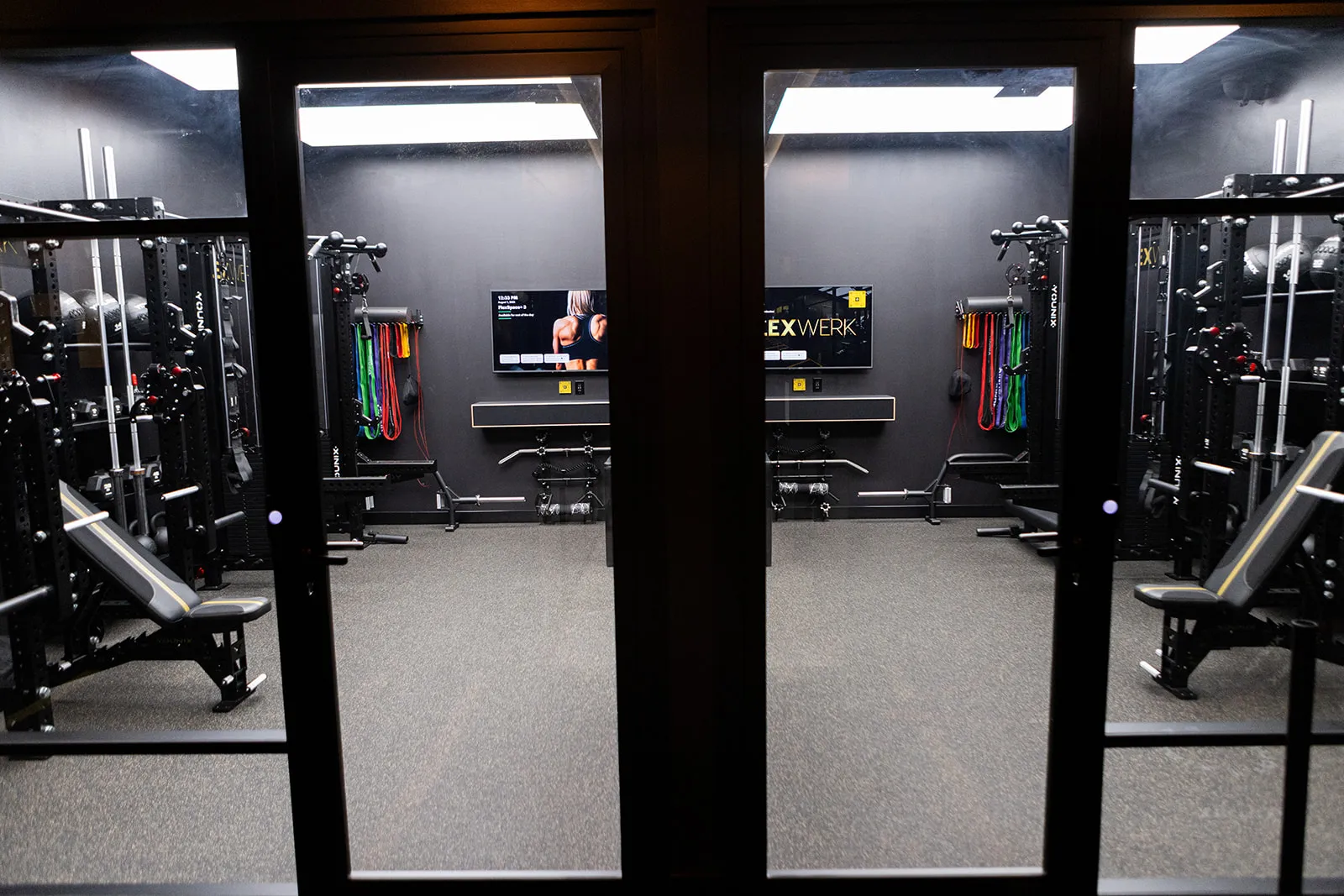
FlexWerk's rooms were built for fitness professionals, and that is precisely their value to a PT whose cash practice centers on movement. Compare thethree FlexSpace tiers to see the fit.
- Standard rooms (150 sq ft, 1-on-1) with a custom lifting rack, cable system, and dumbbells: 850+ exercises of progressive-loading capability
- Plus rooms (200 sq ft, up to 4 guests) when a parent, spouse, or athlete's coach should be in the room
- Cardio rooms with HYDROW rowers, CLMBR machines, and curved treadmills for conditioning and low-impact capacity work
- A door that closes: every room is fully private, with WiFi, music streaming, and controllable lighting
- A TV/monitor for reviewing movement video or walking through home-program material
- Real-time booking through the FlexWerk app, including back-to-back visit blocks
What the room is not
A FlexSpace is not a licensed clinic. There are no treatment tables, modalities, or clinical fixtures: you bring what your practice model requires. Practice within your licensure and scope; FlexWerk provides the private space, not clinical oversight. Privacy, though, is clinical rather than cosmetic: patients discuss pain, fear of movement, and surgical history more openly in a private room than in a curtained bay or on a gym floor.
Simple hourly rates
Pay per visit, not per month
$18/hour
FlexSpace Standard
150 sq ft, built for one-on-one visits: rack, cables, and dumbbells with 850+ exercise options.
$22/hour
FlexSpace Plus
200 sq ft for up to 4 guests, with 1,100+ exercise options: room for a spouse, parent, or coach.
$12/hour, from
FlexSpace Cardio
HYDROW, CLMBR, and curved treadmills in a private room for conditioning and capacity work.
- First hour free for fitness professionals
- No leases, memberships, or minimums
- Keep 100% of what you charge
- Patients of professionals get free guest access
Full details on the pricing page. VIP pricing exists for regulars by qualification: ask a host.
Before your first patient
The diligence to do first
1
Scope and setting rules
Check with the Indiana licensing board and your professional association on any requirements your practice model imposes on treatment settings, documentation, and advertising.
2
Insurance
Ensure your professional liability policy covers care delivered in rented, non-clinic space. The basics ofinsurance for rented gym spaceare a starting point, but your broker is the authority.
3
Business structure
An attorney and accountant should bless your entity, patient agreements, and payment policies. Cash-based practice lives or dies on clean paperwork.
None of this is unusual. Cash-based PTs do it everywhere, but it is your responsibility, not the facility's.
The Hamilton County advantage
A market that pays for time
Carmel is an unusually good market for this model. The county's demographics support out-of-pocket healthcare spending, and the patient profile that seeks cash-based PT, athletes, active professionals, adults who want more than a rushed visit, is exactly who lives here. Premium one-on-one movement services in this market commonly price at $75 to $125 or more per hour, and a private City Center room, steps from the Monon Trail with garage parking a short walk away, presents like the premium service you are charging for.
Logistics work in your favor too. Hours run 5 AM to 9 PM on weekdays and 7 AM to 4 PM on weekends, so pre-work and post-work visits are easy to offer, and visits book through the app: a stacked block of morning patients, an afternoon of documentation from anywhere, no front desk required. The broader local case is on the Carmel rental page.
The referral hallway
The building holds more than 40 fitness professionals seeing their own clients every week, and trainers are a natural two-way referral relationship for a cash-based PT: they send you the clients whose pain is outside their scope, and you send back graduates who need ongoing coaching. Sharing a hallway shortens that loop considerably.
Want to see it before deciding? Book a tour and walk the rooms with your PT eyes on.
Common questions
Physical therapists ask us
Can a physical therapist see cash-pay patients in a rented room?
Many cash-based PTs use rented private space for the movement and exercise portions of their practice. Confirm the specifics with your state licensing board, your liability insurer, and an attorney, since requirements vary by practice model.
Is the room private enough for patient conversations?
Yes. Each FlexSpace is a self-contained room with a door, not a curtained bay or a shared floor, so assessments and coaching conversations stay between you and your patient.
Does FlexWerk provide a treatment table?
No. The rooms are equipped for strength and conditioning, and clinical or specialty tools are yours to bring. For most movement-based cash practices that means a portable table and a bag, and for some it means nothing at all.
What does it cost to get started?
There is no lease or membership. Rooms rent by the hour through the FlexWerk app, from $18 per hour, and your first hour is free, so trying the model costs nothing up front.
Talk with a Host
Leave your details and a FlexWerk host will call you: professional use, room availability, peak hours, and anything else you want to know before your first patient visit.
Ready now? Book Your First Hour Free, orschedule a tour and see the rooms in person first.