
Postpartum Doula Movement Space in Carmel
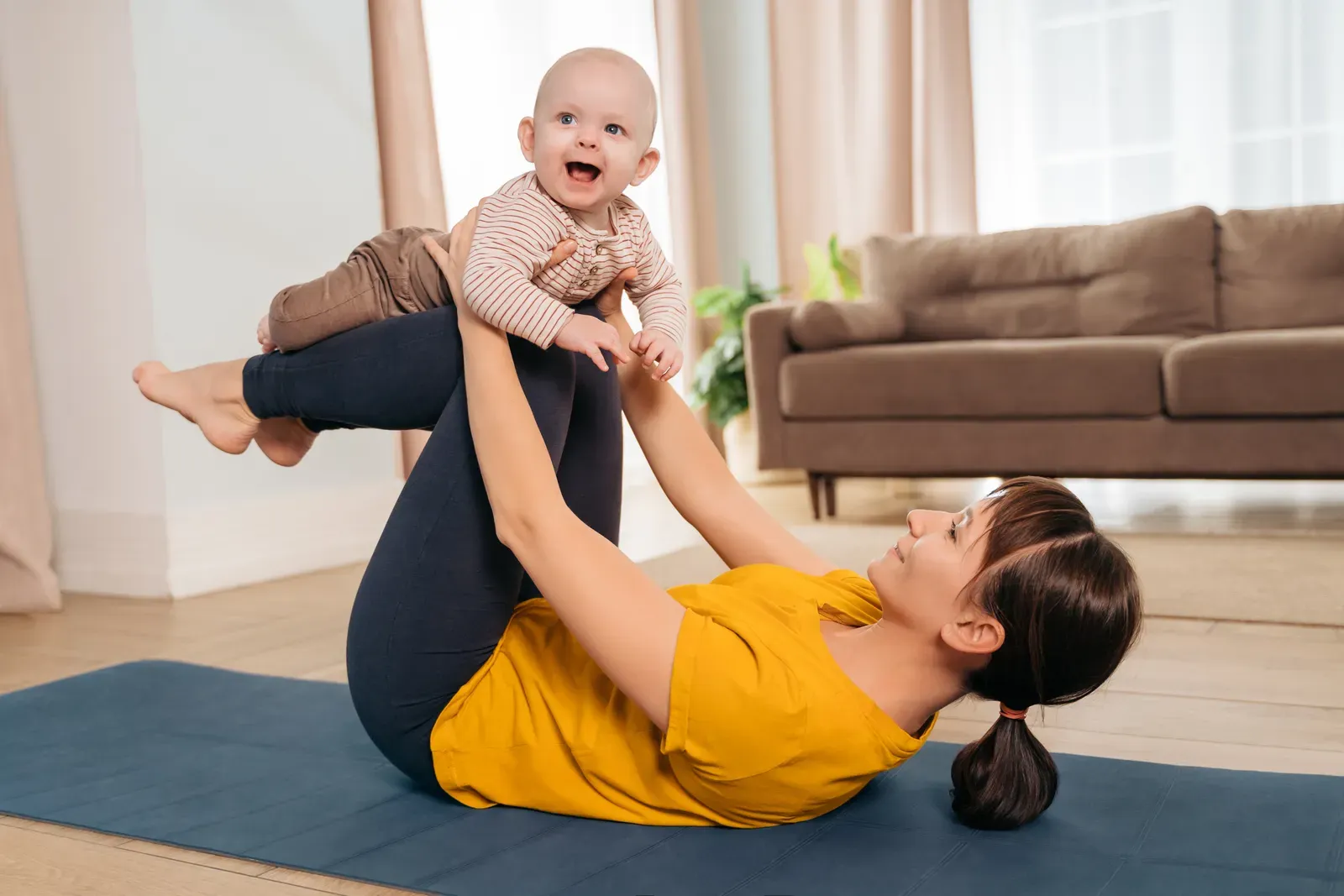
Postpartum support work is expanding past the living room. Families who hire a doula increasingly want the relationship to continue into the recovery months, and doulas who have added movement training to their toolkit are the natural people to walk that road with them. A postpartum doula with genuine movement scope can run gentle return-to-movement sessions in a private hourly room, keeping new mothers supported in an environment that is neither a gym floor nor a house full of laundry. At FlexWerk in Carmel, that room books by the hour and the first hour is free for professionals.
The gap a movement-trained doula fills
The postpartum timeline has a well-known dead zone. Clinical care typically tapers after the early weeks, while mainstream fitness culture stands at the far end waving programs that assume a body ready for intensity. Between those two points sits a long, unglamorous stretch of rebuilding that most new mothers navigate alone. A doula who has invested in postpartum movement credentials, described generically because the certification ecosystem here is wide, lives exactly in that gap: trusted already, present already, and trained to guide the gentle early work that fitness programs skip.
That continuity is the business case. The family already knows you. Extending the engagement into weekly movement sessions is a natural next chapter, not a new sale to a stranger.
What gentle-return sessions look like
The work is quiet by design, and the room should be too. Sessions at this stage commonly center on breath mechanics, posture, and the carrying demands of new parenthood: lifting a car seat, feeding positions, the endless floor-to-standing transitions. Light dumbbell and cable work enters when your training says it should, and the room’s stock, a rack, cable system, and dumbbells covering 850+ exercises in a Standard space, means the progression path is already in the room as your client gets stronger. Music streaming, controllable lighting, and a TV round out an environment you set deliberately, and WiFi makes it easy to share follow-up material on the spot.
None of this needs much space, but all of it needs privacy. A 150 sq ft private room with a door that closes is nearly ideal for a client whose relationship with her body is tender and whose tolerance for an audience is zero.
A typical hour runs quiet and structured: a check-in conversation, breath and posture work, a short strength block scaled to the week, and a carrying or floor-transfer pattern that maps to something the client will actually do that afternoon. Progress is small on purpose. Filming a movement on your phone and reviewing it together on the TV makes those small wins visible, and visible wins are what this population needs more than any other.
Scope, screening, and the referral reflex
Stay inside your training, and say so out loud, because it is both an ethical line and a marketing asset. A doula’s movement work runs alongside clinical care: pain, bleeding, pelvic floor symptoms, or anything that feels off goes straight back to the client’s physician, midwife, or a pelvic health physical therapist, and the pelvic floor PT guide shows what that adjacent practice looks like when it rents the same kind of room. FlexWerk provides the private space, not clinical oversight or medical equipment, so your screening habits and referral relationships are the safety system. Families trust the doula who refers quickly far more than the one who stretches her scope.
Why the private room beats the doula’s default venues
Home visits built the profession, but they cap it. Every session in a client’s home spends your day on driving, and the home itself competes with the work: interruptions, no equipment, and a client who cannot stop seeing chores. The big-box alternative is worse; a crowded floor is the least postpartum-friendly room in any town. A reserved private room splits the difference exactly, and the Indiana calendar sharpens the case, since the walking-based outdoor plans everyone loves in June disappear into roughly 22 inches of snow and January highs around 33 degrees.
Carmel makes the logistics gentle. The facility sits at 885 Monon Green Blvd at Carmel City Center, with garage parking a short walk away, and weekday hours from 5 AM to 9 PM plus weekends from 7 AM to 4 PM leave room for the unpredictable scheduling that new-parent life demands. Partners are welcome in the room; clients of professionals here receive free guest access, which suits a stage of life nobody navigates solo.
The practice economics
The hourly model matches how postpartum work actually flows. You book a room for $18 to $22 per hour through the FlexWerk app only when a session is on the calendar, keep 100 percent of what you charge, and carry no lease through the months when your client load ebbs. A sensible offer stacks naturally: the core doula engagement, then a movement package of weekly sessions across the return-to-movement months, priced as the premium continuity service it genuinely is. More than 40 fitness professionals already run hourly practices in the building, and the prenatal and postpartum trainer guide covers the adjacent trainer-side version of this niche if your credentials run in that direction.
Partners fold in naturally too. A Plus room at 200 sq ft holds up to 4 guests, so a partner learning the carrying and lifting patterns alongside your client is a session format rather than a complication, and it deepens exactly the household support a doula’s work exists to build.
Claim the free first hour, bring one postpartum client whose recovery deserves a calm room, and see how the session lands when the door closes.
Related questions
Can a doula run movement sessions at FlexWerk?
Yes, within the movement scope your training actually covers, with your own liability coverage in place. FlexWerk provides the private room, not clinical oversight, so anything medical stays with the client's providers.
When should a session be referred out?
Pain, bleeding, pelvic symptoms, or anything outside your training goes back to the client's physician, midwife, or a pelvic health physical therapist. A doula's movement work runs alongside clinical care, never in place of it.
What does the space cost?
Rooms rent for $18 to $22 per hour through the FlexWerk app with no lease or membership, and the first hour is free for professionals.