
Personal Training Studio Rental in Noblesville: Lease vs Hourly
Search for personal training studio rental in Noblesville and the listings will happily sell you a growth market at growth-market prices. The real decision is not which space to lease; it is whether a solo coach in a fast-growing city should be leasing at all when private rooms rent by the hour an easy 146th Street drive away. That hourly option is laid out on the gym space for rent near Noblesville page; this article is the lease math underneath the choice.
What “studio rental” turns up in Noblesville
Noblesville is one of the fastest-growing cities in the state, and its commercial landlords price for that trajectory. When a trainer goes looking for studio space here, the search resolves into three shapes: retail and light-industrial units leased on multi-year terms at rates that assume the growth continues, sublet hours inside someone else’s studio around their own class schedule, and floor arrangements at commercial gyms where the house commonly keeps 40 to 60 percent of every session.
The lease is the one that deserves the hard look, because it is the only option you cannot exit when your assumptions miss. Subleases end, floor deals end, but a personal guarantee on a five-year term follows you.
The cost stack behind the listing price
The advertised rent is the beginning of the number, not the number. Before a leased studio earns its first dollar, the stack typically includes:
- Base rent on a multi-year commitment, priced for a market where new subdivisions keep extending the city’s edges and demand keeps landlords confident.
- Build-out and equipment. Flooring, a rack, cables, dumbbells, signage, and the unglamorous work of making a retail shell trainable; the full inventory is itemized in what it costs to open a gym.
- Carrying costs. Utilities, facility-owner insurance, maintenance, and the administrative hours that come out of your coaching week.
- Empty hours. A solo trainer’s sessions cluster into early mornings, evenings, and Saturdays. The studio bills you for the whole day anyway, every day, including vacation weeks and slow Februaries.
That last line is the quiet killer. A coach delivering 25 sessions a week occupies a room perhaps 30 hours of the 100+ it is open and paid for. The rest is rent on an empty room, at growth-market rates.
The hourly alternative, priced honestly
The hourly model flips every line of that stack. At FlexWerk, private rooms rent for $18 to $22 per hour and cardio rooms start at $12, booked through an app, with no lease, no membership, and no revenue split; you keep 100 percent of what you charge. Twenty sessions costs twenty hours. A quiet week costs almost nothing. A vacation costs exactly nothing.
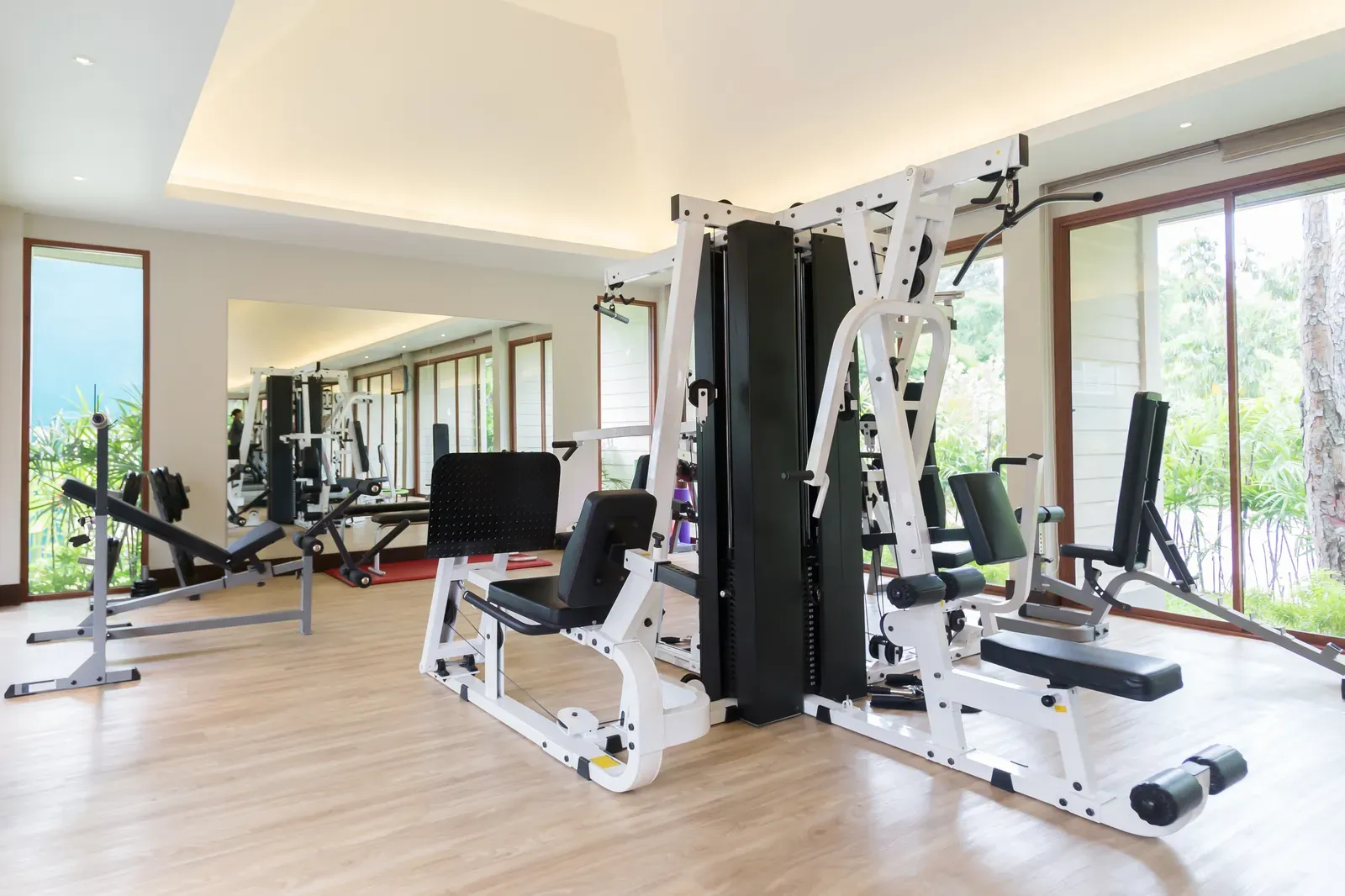
The room itself is not a compromise: a Standard room carries a custom lifting rack, cable system, and dumbbells supporting 850+ exercises, a Plus room runs 1,100+ exercises and holds up to 4 guests for pairs and small groups, and every room has WiFi, a TV, music streaming, and lighting you control. More than 40 fitness professionals already run their businesses out of the building, which is a better proof of the model than any spreadsheet. The same math from the Fishers side of the county is worked through in the Fishers studio rental comparison, and it lands in the same place.
The 146th Street question
The honest cost for a Noblesville coach is the drive. The facility sits at Carmel City Center, 885 Monon Green Blvd, an easy run down the 146th Street corridor, with garage parking a short walk from the door and free guest access for your clients. Coaches make it work the way commuting coaches always do: stack sessions into blocks so one trip covers three or four clients, and lean on the Monday to Friday 5 AM opening, when 146th is empty and before-work clients are gladdest to train.
The caveat runs the other way too. If your entire roster lives in old-town Noblesville and books midday, you are asking every client to absorb the drive at its worst hour, and a local floor deal may serve that specific book better. Most rosters are not that concentrated; trainers whose clients spread across Noblesville, Fishers, and Carmel often find City Center more central than any Noblesville address would be. The wider market case for building here at all is in the Noblesville opportunity read.
When the lease genuinely wins
Sign the lease when the volume already exists: several trainers sharing the cost, group formats larger than four people, a schedule that keeps the room busy across the whole day, or a storefront brand that needs its own address in a specific neighborhood. A leased studio at high utilization beats any hourly rate. A leased studio at solo-trainer utilization is a donation to a landlord who priced for growth.
The break-even logic is worth writing down. A lease beats hourly rates only when your booked hours climb high enough that the fixed rent, divided by real sessions, drops below the hourly rate, and for a solo coach that crossover typically sits far above 30 sessions a week once build-out and carrying costs are amortized honestly. Run your own number before any showing; if the crossover is not in sight within a year, the listing is not for you yet.
If you are not at that volume yet, rent the hours, bank the difference, and let the market grow before your fixed costs do. The cheapest test costs nothing: the first hour is free for fitness professionals, so book it, bring one willing client down 146th, and run your own numbers on the way home.
Related questions
Is there hourly training space in Noblesville itself?
Noblesville has gyms and studios, but no dedicated hourly facility for independent trainers inside the city. The nearest is FlexWerk at Carmel City Center, an easy 146th Street drive away, with private rooms from $18 per hour.
How much does an hourly room cost compared to a lease?
Rooms rent for $18 to $22 per hour and cardio rooms from $12, so 20 sessions a week costs 20 hours of room time. A leased studio bills the same in your best month and your worst, which is the entire difference.
When should a Noblesville trainer sign a lease anyway?
When volume already justifies it: multiple trainers sharing the space, groups larger than four, or a schedule that keeps a room busy most of the day. Below that, fixed rent mostly buys hours nobody is using.