
Neuro Fitness Specialist Private Space in Carmel
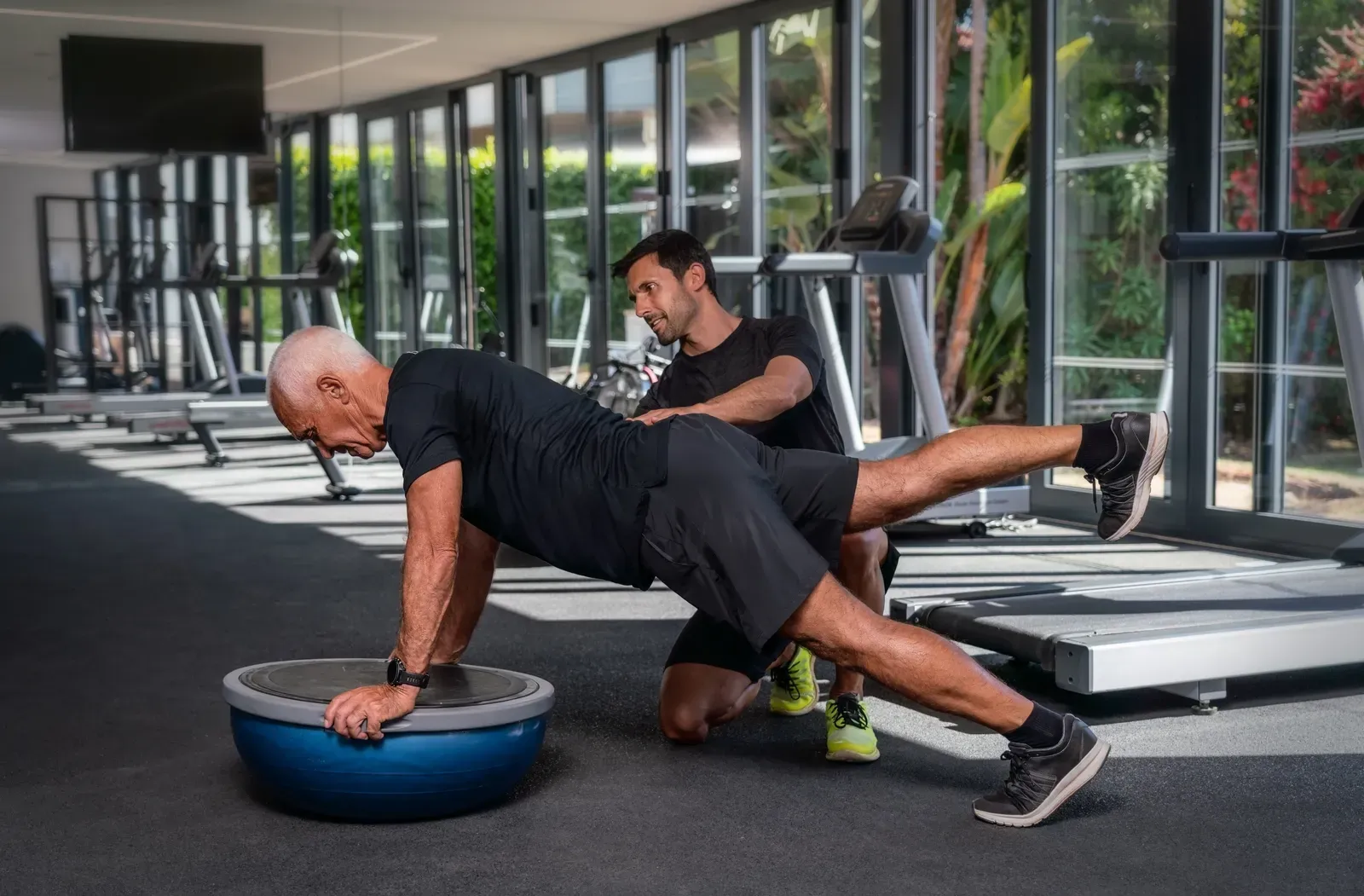
Ask anyone who trains people with stroke histories, multiple sclerosis, or other neurological conditions what their clients fear about gyms, and the answer is rarely the exercise. It is the environment. Neuro fitness work needs a controlled, quiet, fall-aware room, and a private hourly space delivers that environment without the clinic lease that usually comes attached. At FlexWerk in Carmel, the room books by the hour and the first hour is free for fitness professionals.
Why the environment is half the intervention
For neuro populations, a commercial gym floor is close to the worst possible training venue. Crowds, unpredictable noise, visual clutter, and obstacles between machines all tax exactly the systems these clients are working to rebuild, and fatigue management, central to most neuro-aware programming, is impossible in a space where every transition is a negotiation. A private reserved room flips each variable: one client, one coach, lighting and sound you control, and a floor you can keep deliberately clear. The predictability itself is therapeutic groundwork, because a client who trusts the room spends their limited energy on training instead of vigilance.
Setting up a fall-aware session
A fall-aware setup starts with what you remove, not what you add. Keep the floor uncluttered, stage dumbbells before the client arrives, and build sessions so support is always within reach; the custom lifting rack and cable column are sturdy fixed points that double as handholds for supported balance and sit-to-stand work. The Standard space at 150 sq ft keeps everything one step away, which is an advantage rather than a constraint for this work, and a Plus at 200 sq ft gives room for a caregiver plus walking-pattern work when a client needs the space. Specialized balance tools and supports are bring-your-own, carried in for the session and out when you leave.
The room’s screens earn their keep too: film movement on your phone, review it with the client on the TV over WiFi, and send the clip to whoever in their support system needs to see progress.
Keep the session’s arc consistent on purpose: a seated or supported warm-up, the day’s balance and strength work in short blocks with genuine rest, and a calm close that leaves energy in reserve for the walk out. Consistency of structure is itself a training effect for this population, and a reserved room means no session ever gets improvised around a stranger using your equipment.
The scope line: certification, not clinic
You are the fitness layer, and the practice is safest when that sentence leads every conversation. Neuro-focused training credentials, described generically because the ecosystem spans post-rehab, adaptive, and condition-specific programs, define what you deliver: strength, balance, and conditioning work after formal rehabilitation has discharged the client or alongside it with everyone’s knowledge. FlexWerk provides the private space, not clinical oversight or medical equipment. Changes in symptoms, new deficits, pain, or anything ambiguous goes back to the client’s care team, and your intake should collect who that team is on day one. Referring quickly is also how the referral pipeline starts flowing the other way; clinicians send clients to the trainer who respects the line.
The referral pipeline gets built one clinician at a time, and the mechanics are unglamorous: a one-page summary of your credentials and scope, a plain description of what a session looks like, and a habit of sending brief, consented progress updates when a shared client improves. Clinicians refer to what they can predict, and the private room helps there too, because a therapist can observe a session without a gym floor’s chaos surrounding the visit.
Condition-specific versions of this practice have their own playbooks: the Parkinson’s fitness guide covers that community’s specific programming culture, and the adaptive fitness page covers the broader disability-inclusive practice.
The Hamilton County reality
The client base here is larger and better resourced than most trainers assume. Carmel is an affluent, aging-in-place kind of city, with a median household income north of $141,000 and roughly 105,600 residents, which means families who can fund consistent private training as part of a long recovery arc, often coordinated by adult children who want a professional solution. Sessions typically run midday, which suits the facility’s Monday to Friday 5 AM to 9 PM hours, and the building sits at 885 Monon Green Blvd at Carmel City Center with garage parking a short walk away. Plan arrivals honestly with clients who move slowly; walking in from the garage is part of the session warm-up for some, and knowing that in advance keeps the experience calm.
Caregivers and spouses belong in this practice, and the guest model supports that: clients of professionals here receive free guest access, so the familiar person stays in the room without friction.
Running the practice by the hour
The economics reward exactly the session structure neuro work demands. You book rooms for $18 to $22 per hour through the FlexWerk app only when sessions are scheduled, keep 100 percent of what you charge, and carry no lease through the inevitable gaps that health-driven calendars produce. Premium specialist rates are normal in this niche because the alternative for families is nothing, and recent industry surveys suggest around half of clients now seek a specialist over a generalist. More than 40 fitness professionals already run their businesses in the building, so back-to-back booking rhythms and standing weekly slots are the established pattern.
Claim the free first hour, walk the room the way your most cautious client would, and decide whether the environment does what your programming needs it to do.
Related questions
Do I need a medical license to do this work?
No, but you need neuro-focused training credentials, clear scope habits, and liability insurance that covers the populations you serve. FlexWerk provides the private room, not clinical oversight or medical equipment, and clinical care always stays with the client's providers.
Can a caregiver or spouse attend sessions?
Yes. Clients of professionals here receive free guest access, and for many neuro clients a familiar person in the room is part of what makes training work.
What equipment is in the room for balance work?
Each space carries a lifting rack, cable system, and dumbbells, and the rack and cable column double as sturdy support points. Specialized balance tools are bring-your-own.