How to Learn to Lift Weights Without a Gym Membership
You do not need a gym membership to learn to lift weights. You need a room with the right equipment, a conservative plan, and nobody watching you figure it out, and that is bookable by the hour: a private workout space in Carmel rents for $18 to $22 per hour with a rack, cables, and dumbbells behind a closed door. Here is how self-directed beginners actually use it, including the honest limits of learning alone.
Why beginners quit big gyms before they learn anything
The standard beginner path fails at the environment stage, before programming ever matters. You sign a contract you are not sure about, walk onto a floor where everyone seems to know the choreography, and try to learn the most awkward-looking movements of your life in front of an audience. Equipment is contested, so you gravitate to whatever machine is free rather than what you should learn, and the self-consciousness tax on every rep makes sessions shorter and rarer until they stop. None of that is a willpower failure. It is a bad learning environment, and swapping the environment changes the outcome more than any motivation trick.
A private room deletes the audience, the waiting, and the contract in one move. What is left is just you and the learning curve, which turns out to be very manageable when nobody is watching it.
The private-room learning setup
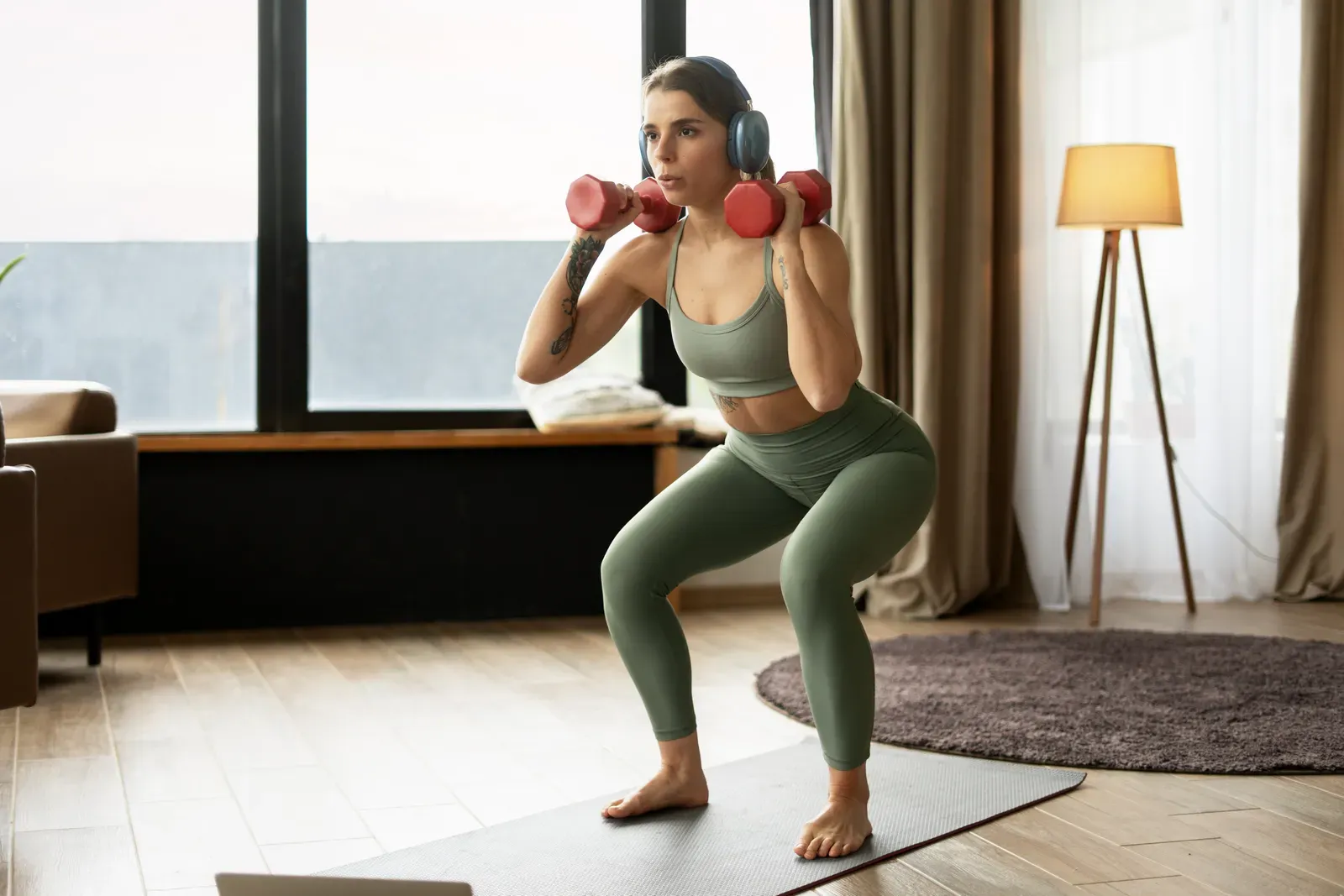
A FlexSpace Standard gives a beginner more than enough to learn on: 150 sq ft with a custom lifting rack, a cable system, and dumbbells supporting 850+ exercises, plus WiFi, a TV, music streaming, and lighting you control. Two features matter more for learners than they first appear. The mirror in the room gives you real-time form feedback, and because the rooms are deliberately filming friendly, propping your phone against a bench or on a small tripod and recording your sets gives you the replay feedback that mirrors cannot: what your hips did on rep six, whether the bar path drifted, how your last warmup set actually looked.
An hour is the right learning unit. Book one, work through a short list of movements slowly, and leave before fatigue makes practice sloppy. You pay for exactly the hours you use, and the empty-room logic means the equipment you planned to learn on is never taken.
A sane first month of lifting
Programming for a solo beginner should be boring on purpose. A reasonable shape for the first month, using generic and widely taught principles:
- Train 2 or 3 times a week, full body each time, with at least a day between sessions.
- Start with dumbbells and cables, not the barbell. Goblet squats, dumbbell Romanian deadlifts, presses, rows, and carries teach the same patterns with far friendlier consequences for form errors.
- Learn five patterns: squat, hinge, push, pull, and carry. Everything else is a variation.
- Keep two or three reps in reserve on every set. Training alone means grinding maximal reps is a habit to build later, if ever.
- Add load slowly. When a weight feels crisp for all sets two sessions in a row, nudge it up. Progress in month one comes from practice quality, not bravery.
- Touch the barbell when the dumbbell versions feel boring, starting with light weights in the rack and conservative setups.
Film the working sets, compare them to reputable instructional videos, and treat every session as skill practice that happens to build muscle. And a non-negotiable caveat: if you have a health condition, an old injury, or any doubt about whether hard training is appropriate for you, talk to your physician before you start. That is their lane, not this article’s.
The honest tradeoffs of learning solo
Self-directed learning is viable, not optimal. A good coach compresses months of trial and error into weeks, catches form faults you cannot feel, and removes the constant low-grade doubt about whether you are doing this right. Learning alone also means structuring your own exercise selection around the fact that there is no spotter: dumbbells, cables, and conservative rack work cover that completely, but it is a real constraint, and pretending otherwise would be bad advice. Finally, solo learners own their own consistency. The booked hour helps, because a reservation at 6 AM has more gravity than an intention, but nobody is texting you when you skip.
If you get three weeks in and want the faster path, that is not a failure of the private-room approach; it is what the learning told you.
If you decide you want a coach
Coached training is the other side of the FlexWerk world, and it lives at flexwerkfitness.com: a free consultation, a free first session, and coaches matched to your goals and schedule. Plenty of people run a hybrid, learning solo in booked hours and checking in with a coach periodically to audit form and update the plan.
Either way, the entry point for the solo path is the same: the talk to a host form on the private workout space page or a call to (888) 353-9975, then hours booked in the FlexWerk app whenever you want to practice. The facility runs Monday through Friday 5 AM to 9 PM and weekends 7 AM to 4 PM at Carmel City Center, and if you are 18 or older and local, the first hour is free. Book it, bring a light plan and a phone to film with, and let the first rep of your lifting life happen with the door closed.
Related questions
Can a complete beginner really learn to lift alone?
Yes, with conservative habits: start with dumbbells and cables, keep loads light, film your sets to check form, and stop each set well short of failure. The learning curve is slower than with a coach, but it is a real and well worn path.
What does practicing in a private space cost?
Spaces rent for $18 to $22 per hour with no membership or contract, and cardio spaces start at $12. If you are 18 or older and local to the Carmel location, your first hour is free once a host confirms eligibility.
When should I get a coach instead?
If you want faster feedback, have a health condition, or find yourself guessing more than learning, coaching is worth it. Coached training lives on the consumer side at flexwerkfitness.com, starting with a free consultation and a free first session.