
Rider Fitness Coach Space in Carmel: Strength Off the Horse
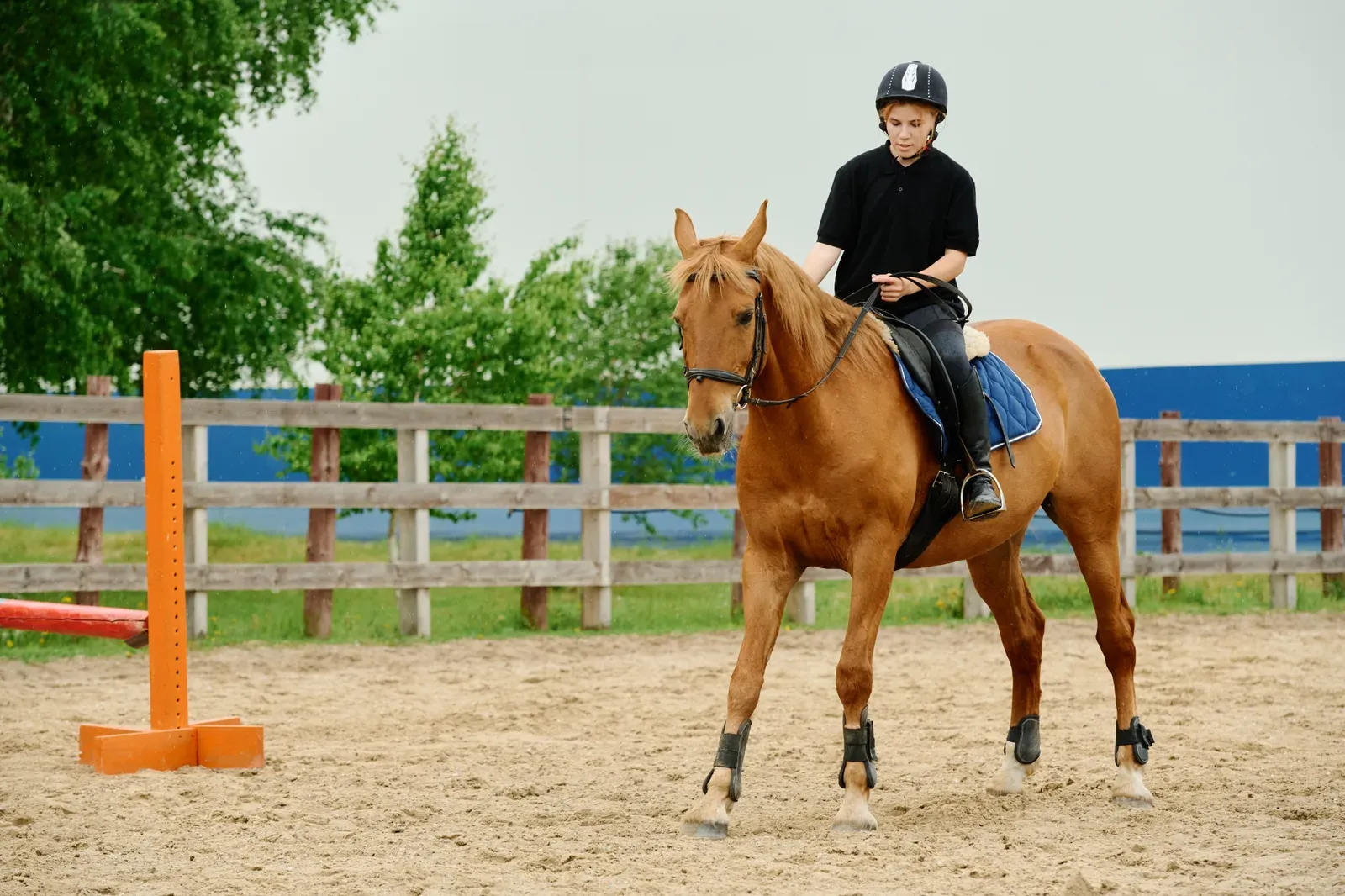
Every horse is an honest mirror: it drifts toward the rider’s strong side, hollows under a collapsed back and rushes when the rider’s legs give out. A rider fitness coach fixes the rider’s body between barn days, and a private hourly room with a cable system, dumbbells and a rack covers that work completely without a horse anywhere in sight. At FlexWerk in Carmel, the space for your practice rents by the hour, so a rider-strength niche carries no lease through the summer show months.
Who hires a rider fitness coach
Three riders make up the niche, and they buy for different reasons. The adult amateur, often a professional in her forties or fifties who returned to riding after a career pause, buys because her back hurts and her trainer keeps saying the same thing about her left side. The junior on the show circuit buys because a parent already pays for lessons, coaching and travel, and body work is the obvious next input. The barn professional, the instructor or groom who rides several horses a day, buys because the job is wearing them out. Zionsville’s demographics suit the first group unusually well: a median household income of $172,024, the highest of the north metro towns, and a median age of 42.1 (Census estimates), which is the adult amateur exactly.
None of them wants to be coached on a gym floor. Riders are private about their bodies in a way most athletes are not, and they are used to paying instruction rates for one-on-one attention in a quiet arena. A closed room with an instructor is the format they already understand.
The rider’s problem list and what the room supplies
Riders arrive with the same five issues, and the room has a tool for each. Asymmetry first: years of mounting from one side and a dominant rein hand build a body that is stronger and tighter on one side, so single-arm cable rows and presses, single-leg dumbbell hinges and split squats do most of the early work. Hips second: the position asks for adductor and hip-flexor length that the desk and the saddle both steal, so loaded hip mobility and slow controlled ranges with light dumbbells fill every warm-up. Core third: a rider’s trunk resists rotation and absorbs motion rather than producing it, which makes anti-rotation cable holds and carries the core program. Upper back fourth: the collapsed thoracic posture every instructor shouts about responds to cable pulling volume and dumbbell rear-delt work. Legs last: a leg that has to hold a position through a course or a test needs isometric endurance, so long-hold split squats and rack-supported isometric holds close the session.
A FlexSpace Standard, 150 sq ft with a custom lifting rack, cable system and dumbbells supporting 850+ exercises, carries all of it for one rider; a Plus at 200 sq ft fits a parent watching a junior or a pair of barn friends training together, since clients of professionals receive free guest access. Balance tools are bring-your-own. Film the single-leg work from the side on your phone, review it on the room’s TV over WiFi, and the rider sees the asymmetry her instructor has been describing for years.
Fitting the practice to the barn calendar
Riders train around horses, not around gyms, and the calendar has a clear shape. Show season runs spring through fall, riders are at the barn on weekends, and lesson days eat the late afternoons, so a rider-strength practice lives on early weekday mornings and midweek lunch hours; weekday doors open at 5 AM and the building runs until 9 PM. Winter is the real block. Central Indiana’s roughly 22 inches of snow and January highs near 33 degrees empty the show calendar from late fall to early spring, and that is when a rider commits to twelve weeks of body work, the same seasonal logic that drives the golf fitness coach niche one sport over. Summer humidity in the upper 80s and 90s makes conditioning for long show days, rowing intervals in a cardio space from $12 per hour, the warm-weather offer.
You own the body; the instructor owns the horse
Draw the line early and the barn becomes your referral partner instead of your competitor. Riding instruction, position, aids and everything with a horse under it belong to the rider’s trainer, and the coach never critiques riding. Pain, a fall, a concussion or any injury goes to the rider’s physician before another session happens, and the coach trains capacity within fitness scope. FlexWerk provides the private room, not clinical oversight or medical equipment. Say all of this to the barn’s head instructor in one conversation, offer to fix the hip she cannot fix from the center of the arena, and the barn sends you its most frustrated students. Riders with posture as the primary complaint overlap with the posture specialist practice, and the same referral pattern works there.
The economics of a rider niche
Rider-strength sells in blocks the way lessons do, and hourly space keeps every block profitable. A twelve-week winter program, one or two sessions a week with homework between, mirrors how riders already buy instruction; your cost is $18 to $22 per booked hour with no lease and no membership, and you keep 100 percent of your fee. Premium private coaching in the north metro commonly runs $75 to $125 per session, and a specialist a barn recommends by name sits at the top of that band. Between winter blocks, maintenance sessions and show-season conditioning keep the roster warm, and the building at 885 Monon Green Blvd, garage parking a short walk away, already houses more than 40 fitness professionals running practices this way. A coach whose clients include drivers will find the adjacent niche on the motorsport driver fitness page; both sports share the rule that the athlete is the only part of the system you can train.
Bring one rider whose trainer keeps mentioning her left side, film a single-leg hinge from both sides in a free first hour, and let the footage make the case the arena never could.
Related questions
Do riders actually need a fitness coach?
The serious ones already know they do. A horse mirrors the rider's crookedness, and no amount of lessons fixes a hip that will not open or a core that cannot hold. Off-horse strength is the input riding instructors cannot deliver.
Is there any riding equipment in the room?
No, and the practice does not need any. The room has a rack, a cable system and dumbbells; balance tools and any rider-specific gear travel with you. Riding stays with the horse and the barn's instructor.
How do rider sessions fit around barn schedules?
Most riders train early or midweek and ride on weekends, and the building opens at 5 AM on weekdays. Winter, when shows stop, is when a standing weekly session takes hold.