
Corporate Fitness Without Building an Onsite Gym
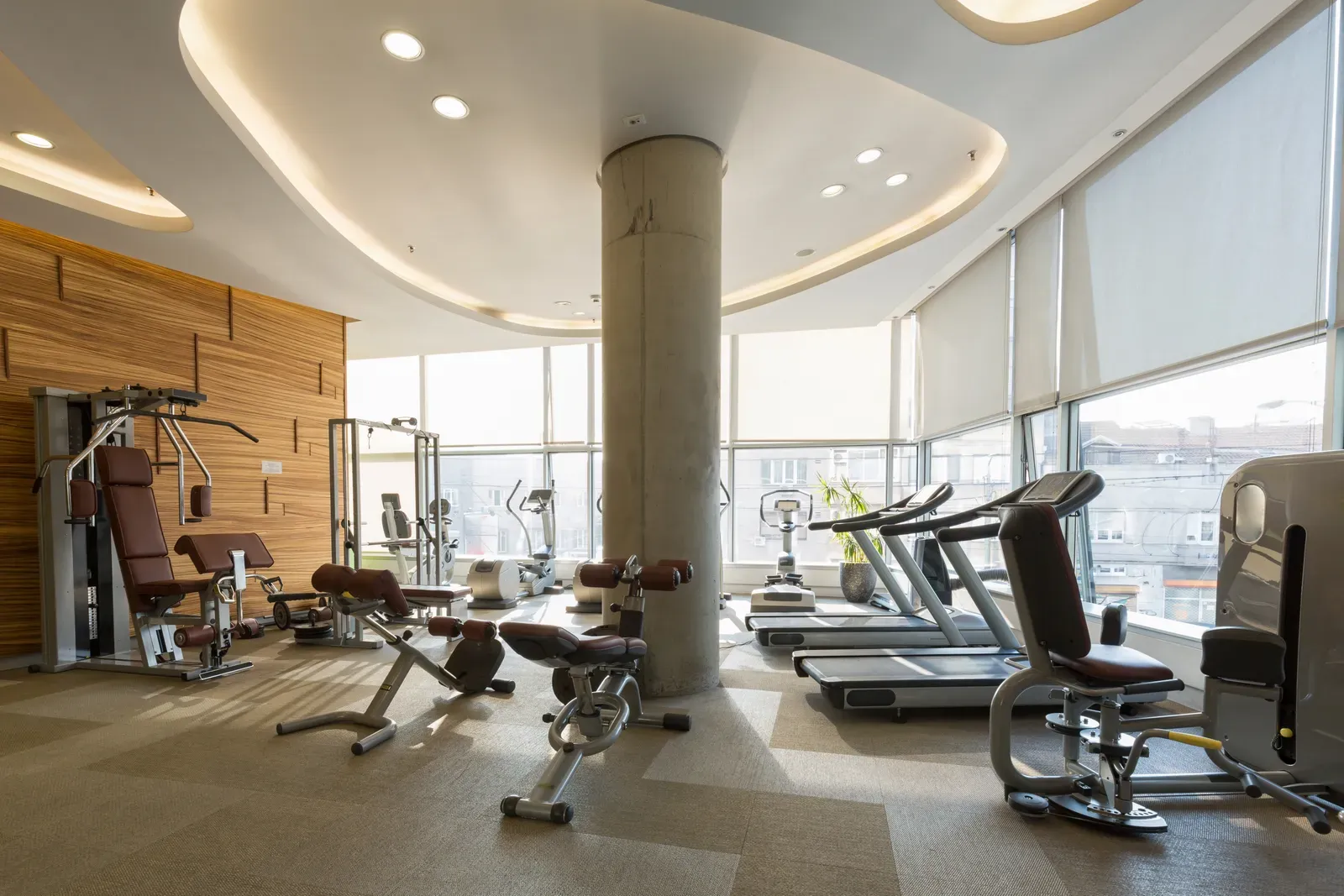
Small companies get pitched the same false choice constantly: build an expensive onsite gym or offer employees nothing more than a generic membership discount nobody uses. There is a third option that fits a company with ten or fifty employees far better than either extreme, small teams of coworkers training together in a private, professionally equipped room a short drive from the office, booked by the hour instead of built, leased, or maintained by the company. Booking that room directly turns a corporate fitness benefit into a line item that scales with actual attendance instead of a facilities project.
Why small employers skip the onsite gym build
An onsite company gym sounds like a perk until a small business actually prices it out. Beyond the initial equipment cost, a company takes on ongoing maintenance, liability for anyone injured on company property using company equipment, and square footage that could otherwise be leased space generating revenue for someone else. None of that makes sense for a business with a headcount too small to keep a room in constant use. The gym sits empty most of the day, the equipment ages without a service contract behind it, and the company has converted a perk into a facilities problem nobody signed up to manage.
The math looks different once training moves off site. A company pays only for the hours its employees actually use, in a room built and maintained by someone else, with none of the liability that comes with owning the equipment yourself. The benefit still exists, employees still get supervised, in-person training, but the fixed cost and physical footprint disappear from the company’s side of the ledger entirely.
What the off-site small-team format actually looks like
The model runs on small, consistent groups rather than a drop-in gym anyone can wander into. A Standard room fits one or two employees for a tighter session; a Plus room holds up to four, which is the sweet spot for a small-team format, three or four coworkers training together on a recurring day and time. Sessions run through a real coach, with a rack, cable system, and dumbbells for strength work and cardio rooms with HYDROW rowers, CLMBR machines, and curved treadmills for anyone who wants engine work instead. Because the room books by the hour with no lease or membership behind it, a company can start with a single weekly slot and expand only once attendance proves it out, the same low-risk logic that makes hourly space a better test than a lease for almost any small business decision.
Why this corridor makes the off-site version practical
The geography matters here in a way it would not in a more spread-out market. The Meridian Street corridor is the second largest concentration of office workers in Indiana, and Carmel alone is home to more than 100 corporate headquarters, which means a genuinely large number of small and mid-size employers sit within a short drive of a bookable private room. With roughly 23 percent of Hamilton County working from home, plenty of companies are also actively looking for anything that pulls a hybrid team into the same room at the same time, and a standing weekly training slot does exactly that far more reliably than an optional app-based benefit anyone can ignore from their kitchen table.
Structuring the offer for HR to say yes
The offer that gets approved quickly is small and specific, not a sweeping wellness program. A useful structure to propose:
- One recurring day and time, so the benefit becomes a habit rather than a one-off event nobody remembers to schedule.
- A capped group size, four or fewer, so cost stays predictable and every session actually runs as planned.
- A simple payment structure, either fully covered by the company, partially subsidized, or a negotiated rate employees pay directly, decided once and left alone rather than renegotiated every month.
- A trial period, four to six weeks, framed explicitly as a test rather than a commitment, which is the same low-pressure structure that gets any new employer relationship off the ground; the wider version of pitching a company directly is covered in pitching a local company on wellness.
Bring that structure to whoever owns the decision, usually an office manager at a small company or an HR lead once the headcount grows past roughly fifty, and let the trial period do the convincing that a sales pitch never quite can.
Scheduling around a workday is easier than it sounds once the hours line up with how people actually work. Rooms are bookable Monday through Friday 5 AM to 9 PM, which covers an early slot before the office opens, a lunchtime block, or an after-work session without asking anyone to burn a whole evening. A company testing the idea for the first time typically starts with one lunchtime or after-work slot a week, since that single recurring hour is enough to see whether attendance holds before proposing a second one.
The honest limits of the model
Off-site small-team training will never replicate the convenience of a gym down the hall, and it depends on employees being willing to leave the building during the day or stay a little after work. It is also not built for large group classes; room capacity tops out at four, so a company with dozens of employees who all want to attend needs several time slots rather than one big session. For the specific gap it fills, a real, in-person benefit for a company too small to justify building anything, it solves a problem that a membership stipend never quite reaches.
Propose one recurring slot to one company first, and let a few weeks of full attendance be the case for keeping it on the calendar.
Related questions
How small can a company be and still do this?
There is no minimum. A team of four or five employees fits comfortably in a single booked room, which means the model works for a small office that could never justify building its own gym.
Who pays for the sessions, the company or the employees?
Either model works. Some employers cover the full cost as a benefit, others subsidize part of it and let employees pay the rest, and some simply negotiate a group rate and let employees opt in and pay directly.
Does this replace an individual gym membership benefit?
Not necessarily. Small-team sessions add a shared, social benefit that a generic membership stipend does not, and many employers offer both rather than choosing one over the other.