
A Place to Do Your Physical Therapy Exercises Properly
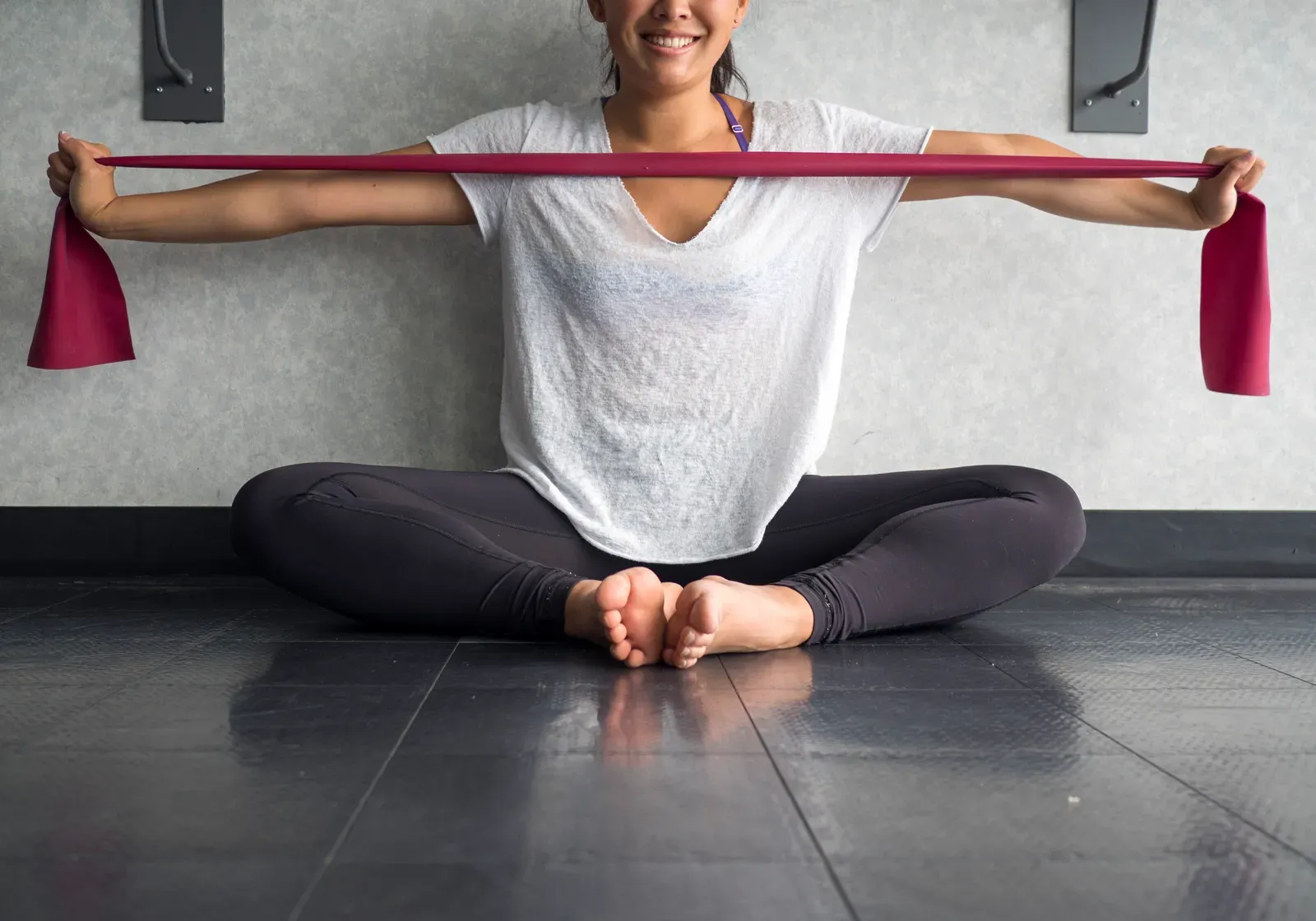
Every physical therapy patient knows the gap between the clinic and the living room: the exercises that felt precise on Tuesday turn into guesswork on the carpet between the couch and the coffee table. A private workout space rented by the hour closes that gap: open floor, a cable system and dumbbells, WiFi and a TV for your clinician’s exercise videos, and zero audience while you move carefully. It is your PT’s plan, done properly, in a room built for movement.
Why PT homework fails at home
Home exercise programs mostly fail for boring, physical reasons. There is no clear floor space, so the lunge sequence happens in a hallway. There is nothing solid to anchor a band to, no place to hold on for single-leg balance work, and no mental separation between rehab time and household time, so the program gets ground down to the two easiest exercises and then to none. Clinicians see this constantly; adherence to prescribed home programs is famously imperfect, and in most cases the environment is a far bigger culprit than laziness ever was.
A booked room fixes the physics and the psychology at once. The floor is open and meant for exercise, sturdy equipment gives you the anchor points and support a living room lacks, and the reserved hour marks a clean boundary: this time exists for the program, nothing else. Paying a modest hourly rate for that boundary turns out to be its own adherence tool; booked time gets used in a way good intentions never quite are.
What the room offers a rehab session
A FlexSpace Standard covers the practical needs of most home exercise programs. The cable system provides smooth, adjustable resistance for rows, presses, and hip work at whatever light setting your program calls for; the dumbbell rack starts light for early-stage loading; the lifting rack doubles as a solid support for balance drills and assisted movements. The TV and WiFi may be the sleeper feature: pull up the exercise videos or notes your clinician gave you and follow along at full size instead of squinting at a phone on the floor. Bands and small tools your PT issued come with you, as they would anywhere.
Just as valuable is what the room does not contain: an audience. Rehab movement is slow, asymmetric, and deliberately unimpressive, and doing it on a busy gym floor makes many patients rush or skip the awkward pieces. Behind a closed door, careful looks exactly how careful should look; that dynamic is the same one covered in working out alone with gym anxiety.
The boundary that keeps this honest
Draw the line clearly, because it protects you. What happens in this room is your clinician’s program, performed by you, on your own time. FlexWerk is not a medical facility, provides no clinical oversight and no medical equipment, and nobody in the building is supervising your rehab. Every judgment call belongs to your care team: if an exercise hurts differently than your PT described, if you are unsure about progressing weight or range, or if something new shows up, that is a message to your clinician or physician, not an experiment to run alone. Many patients bring their program notes on a first visit and simply follow the sheet; if your PT wants to know where you are doing your homework, the room takes a minute to describe, and some clinicians in the area already run their own sessions from rented space.
Making the habit stick through discharge and beyond
Rehab rewards boring consistency, and the booking model supplies it. The rhythm that works for most people slots homework between clinic visits: see your PT on Monday, book homework hours Wednesday and Friday, and arrive at next Monday’s appointment with the program actually done, which changes what your clinician can progress. Reserve the same one or two hours each week in the FlexWerk app so the program has appointments, not intentions; a common structure is 30 minutes of prescribed work followed by 30 minutes of easy walking on a curved treadmill in a cardio space, which start at $12 per hour, with strength spaces at $18 to $22 and no membership behind any of it. Hours run Monday to Friday 5 AM to 9 PM and weekends 7 AM to 4 PM at 885 Monon Green Blvd in Carmel City Center, with garage parking a short walk away, and if you are 18 or older and local, a host can confirm you for a free first hour; details in who qualifies for the free first hour.
Then comes the good problem: discharge. The patients who keep their gains are the ones who convert rehab hours into training hours, and the room makes that conversion seamless, same space, same schedule, gradually fuller sessions, with sensible solo-loading habits like the ones in lifting heavy without a spotter as you progress. If you want a professional to build that post-rehab bridge, coached training lives on FlexWerk’s fitness side starting with a free consultation, and your clinician’s guidance on what to tell a trainer comes first. Older patients balancing rehab with general fitness will find the age-specific picture in a private gym for older adults.
Your PT wrote the plan; the missing ingredient was a room that takes it as seriously as the clinic does. Book the hour, bring the sheet and your bands, and do the homework the way it was actually prescribed.
Related questions
Is this physical therapy?
No. You are doing the home exercise program your own clinician prescribed, on your own time, in a rented room. FlexWerk is not a medical facility and provides no clinical oversight; questions about pain or progressions go to your PT or physician.
What equipment is in the room, and what should I bring?
The room has a lifting rack, cable system, dumbbells, open floor space, WiFi, and a TV. Bands and any small tools your PT gave you come with you, exactly as they would to a living room.
How much space and time do I need to book?
One hour in a FlexSpace Standard covers most home exercise programs with time to spare, at $18 to $22 for the room. Many people pair 30 minutes of homework with 30 minutes of easy walking or cardio.